In a garage workshop outside Kyiv, Eduard Trotsenko moves between robotic arms, circuit boards, and stacks of composite materials, his enthusiasm palpable as he demonstrates the latest additions to his arsenal. The 55-year-old engineer, who once built car charging stations, now designs ground drones for the Ukrainian military. His ambitions stretch to what he calls “mechanical birds” that could perch on high-voltage lines to recharge, and “robot dogs” that could scout ahead of infantry.
“To save human lives, to save soldiers, there must be robots,” Trotsenko told AFP, echoing a sentiment that has become central to Ukraine's war effort.
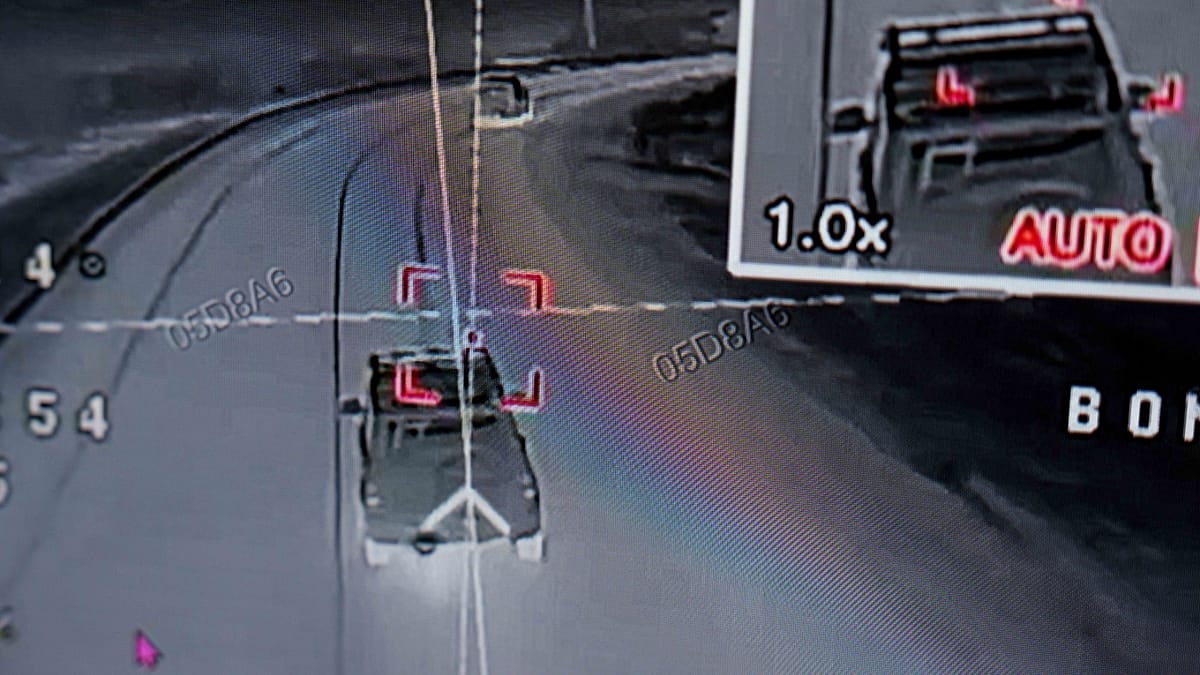
Since Russia's full-scale invasion in February 2022, aerial drones have become ubiquitous on the front lines—used for reconnaissance, artillery spotting, and dropping explosives. On the ground, unmanned vehicles now evacuate wounded soldiers and ferry ammunition across the perilous “kill zone,” the contested strip where Russian and Ukrainian drones patrol the skies and any movement below is fraught with danger.
Ukraine has built a sprawling drone industry from nothing, an achievement that President Volodymyr Zelenskyy has called the best in the world. Yet the dismissal last month of Defence Minister Mykhailo Fedorov—one of the sector's most vocal champions—raised questions about whether the momentum would stall.
Fedorov, who had been instrumental in pushing technological innovation within the armed forces, created the Defence AI Center A1, a hub dedicated to embedding artificial intelligence in military systems and accelerating the deployment of new tech based on frontline feedback. He also championed the integration of private companies into the military supply chain, fostering competition and rapid iteration.
“In a private company, you can take risks more quickly,” Trotsenko said, explaining how small firms were incentivised to adapt and improve their products at speed to win contracts.
His own company, Temerland, is now testing combat ground drones equipped with RPG launchers and heavy machine guns, controlled by onboard AI. “They're currently being tested in some brigades,” he said, awaiting approval from the General Staff for wider deployment.
Despite Fedorov's departure, industry insiders and military personnel insist the drone revolution is irreversible. “The young people there won't let it go. There'll definitely be drones,” Trotsenko said.
Bottom-up innovation
Hundreds of kilometres away, a 45-year-old commander who goes by the call sign “Jason” has just returned from a mission. He leads a unit that operates the kind of ground drones Trotsenko develops. For him, the logic is simple: “You can afford to lose a drone, but not a person. The probability of human losses there is reduced.”
Jason dismisses the idea that Fedorov's removal could derail the sector. “It's not that simple... the technological initiative was not flowing from the top down. It wasn't a government order,” he said. After the invasion, “there was an explosion of bottom-up initiative.” Young engineers began creating new products, showing them to military units, who adopted what worked and then started their own development cycles.
Today, programmers, telecoms specialists, and engineers are fully embedded in the army, and Jason says the biggest challenge he faces is “the shortage of professionally trained people.”
The resilience of Ukraine's drone ecosystem is also evident in the broader context of the war. Recent Ukrainian strikes on Russian refineries and the attack on a German-owned cargo ship near Odessa underscore the ongoing role of drones in both offensive and defensive operations. Meanwhile, China's recent drone export curbs highlight the global strategic importance of this technology.
Back in Trotsenko's workshop, his engineers are already sketching the future of warfare. On a whiteboard, he outlines a vision of conflicts fought by “humanoid robots,” controlled remotely by operators in other countries—or even by wounded soldiers lying in hospital beds. “Things have really taken off,” he said confidently.
The dismissal of Fedorov, who had clashed with the Soviet-style commander-in-chief Oleksandr Syrsky over the pace of reform, sparked protests and ultimately led to Syrsky's removal. But for those on the ground, the shift is clear: Ukraine's drone industry is no longer a top-down project but a grassroots movement that has become integral to the country's defence.