Beijing has unveiled a package of trade countermeasures against Washington, including tighter controls on drone exports and a ban on transactions with six American organisations. The move is a direct response to recent US restrictions on Chinese technology, and it lands just weeks before President Xi Jinping is expected to travel to the United States for talks.
China's Ministry of Commerce said the sanctions were provoked by US actions, notably the Federal Communications Commission's (FCC) ban on imports of Chinese drones and the Department of Homeland Security's decision to add 43 Chinese companies to the Uyghur Forced Labor Prevention Act entity list, which blocks goods produced with forced labour.
The ministry argued that these steps "seriously violate the important consensus reached by the two heads of state and severely damage China's legitimate rights and interests." It added that "China has no choice but to take necessary countermeasures in response."
In a statement, Beijing said it was acting with restraint and urged Washington to withdraw its measures and stop its "erroneous practices." It also warned that further sanctions would follow if the US introduces new restrictions against Chinese firms.
Export controls and entity bans
The new rules require case-by-case reviews for exports of unmanned aerial vehicles (UAVs), their key components, and related technologies. These items are now on China's list of controlled dual-use goods, which can serve both civilian and military purposes.
Six US entities have been barred from engaging in trade or other activities with Chinese companies. Among them are Applied DNA Sciences, a biotechnology firm, and Human Rights in China, a non-governmental organisation. Beijing also prohibited Compliance Testing LLC from operating in the country, accusing it of collaborating with the FCC to undermine "China's sovereignty and security."
The Commerce Ministry said it was also investigating the potential national security impact of imported printing software and office equipment, though it did not name any specific companies.
New certification rules for US firms
China's State Administration for Market Regulation announced that US companies which perform follow-up factory inspections on behalf of Chinese entities for CCC certification can no longer issue those certifications. CCC certification ensures that electronic products meet basic safety standards. Under the revised rules, US manufacturers of certified electronics will need to hire auditors based outside the US or rely on other non-US designated bodies.
The FCC's drone ban, introduced in December, was later revised to allow some models through, but the underlying friction remains. This latest escalation underscores the fragile state of US-China trade relations, even as diplomatic channels stay open.
For Europe, the dispute carries significant implications. The EU has its own trade disputes with Beijing, and the bloc is watching closely as Washington and Beijing spar over technology and supply chains. As the EU's October deadline with China approaches, trade concessions look increasingly unlikely, and European manufacturers are bracing for potential spillovers.
European automakers, for instance, are already feeling the pinch from China's economic slowdown, as seen in Mercedes-Benz lowering its sales forecast despite a profit jump. Meanwhile, Porsche's profit rise was driven by cost cuts and strong 911 sales, but its China sales remain weak.
The broader context is a global tech rivalry that extends beyond Washington and Beijing. As the West debates AI regulation, China is building its own governance track, and the EU's AI Act is already having global reach, with half of citing firms being non-EU. These parallel developments suggest that the transatlantic and European approaches to technology will be shaped by the outcome of US-China tensions.
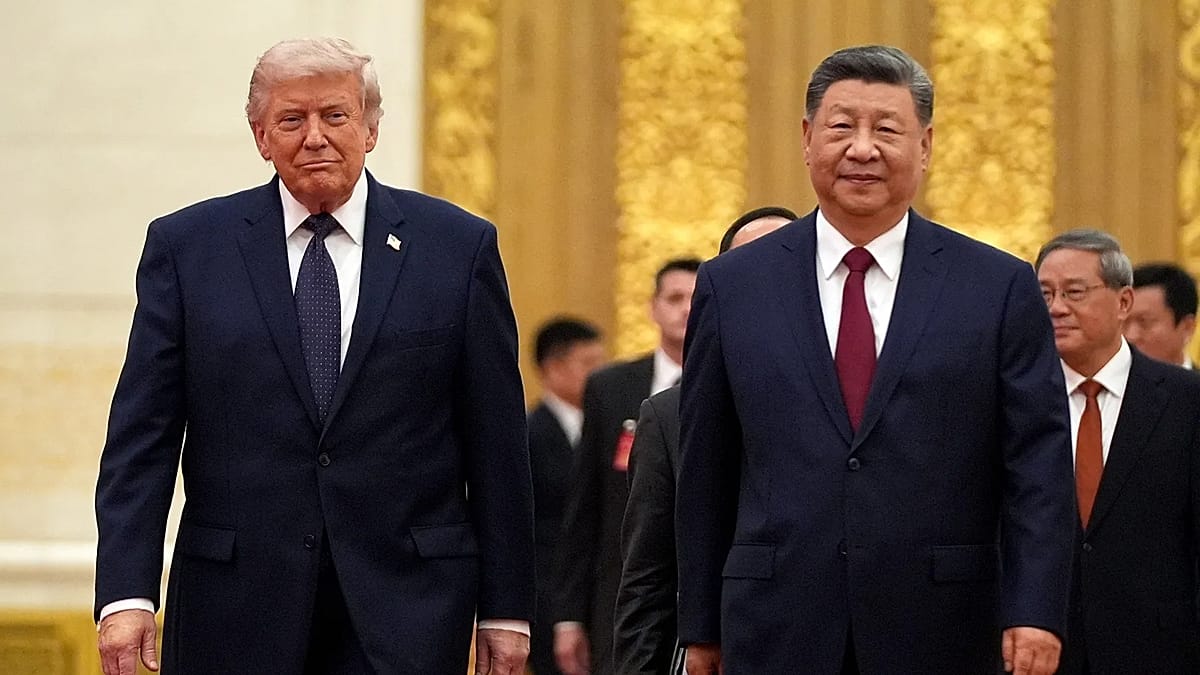
Xi's visit to Washington, expected in September, was meant to signal a thaw after his meetings with President Trump in Beijing in May. But these new measures cast a shadow over that optimism, and European diplomats are likely to be watching closely for any signs of a broader trade war that could disrupt global supply chains.