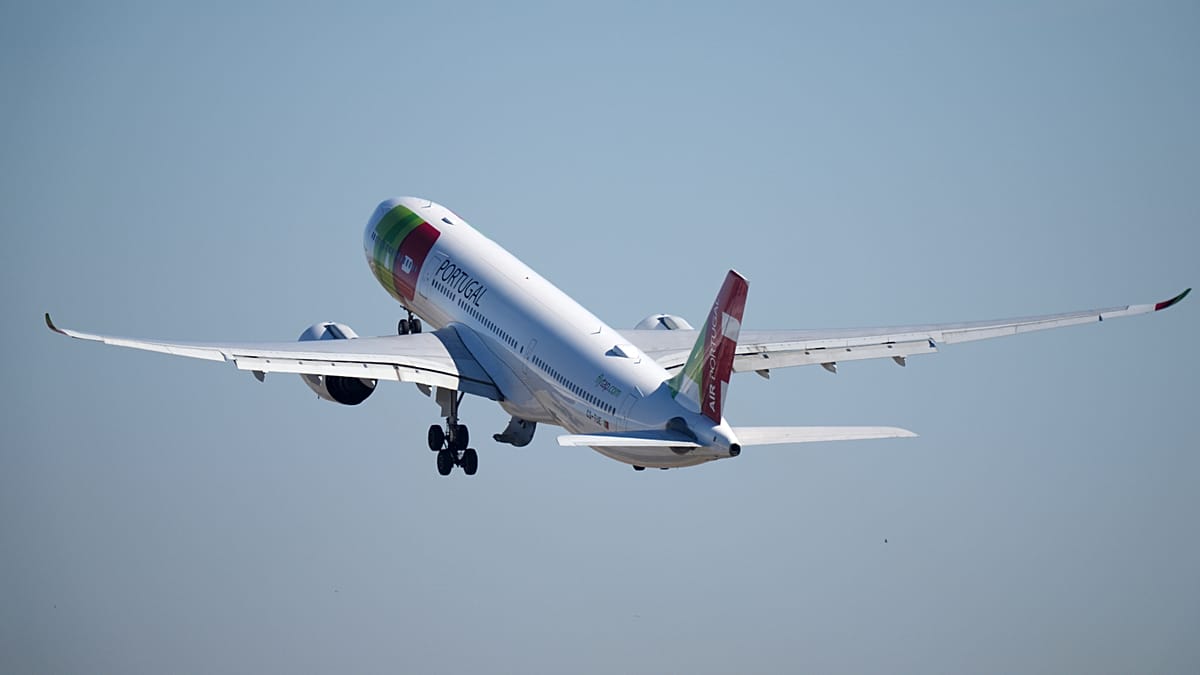
Lisbon has taken a decisive step in the long-awaited partial privatisation of TAP Air Portugal. On Tuesday, the Portuguese government and Germany's Lufthansa Group signed the share purchase agreement, cementing the terms first announced in October. The ceremony took place at the TAP Campus near Lisbon's Humberto Delgado Airport, with Prime Minister Luís Montenegro, Finance Minister Joaquim Miranda Sarmento, and Lufthansa CEO Carsten Spohr in attendance.
In his address, Montenegro framed the deal as a strategic victory for the country. "Today the country is taking an extremely important step to ensure it will continue to have a Portuguese airline, with a Portuguese brand and identity," he said. He stressed that the government would not have proceeded had the agreement not safeguarded TAP's unique character, including its role in connecting Portugal's diaspora, its autonomous regions, and Portuguese-speaking nations across the globe.
Montenegro also emphasised the importance of maintaining social stability within the airline. "This uniqueness has been safeguarded, as well as social peace within the company and the commitment we have to TAP's workers," he told those gathered. The prime minister's remarks were aimed at reassuring critics who feared that foreign ownership would dilute TAP's national character.
Lufthansa's vision for TAP
Carsten Spohr, who has led Lufthansa since 2014, described the signing as "an important milestone for TAP, for Portugal, but also for the Lufthansa group." He reiterated that TAP "will continue to be a Portuguese airline," and outlined plans to develop Lisbon as one of Lufthansa's hubs while preserving the carrier's distinctiveness. Spohr was quick to note that the group's ambitions extend beyond the capital: Porto, Funchal, Madeira, and the Algarve all feature in its strategic thinking.
The German group sees TAP as a gateway to new markets, particularly in Africa and Latin America, with Brazil singled out as a key opportunity. "For us, this is a unique opportunity," Spohr said, pointing to the airline's extensive network in Portuguese-speaking countries. The deal also gives Lufthansa a stronger foothold in the transatlantic market, where TAP has a significant presence.
The financial structure of the agreement was confirmed: Lufthansa will pay €1.201 billion for up to 49.9% of TAP's capital, with 5% of that stake reserved for employees. The Portuguese state will retain 51% of the shares and a majority on the board of directors, ensuring continued governmental oversight. The transaction is expected to be completed by early 2028, pending approval from the European Commission.
Until Brussels gives its green light, TAP will continue to operate independently, albeit with Lufthansa providing strategic guidance. The government anticipates that European approval will arrive in the first half of 2028. This timeline reflects the complexity of the deal, which has been in the works for years and has seen previous attempts at privatisation stall.
The sale has not been without controversy. Critics have questioned whether Lufthansa's involvement might lead to job cuts or a shift in focus away from Portugal's regional routes. However, both sides have sought to allay these fears. Montenegro insisted that the agreement protects TAP's role in connecting the mainland with the Azores and Madeira, as well as its links to Portuguese communities in North America and Africa.
For Lufthansa, the acquisition is part of a broader strategy of consolidation in Europe's competitive aviation market. The group already owns Swiss, Austrian, and Brussels Airlines, and has been expanding its presence in southern Europe. TAP's strong brand recognition and its hub in Lisbon, which offers convenient connections between Europe, Africa, and the Americas, make it an attractive addition.
The deal also comes at a time when the aviation industry is grappling with rising fuel costs and geopolitical tensions. Lufthansa has recently faced a €2bn increase in its fuel bill due to the Middle East conflict, which has driven up kerosene prices. This context underscores the financial challenges that TAP will face as it integrates into the larger group.
Portugal's housing market, meanwhile, continues to boom, with October house prices setting a new record with a 7.5% annual jump. The influx of foreign investment, partly driven by the country's growing appeal as a business hub, is likely to be boosted further by the TAP deal, which signals confidence in Portugal's economic trajectory.
As the formalities are completed, the focus now shifts to Brussels. The European Commission will scrutinise the deal for potential competition concerns, particularly regarding Lufthansa's dominance in certain routes. If approved, TAP will join the Lufthansa Group's portfolio, but with a clear commitment to maintaining its Portuguese identity.
For now, the airline's employees, passengers, and the Portuguese public can take some comfort in the assurances given by both the government and Lufthansa. The brand, the identity, and the strategic importance of TAP to Portugal's global connections appear to be preserved, at least on paper. The coming years will reveal whether these promises hold up in practice.