The United Nations has renewed its demand that Israel grant international investigators unrestricted access to every part of the Gaza Strip, as the grim task of recovering human remains from the territory's ruins continues nearly three years after the conflict began.
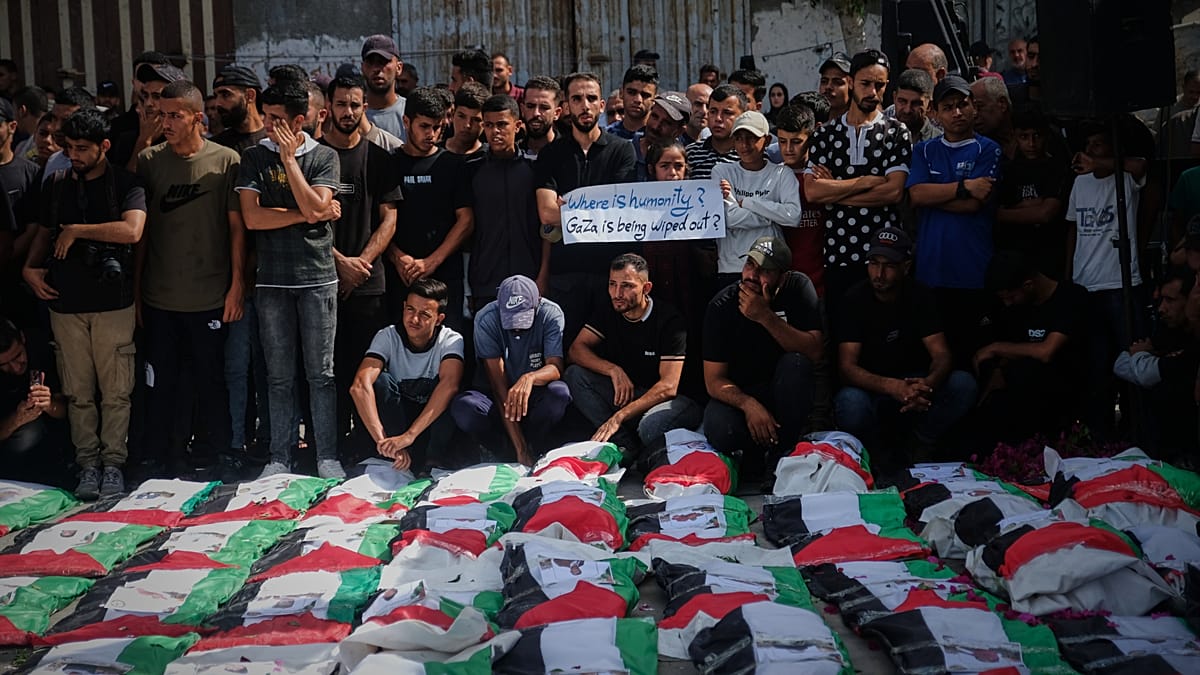
The UN human rights office stressed that evidence collection at destroyed sites is vital, urging that "international investigators be allowed into all parts of Gaza to assist with evidence-gathering." Most of the dead being recovered are reported to be women and children, a detail the UN says points to the likelihood that war crimes were committed during the military campaign.
Tip of the iceberg
Volker Turk, the UN High Commissioner for Human Rights, expressed deep concern in a statement: "The remains of what appears to be entire families are now being unearthed at locations that were pulverised by Israeli attacks." He added, "I worry the remains recovered so far may only be the tip of the iceberg," pointing to how "much of Gaza has been flattened by Israeli bombing or demolition and clearing by heavy machinery and explosives."
Turk also highlighted ongoing destruction: "Today, many areas in Gaza where the Israeli military is deployed continue to be levelled by bulldozers with no respect for the dead under the rubble."
According to UN data, as much as 82% of the Gaza Strip has been reduced to rubble following the Israeli offensive. The Palestinian Civil Defence reports that more than 630 bodies and other remains have been pulled from beneath collapsed buildings across Gaza since last November alone.
The UN rights office cited an estimate that over 8,000 people remain missing under the rubble—a figure that underscores how much of the territory's devastation has yet to be fully accounted for. Turk insisted that "every feasible effort must be taken to document and identify these victims, preserve forensic information and biological samples, record their burial locations and inform their families."
"The discovery of extensive remains under the rubble in Gaza City resurfaces concerns of war crimes and other atrocity crimes," he warned.
The war began after Hamas's October 7, 2023 attack on Israel, which killed at least 1,195 people according to official Israeli data. Israel's subsequent bombing campaign and ground invasion left much of Gaza in ruins. Gaza's health ministry, which operates under Hamas authority, says the offensive has killed more than 73,000 Palestinians in total, including over 1,350 since a ceasefire was signed last October.
The UN's call for access comes as international scrutiny of the conflict's conduct intensifies. European governments and institutions have been vocal in demanding accountability, with the European Central Bank recently raising interest rates partly due to energy inflation linked to the Middle East conflict. The humanitarian and legal dimensions of the war continue to reverberate across the continent, shaping diplomatic positions and public opinion.
As the recovery of bodies proceeds, the question of who will ultimately be held responsible for the deaths and destruction looms large. The UN's insistence on full access for investigators is a critical step toward documenting the full scale of the tragedy and ensuring that the war's legacy is defined by truth and justice, not just rubble and silence.