When Emilia Privitera began coughing relentlessly in March 2021, she feared a second bout of COVID-19. A negative test pointed to seasonal allergies. But the cough persisted, and a specialist found something far less common: microscopic ash particles lodged deep in her lungs.
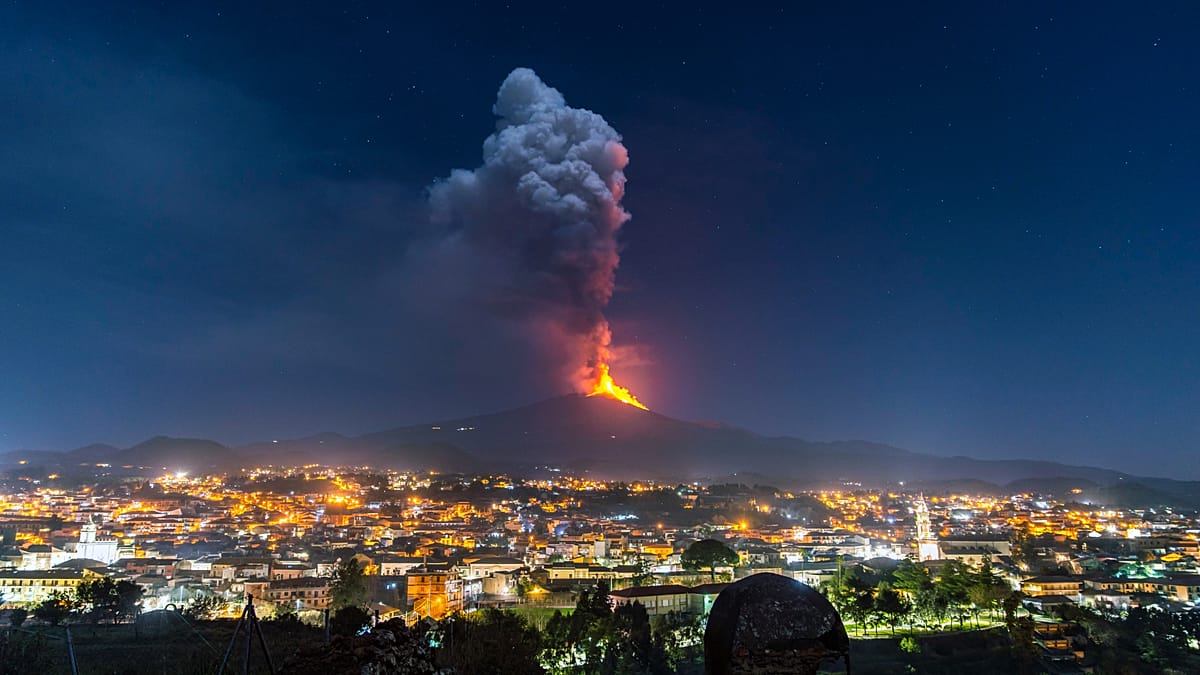
Privitera lives in Nicolosi, a town on the slopes of Mount Etna near Catania, Sicily. Europe's tallest and most active volcano erupts several times a year, and each event brings back her symptoms. Hundreds of neighbours share the same ordeal, though their plight rarely makes the news that celebrates Etna's fiery displays.
Recent weeks have seen intense eruptions that grounded flights for days and drew global attention. Yet the quieter crisis is the steady fallout of ash that can reach thousands of tonnes daily, coating streets, roofs, and fields across the region.
The hidden health toll of volcanic ash
Volcanic ash is made of fine rock, mineral, and glass particles that settle into every crevice and can linger for years. While it enriches soil, it also poses a respiratory hazard when stirred up by wind or traffic.
A 2013 study of Etna's powerful 2002 eruptions found a significant spike in emergency visits for acute respiratory illness, cardiovascular problems, and eye irritation. Daniele Lombardo, a co-author, explains that fine ash can penetrate deep into the lungs, triggering inflammation and oxidative stress, especially in children, the elderly, and those with chronic conditions.
Research from the University of Palermo has also linked living in Etna's shadow to higher rates of thyroid cancer, with evidence of increased exposure to trace elements from volcanic emissions.
In Catania, pulmonologist Nunzio Crimi cut his summer break short this year after a surge of calls from patients with pre-existing respiratory disorders. He tells European Pulse that those with weakened immune systems or conditions like allergic asthma and chronic bronchopneumonia are most vulnerable. “Especially those whose respiratory systems have been weakened by past pneumonia or COVID tend to suffer the most,” he says.
During the early August eruptions, Sicily's Civil Protection Department reported a rise in emergency room visits across the province of Catania, with symptoms including conjunctivitis, coughing, and nasal irritation. Crimi saw an eight per cent increase in consultations compared with normal periods.
Italy is not alone. Iceland's 2010 Eyjafjallajökull eruption left lasting health effects, with researcher Gunnar Guðmundsson finding that respiratory symptoms and psychological distress persisted for years among the most exposed residents, particularly where wind repeatedly resuspended ash.
Animals suffer too. Berglind Hilmarsdottir, a farmer in the Westfjords, warns that cattle can die from fluoride poisoning if they graze on contaminated grass. Fluoride in ash can damage digestive linings, interfere with calcium, and weaken bones over time.
For years, Catania residents have pressed for better public health preparedness, but gaps remain. Ash collection is often delayed, leaving hazardous dust to be kicked up by every passing car. The problem is compounded by budget constraints and the sheer scale of the task.
Some local authorities have begun experimenting with more efficient street cleaning and public information campaigns, but experts argue for a coordinated regional strategy that includes health monitoring, early warning systems, and faster clean-up protocols. The challenge is not just technical but political, as Sicily's municipalities juggle limited resources.
As Etna shows no sign of quieting, the people of Catania and Nicolosi face a recurring nightmare that demands more than awe. They need solutions that match the volcano's relentless pace.