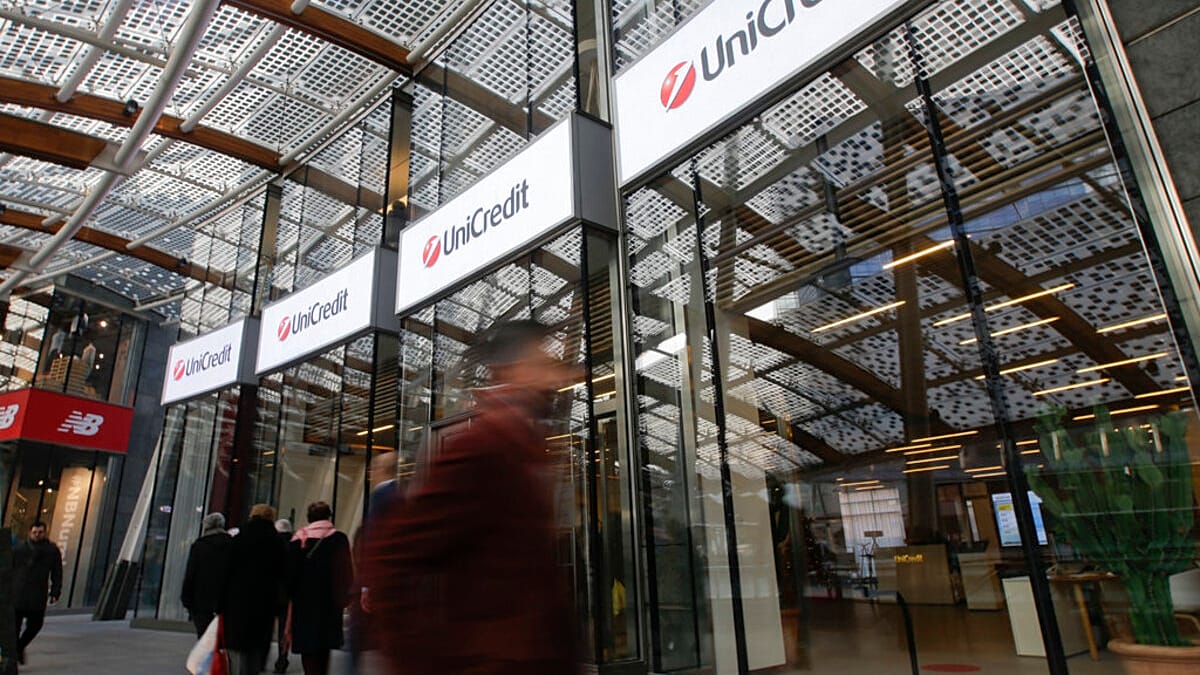
In a rare concession, the Kremlin has given Italy's UniCredit the go-ahead to sell a significant portion of its Russian operations. A decree signed by President Vladimir Putin on Monday permits the Milan-based lender to reorganise its local subsidiary, UniCredit Bank, and transfer the bulk of its business to a buyer while retaining a smaller entity dedicated to international payments.
UniCredit has operated in Russia since 1989 and continued after the full-scale invasion of Ukraine in February 2022, despite mounting pressure from European regulators. In May, the bank announced its intention to sell part of the Russian arm to a private investor from the United Arab Emirates, described as having deep ties to local institutional and business circles. The buyer's identity has not been officially confirmed, but Russian daily Kommersant has reported that the investor is linked to Alfa Group, a conglomerate whose co-founder Mikhail Fridman was recently removed from the EU sanctions list.
A conditional exit
The decree allows UniCredit to separate part of its Russian legal entity into a new company that will remain under Italian ownership. This carved-out bank will focus on euro and dollar payments for corporate clients not subject to sanctions. The remaining business—including loans, deposits, and other assets—will be sold to the unnamed buyer, with UniCredit estimating the financial impact at €3–3.3 billion.
Without the president's personal approval, the deal would have been impossible. Since 2022, a decree on special measures against so-called 'unfriendly' countries has required special permission for any share transaction involving UniCredit Bank. The Russian central bank also lists UniCredit and Austria's Raiffeisenbank as systemically important credit institutions, subjecting them to heightened scrutiny.
The European Central Bank has repeatedly urged both banks to reduce their Russian exposure, and both have declared they are winding down operations. Italy's Intesa Sanpaolo, which received presidential approval to leave in September 2023, has yet to complete its exit. Hungary's OTP Bank also continues to operate through its Russian subsidiary.
Leaving Russia has become increasingly costly. In October 2024, Moscow imposed a mandatory discount of at least 60% on foreign asset sales and an exit tax of no less than 35%, according to UN Trade and Development (UNCTAD). UniCredit's chief executive, Andrea Orcel, has previously said the bank was unwilling to sell its Russian assets too cheaply, a stance that has complicated negotiations.
The approval for UniCredit stands in contrast to Moscow's recent moves against other Western companies. In September, Putin signed a decree transferring the management of assets linked to 16 companies, including Nestlé and Auchan, to a little-known firm with alleged ties to Russia's security apparatus. Days later, German wholesaler Metro AG lost operational control of its Russian subsidiary under a similar decree, with control passing to UK Torg RUS while ownership remained with the German group.
UniCredit expects to complete the transaction in the first half of 2027, subject to binding agreements, the separation of the businesses, and regulatory approvals. The deal, if completed, would mark one of the few successful exits by a major European bank from Russia since the invasion, though the financial toll underscores the high price of doing business with the Kremlin.