Unitree Robotics, the Chinese company behind some of the most viral robot videos on the internet, made a spectacular entrance to the stock market on Wednesday. Shares in the Hangzhou-based firm jumped as much as 629% above their initial public offering (IPO) price during the first day of trading on Shanghai's STAR Market, before settling around 500% higher by the close.
The IPO priced at 150.8 yuan (€19.3) per share, but the stock quickly climbed to a high of 1,100 yuan (€140.6). That surge valued the company at tens of billions of euros, a remarkable feat for a firm that only began selling robots commercially a few years ago.
Retail frenzy and a founder's fortune
The extraordinary demand came almost entirely from Chinese retail investors. According to exchange data, the portion of shares reserved for non-professional investors was oversubscribed by thousands of times, reflecting a broader retail mania for AI and robotics stocks in China. Institutional investors, by contrast, were allocated a smaller share of the offering.
Wang Xingxing, Unitree's founder and CEO, still owns roughly a fifth of the company, making him one of China's newest billionaires on paper. Wang, a former drone researcher, started Unitree in 2016 with a focus on quadruped robots before expanding into humanoid models.
From viral clips to commercial success
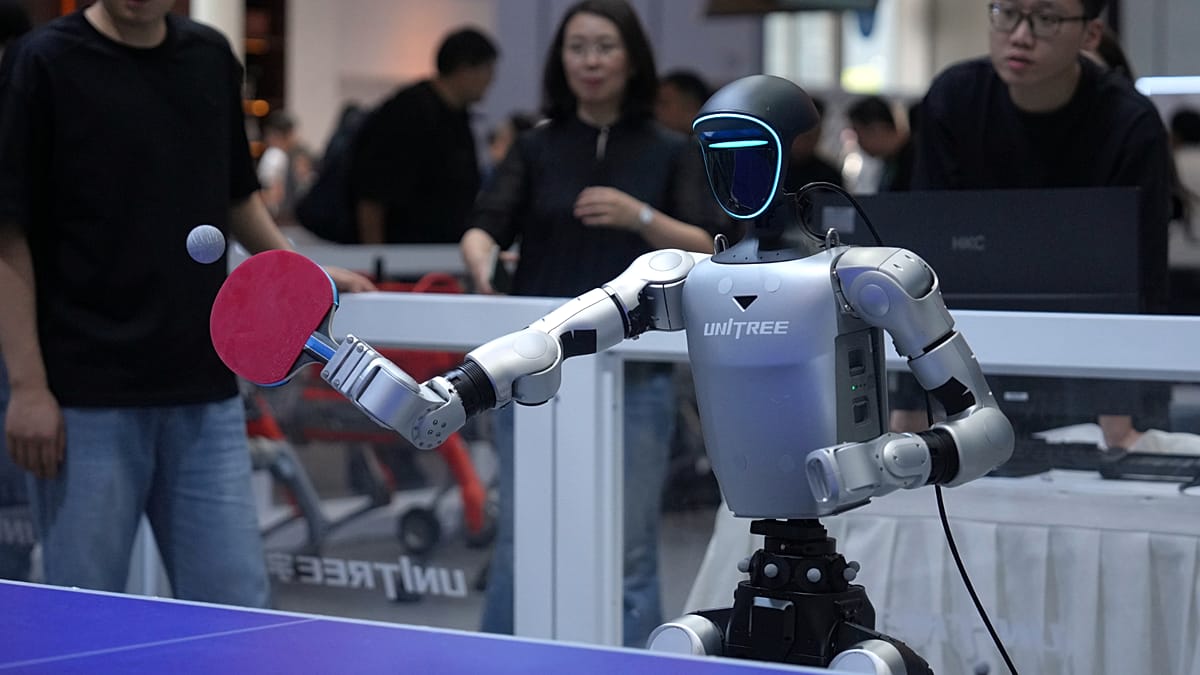
Unitree first gained global attention through videos of its robots performing backflips, vaults, and even rollerblading. More recently, they appeared as backup dancers for pop stars and played table tennis against humans. These clips have amassed hundreds of millions of views on social media, turning the company into a household name in robotics.
But the company's appeal goes beyond spectacle. Unitree's robots are significantly cheaper than comparable models from US rivals like Boston Dynamics. Its robot dogs start at around €1,600, while humanoid models are priced at a fraction of what Tesla and others charge. That affordability is largely due to the robust supply chain in Hangzhou, where Unitree can source components locally and keep manufacturing costs low.
This cost advantage has allowed Unitree to scale production quickly and turn a profit earlier than most robotics startups. The company says it is already shipping thousands of units annually, a volume that puts it ahead of many Western competitors.
Robotics as a national priority
China's government has made robotics a strategic focus, seeing it as a way to offset a shrinking workforce and boost productivity. That policy support has helped companies like Unitree and UBTECH Robotics, which is also listed in Shanghai, to attract capital and talent.
The global market for humanoid robots is projected to reach $38 billion (€32.7bn) by 2035, according to Goldman Sachs. That potential has drawn interest from tech giants and automakers alike. Tesla, Xiaomi, and Hyundai Motor all have humanoid robot programs, while several other Chinese firms, including Leju Robotics and Deep Robotics, are preparing their own IPOs.
For European investors, the Unitree debut is a reminder of the growing gap between Asian and Western robotics companies. While Europe has strong research institutions and industrial automation, it lacks a comparable ecosystem of consumer-facing humanoid robot startups. Some European policymakers have called for more investment in physical AI, which combines machine learning with real-world robotics.
However, not all markets are open to Chinese robotics. The United States has restricted imports of some foreign-made robots over national security concerns, and similar debates are emerging in Europe. The EU has yet to impose blanket bans, but some member states are reviewing the use of Chinese drones and robots in critical infrastructure.
For now, Unitree's stock market success underscores the commercial appetite for robots that can dance, run, and interact with humans. Whether the company can sustain its valuation will depend on its ability to move beyond viral moments and deliver reliable, useful machines for industries like logistics, healthcare, and home assistance.