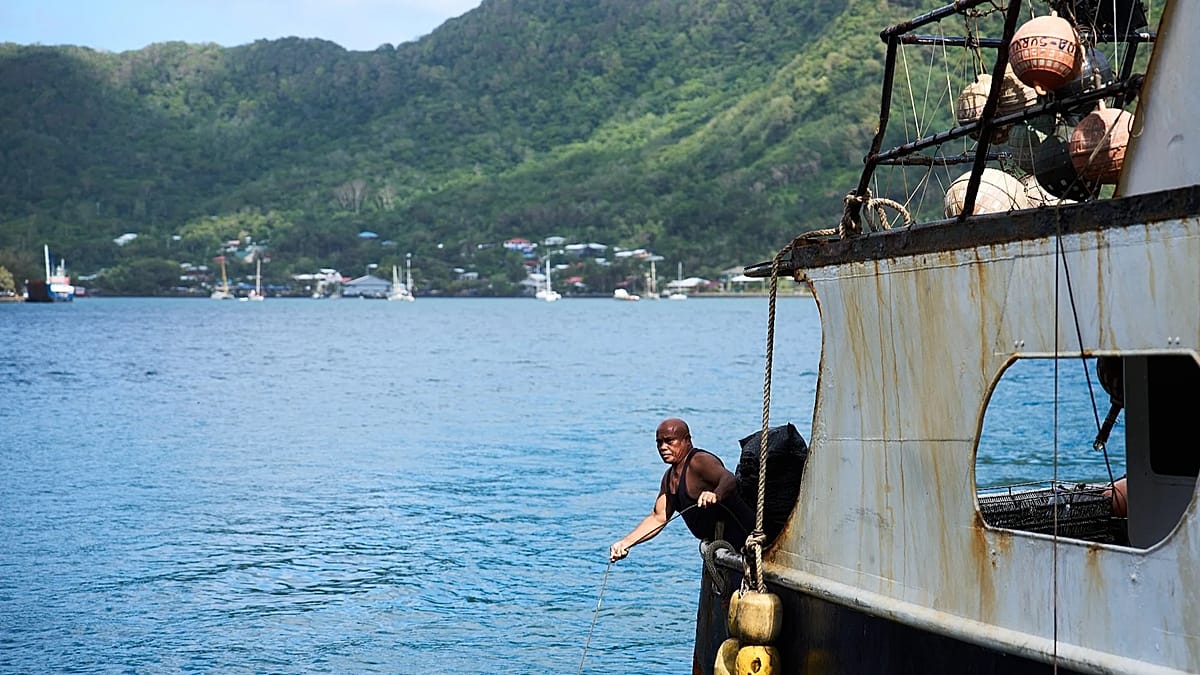
Washington has pressed ahead with the first deep-sea mining lease sale in US history, auctioning seabed areas off American Samoa just days after a federal judge ruled the approval process unlawful. The sale, completed on Thursday, covers two zones totalling roughly 31 million acres (12.5 million hectares) in the Pacific, drawing sharp criticism from environmental groups and local residents.
Each zone attracted a winning bid of $3 million, bringing the total to $6 million (about €5.5 million). The identity of the successful bidders has not been disclosed. The move comes despite a ruling on Monday by Judge Jill Otake of the US District Court in Hawaii, who found that the National Marine Fisheries Service (NMFS) had violated the Endangered Species Act when it cleared the sale.
Interior Secretary Doug Burgum hailed the auction as “the first time the United States has held an offshore critical minerals lease sale in the Pacific and a historic step for America’s energy and mineral security.” He added that the sale “opens a path to learn more about the resources off the coast of American Samoa and assess whether they could contribute to a more reliable domestic supply.”
The leases are intended to allow mining companies to harvest polymetallic nodules — potato-sized lumps rich in nickel, copper, and cobalt, metals essential for batteries and electric vehicle systems. The sale follows an executive order signed by President Donald Trump in April 2025, which described leadership in deep-sea science and technology as “a core national security and economic interest.” It also responds to a request from Impossible Metals, a US company seeking to explore the region.
Legal and environmental backlash
Conservation groups have vowed to challenge the leases in court. “In deciding to move forward with today’s scheduled sale, the Trump administration has performed a renegade, unlawful act,” said Chris Eaton, an attorney with Earthjustice. “We will use the full extent of the law to vigorously push for the leases to be voided.”
Julia Singer, campaign manager at Oceana, warned of irreversible damage. “This premature push to exploit the deep sea before we even fully understand how vital it is will have catastrophic consequences that reverberate for generations,” she said.
Judge Otake’s ruling was blunt: “NMFS failed to even attempt to consider the potential effects on ESA-listed species.” The lease areas lie close to the Rose Atoll marine sanctuary, a haven for endangered whales, turtles, sharks, and corals.
Local opposition has been strong. American Samoa banned deep-sea mining in its territorial waters in 2024, but the auction covers the federally controlled Outer Continental Shelf beyond that limit. Governor Pulaali’i Nikolao Pula stated in a public comment in September that he “does not support commercial deep-sea mineral extraction at this time.”
The sale has also drawn attention beyond the Pacific. European nations, which have been cautious about deep-sea mining, are watching closely. The EU has called for a moratorium on deep-sea mining until environmental safeguards are proven, and several member states, including Germany and France, have backed that position. The US move could complicate international negotiations at the International Seabed Authority, where rules for deep-sea mining are still being drafted.
“This is a test case for the entire industry,” said a Brussels-based environmental policy analyst. “If the US can push through with leases despite a court ruling, it sets a dangerous precedent for other nations.”
The Trump administration’s decision to proceed despite the court’s finding has been described as a deliberate act of defiance. Legal experts say the leases may be voided if the court later rules on the merits, but the administration appears willing to take that risk to advance its critical minerals agenda.
For now, the auction stands as a stark illustration of the tension between resource extraction and environmental protection, a debate that resonates from the Pacific to European capitals.