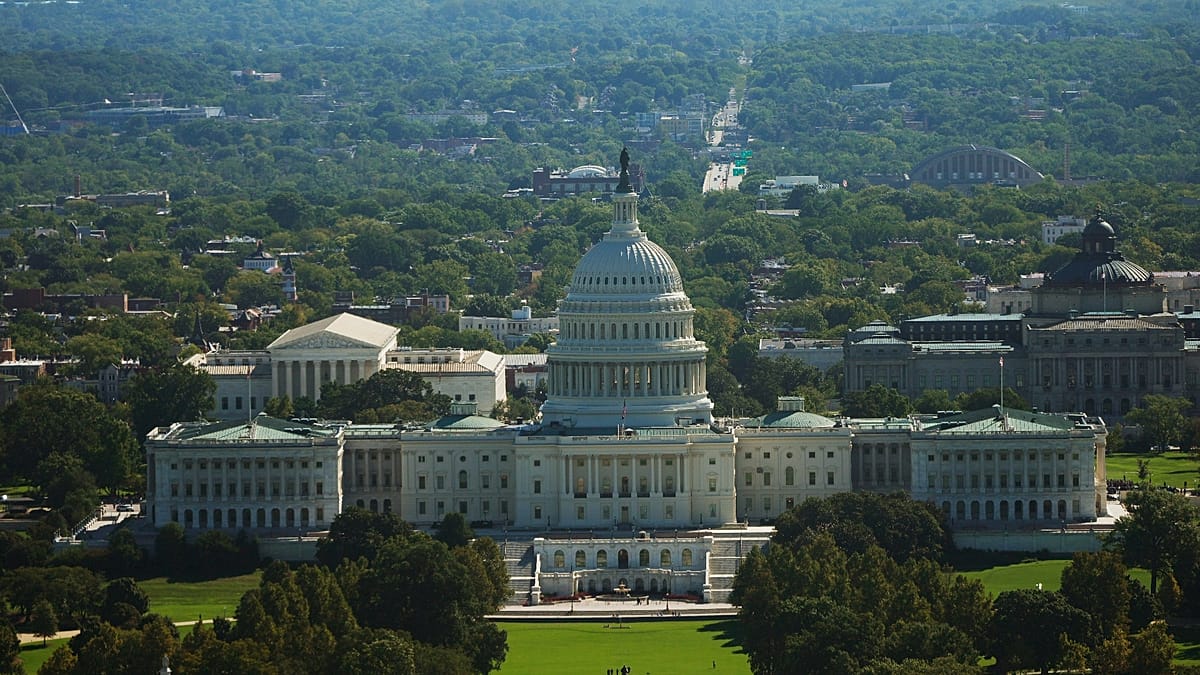
For the third time in as many months, the US House of Representatives voted on Tuesday to end the war in Iran, approving a war powers resolution that would strip President Donald Trump of the authority to continue military action without congressional approval. The 220–204 vote saw seven Republicans break ranks and join all Democrats, a slight increase from the four GOP defectors in earlier attempts.
The resolution, however, is unlikely to become law. The Senate has already shown reluctance to sustain such measures, and President Trump has made clear he would veto any attempt to curtail his military campaign. None of the previous resolutions reached his desk, and this one is expected to meet the same fate.
Representative Seth Moulton, a Massachusetts Democrat and former Marine who served in Iraq, framed the vote as a constitutional imperative. "Remember when Donald Trump said that this war would last just a few weeks?" he said. "It's time for Congress to actually ask tough questions, as the Constitution directs us to do, rather than be subservient to another warmongering administration."
Republicans countered that the resolution would undermine the fight against a persistent threat. Representative Brian Mast of Florida, chairman of the House Foreign Affairs Committee, questioned which military resources Democrats would withdraw from the region. "They are a continuous ongoing threat to the United States," Mast said. "Enough is enough." He echoed the president's line that Trump is ending "forever wars," despite the conflict now entering its seventh month.
A costly conflict with global ripple effects
The war, launched on 28 February, has already cost the US more than $38 billion (€33 billion) as of 1 August, according to the Congressional Budget Office. The CBO projects monthly costs of between $2 billion and $3 billion, depending on the intensity of fighting. It also estimates that the conflict will push inflation 0.5 percentage points higher than previously expected by 2027.
For Europe, the war's economic fallout is acute. The disruption of oil flows through the Strait of Hormuz has driven up energy prices across the continent, feeding inflation and complicating the European Central Bank's efforts to manage price stability. The ECB recently raised its deposit rate to 2.5% in response to energy-driven inflation, a move that has ripple effects for households and businesses from Berlin to Barcelona.
The conflict has also reshaped travel patterns. Despite the turmoil, Europe's summer skies set record traffic, as airlines rerouted flights and passengers adapted to longer journeys. The war's impact on regional stability is a growing concern for European policymakers, who fear a prolonged conflict could further destabilize the Middle East and trigger new migration pressures.
Iran's economy, already battered by sanctions and war, is spiraling, with fuel hikes crushing households. The humanitarian toll is mounting, and European governments are grappling with how to respond without alienating Washington.
Midterm politics and the war's unpopularity
Tuesday's vote is likely the last on the Iran war before the midterm elections, now less than 50 days away. Lawmakers are heading home to campaign, and the conflict is a central issue in many races. Voters are feeling the pinch at the petrol pump, and an AP-NORC poll from July found that most Americans believe the war has not been worth fighting.
The political calculus is delicate for Republicans. Trump promised during his re-election campaign to avoid foreign entanglements, and his actions in Iran have become a liability for the party. The seven GOP lawmakers who voted for the resolution include Representatives Zachary Nunn and Mariannette Miller-Meeks of Iowa, both from a battleground state, and retiring Representative Nancy Mace of South Carolina. They were joined by Tom Barrett of Michigan, Warren Davidson of Ohio, Brian Fitzpatrick of Pennsylvania, and Thomas Massie of Kentucky.
House Speaker Mike Johnson acknowledged the need to address high gas prices but argued that the conflict is entering a "new phase" as allies step up to stabilize the region. "When that happens," he said, "you're going to see, as the president said, anytime gas prices will go down again, the cost of groceries will as well."
The war powers resolution is a long shot, but its repeated passage reflects growing unease in Congress about the scope of presidential authority. The War Powers Act, enacted after Vietnam, was designed to limit such authority, requiring congressional approval for sustained military actions beyond 60 or 90 days. Yet in practice, presidents have often ignored or circumvented it.
For Europe, the stakes are high. The conflict has already disrupted global energy markets and contributed to inflation, and a prolonged war could have even deeper consequences. European leaders are watching Washington's next moves closely, even as they struggle to forge a unified response to a crisis that is not of their making.