A US-hosted defence meeting in Poland has stirred unease among NATO experts, who warn that the selective format could deepen divisions within the alliance at a time when Washington is pressing Europe to shoulder more responsibility for its own security.
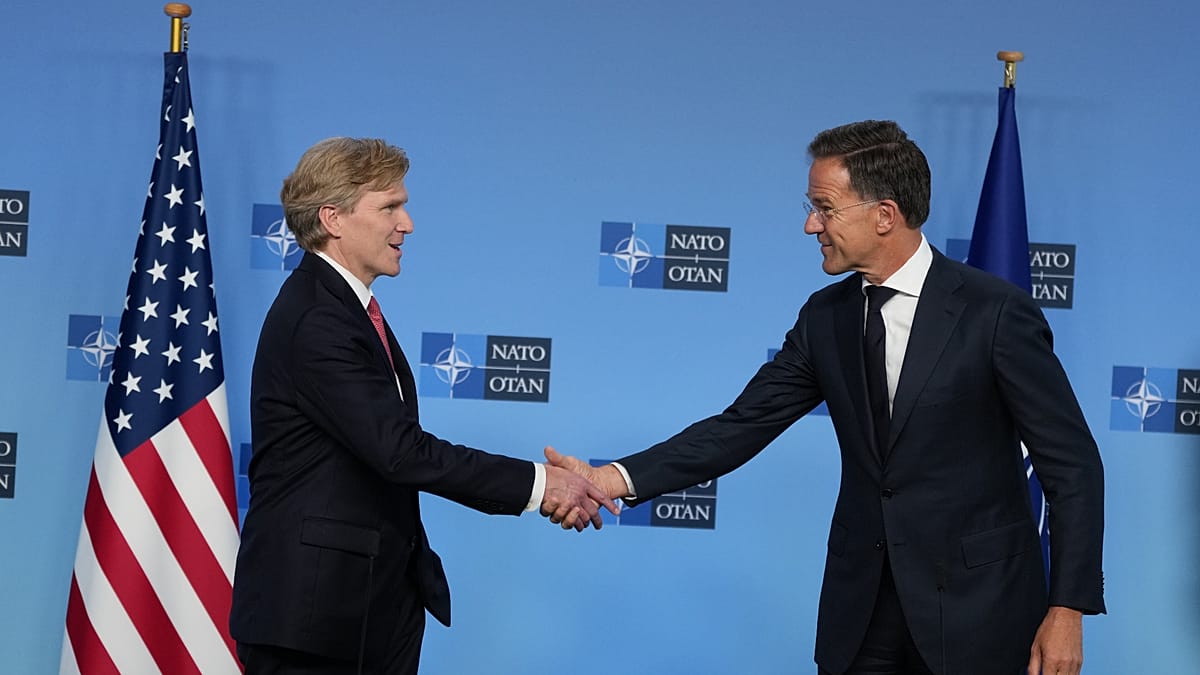
The talks, led by US Undersecretary of Defense Elbridge Colby, brought together representatives from Sweden, Finland, Poland, Germany and the Netherlands – a group that first convened in Norway last year and is informally known as the Bergen Group. Notably absent were France, the United Kingdom, and the three Baltic states of Estonia, Latvia and Lithuania.
Fabrice Pothier, CEO of geopolitical consultancy Rasmussen Global and a former NATO policy planner, described the arrangement as “very toxic for an alliance that relies on collective play.” He added: “Clearly this is about the US having favourites.”
The Bergen Group was created to discuss NATO’s evolution towards what some call “NATO 3.0” – a concept, largely shaped in Washington, in which European allies take the lead on conventional defence of the continent. Under this model, the US would scale back its traditional role, withdrawing capabilities such as bombers, submarines and personnel it currently contributes to the alliance.
NATO officials have sought to downplay the significance of the subgroup, noting that “it’s not unusual for groups of Allies to meet in smaller formats.” But critics argue that such arrangements risk categorising members into “good Europeans” and “bad Europeans,” while reinforcing Washington’s influence over alliance decisions.
Why these five, and not others?
Pothier acknowledged that smaller groups can sometimes advance new ideas within large organisations, citing the use of informal “non-papers.” However, he questioned why the US had chosen these particular countries, given that they are not the only ones meeting key defence criteria.
“These countries bring a certain desired mass – ground, air and maritime,” he said. “But why is the US picking some rather than others when this is not a policy exercise?”
He warned that the creation of subgroups could introduce the notion that the US might be more inclined to defend certain allies over others. “You introduce the notion that the US favours some allies and would be likely to defend those allies ahead of the rest,” Pothier said.
He suggested that President Donald Trump’s “grudge” over the UK and France’s initial refusal to join the war in Iran, as well as France’s push to buy European military equipment, could explain their exclusion. British diplomats, however, rejected the suggestion that London was being sidelined, insisting they remain in regular contact with their US counterparts.
Baltic absence raises eyebrows
The exclusion of the Baltic states is particularly striking. Estonia, Latvia and Lithuania are among NATO’s biggest defence spenders as a share of GDP and sit on the alliance’s frontline with Russia. The region has faced repeated hybrid attacks, including drone incursions, arson and sabotage.
Their absence follows Colby’s visit to NATO headquarters in Brussels in August, when, according to NATO sources, he urged Baltic officials to adopt a less confrontational tone towards Russian aggression. One source said Colby cited renewed US efforts to end the war in Ukraine as a reason to tone down talk of being at “war” with Russia.
Washington has also invited Russian President Vladimir Putin to the G20 summit in Miami in December, at a golf resort owned by Trump. “It's probably the first time since NATO enlargement that there’s a split between the US and Baltics,” said Pothier. “We know that this US administration is far less fazed by Russian aggression.”
The situation for the Baltics remains tense due to ongoing drone and other shadow war hostilities. Government, military and civilian populations are on constant alert. On Saturday, Vilnius airport was forced to shut down for around an hour, prompting the deployment of two NATO jets in response to a suspected drone intrusion from Belarus.
A source confirmed that the Lithuanian government has invited Colby to visit the region to witness the ongoing airspace violations first-hand. “We say what we see,” a Baltic diplomat told Euronews, defending their forward military posture. The diplomat added that Moscow must understand the cost of its shadow war to be “harsh.”
EU Defence Commissioner Andrius Kubilius, a former Lithuanian prime minister, also called for a stronger response at the Euronews Defence and Space Summit last week. “If we are hit by Russian hybrid attacks, our answers should be as painful as that attack,” Kubilius said.
The debate over the Bergen Group comes as Europe grapples with its own defence ambitions, including tensions over the EU Space Shield and broader questions about strategic autonomy. The outcome of these discussions will shape not only NATO’s future but also the credibility of European security guarantees.