Washington’s dual-track approach to Iran—military pressure alongside diplomatic overtures—intensified this week as US forces fired on an Iranian oil tanker in the Gulf of Oman. The incident came hours after President Donald Trump claimed “very good talks” with Tehran and suggested a peace deal was near, while simultaneously threatening to resume bombing if Iran did not agree to terms.
US Central Command stated that a fighter jet shot out the rudder of the Iranian-flagged vessel after it ignored warnings and attempted to sail toward an Iranian port in violation of the US blockade. The action underscores the fragility of the Strait of Hormuz, through which roughly a fifth of the world’s oil normally passes. Since late February, Iran has effectively halted commercial traffic there, leaving vessels bottled up in the Persian Gulf.
Diplomatic Maneuvering
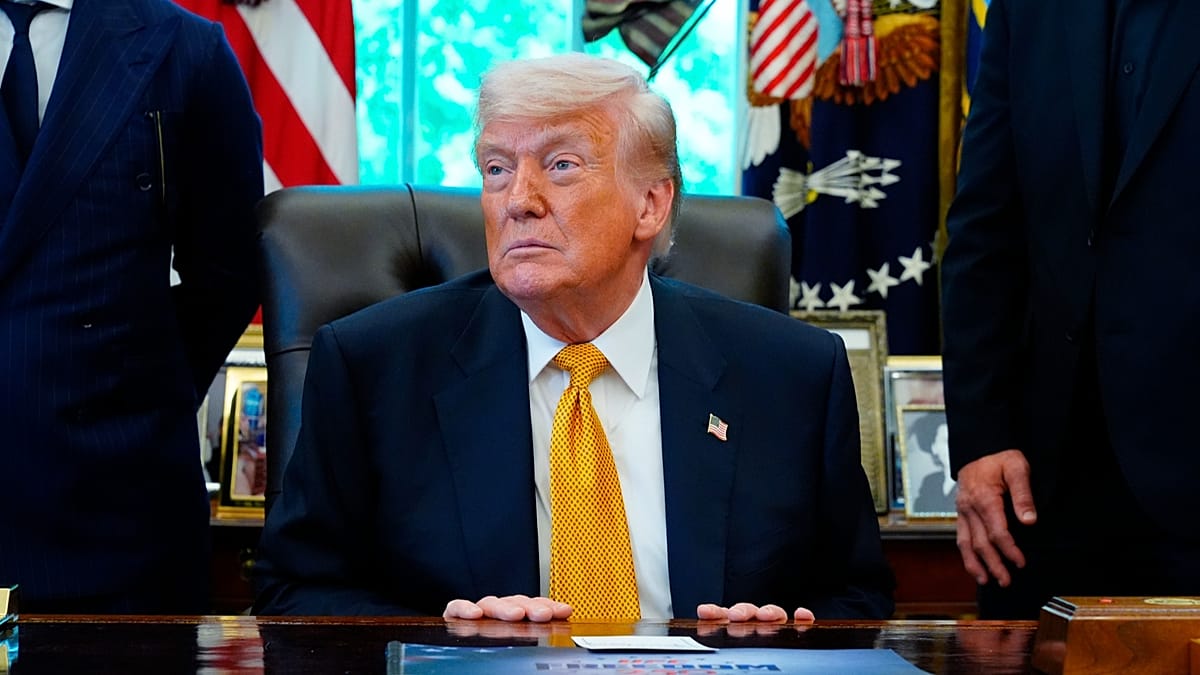
Trump told reporters in the Oval Office on Wednesday that Iran “want to make a deal badly” but reiterated that any agreement must prevent Tehran from acquiring nuclear weapons. When asked about a deadline for Iran’s response, he replied: “Never a deadline. It’ll happen. It’ll happen. But never a deadline.”
However, earlier that day on Truth Social, Trump threatened: “If they don’t agree, the bombing starts, and it will be, sadly, at a much higher level and intensity than it was before.”
Iran has yet to respond formally to the US proposal—a one-page memorandum—but chief negotiator Mohammad Bagher Ghalibaf warned that Washington is seeking to force the Islamic Republic’s “surrender through a naval blockade, economic pressure and media manipulation.” Iranian Foreign Ministry spokesman Esmaeil Baqaei told local media that the plan is under review and that Tehran will communicate its position to Pakistan after finalising its views.
It remains unclear how the one-page memorandum differs from the 14-point plan Iran submitted last week. Provisions under discussion include a moratorium on Iranian uranium enrichment, lifting of US sanctions, distribution of frozen Iranian funds, and reopening the Strait of Hormuz for shipping.
European Implications
The standoff has direct consequences for European energy security and trade. Oil prices have skyrocketed as the risk of attacks in the waterway persists. Kaho Yu, head of energy and resources at risk intelligence company Verisk Maplecroft, said: “Refiners, shippers and commodity traders will remain cautious until there is clearer evidence that Hormuz disruptions will not re-escalate.”
European capitals are watching closely. The EU has already prepared for a potential trade showdown with Washington, as Trump has threatened 25% tariffs on European cars. The bloc’s finance ministers have urged caution, and former EU foreign policy chief Catherine Ashton recently argued that Trump views trade as a weapon, to which Europe must adapt. Meanwhile, the US has paused its Hormuz naval escort mission, citing progress in talks—a move that could leave European shipping more exposed.
For now, the situation remains volatile. With no deal in sight and military posturing continuing, the risk of further escalation—and its ripple effects on global energy markets and European economies—remains high.