The United States military has confirmed that a strike on a suspected drug-smuggling vessel in the Pacific Ocean on Sunday killed two people. The operation, carried out by US Southern Command (SOUTHCOM), targeted a boat that was allegedly operating along established narco-trafficking routes in the Eastern Pacific.
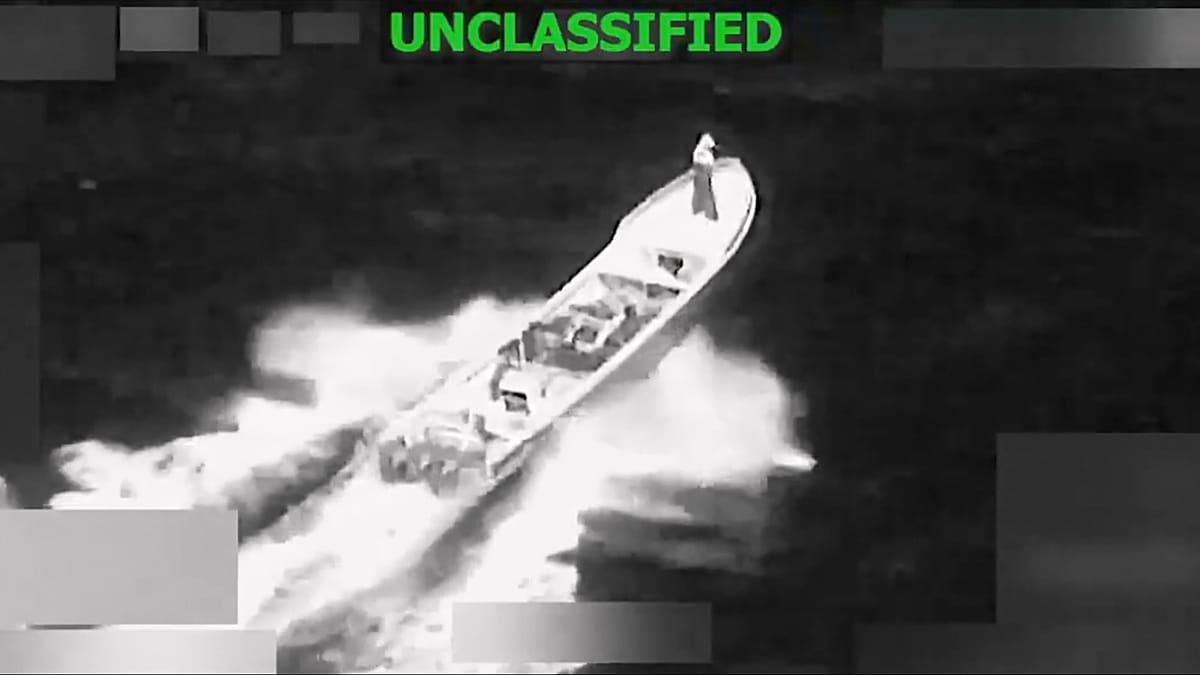
In a statement posted on X, SOUTHCOM said that "confirmed intelligence revealed the vessel's active involvement in narco-trafficking." The command added that the strike was "a clear and decisive reminder that SOUTHCOM is taking the fight directly to the cartels." A grainy black-and-white video released alongside the statement shows a boat moving through the water before a large explosion.
The strike is part of Operation Southern Spear, launched in early September under President Donald Trump, who has argued that Washington is effectively at war with drug cartels operating out of Latin America. According to an AFP tally, more than 200 people have been killed in such strikes in the Eastern Pacific and the Caribbean Sea since the operation began.
European concerns over extrajudicial strikes
The escalating US military campaign has drawn attention in European capitals, where officials are increasingly concerned about the legal and humanitarian implications of targeting vessels without public evidence of their involvement in drug trafficking. The Trump administration has not provided definitive proof that the boats struck were actually carrying narcotics, raising questions about the rules of engagement and the potential for civilian casualties.
European Union foreign policy officials have previously urged the United States to adhere to international law, including the law of the sea, when conducting such operations. The strikes occur in international waters, where the principle of freedom of navigation is protected, but the use of lethal force against civilian vessels is subject to strict legal scrutiny.
Human rights organisations, including several based in Brussels and Geneva, have called for independent investigations into the strikes. They argue that the lack of transparency could undermine regional stability and set a dangerous precedent for other nations, including Russia and China, which have their own maritime security operations.
The campaign also has implications for European efforts to combat drug trafficking, which is a shared concern across the continent. The European Monitoring Centre for Drugs and Drug Addiction, headquartered in Lisbon, has noted that cocaine seizures in Europe have reached record levels, with most of the supply originating from Latin America. However, European agencies have traditionally relied on intelligence-led interdiction and judicial cooperation rather than military strikes.
Some European analysts have pointed out that the US approach could disrupt international cooperation in the fight against drug cartels. "The cartels are a transnational threat, and addressing them requires coordinated legal and law-enforcement efforts, not just military action," said a security expert at the European Policy Centre in Brussels. "Unilateral strikes risk alienating the very partners needed for a sustainable solution."
The strikes have also raised concerns about the impact on migration and regional stability in Latin America, which in turn affects European foreign policy priorities. The EU has been a major donor to development and security programmes in the region, and any escalation of violence could complicate those efforts.
As the US campaign continues, European governments are likely to press for greater transparency and accountability. The issue may also feature in transatlantic discussions on security and defence, particularly as the EU seeks to strengthen its own maritime security capabilities in the Atlantic and the Mediterranean.
For now, the human cost of the operation remains a point of contention. With more than 200 deaths reported, the lack of public evidence for each strike has become a growing concern for international observers, including in Europe, where the rule of law is a core principle of foreign policy.