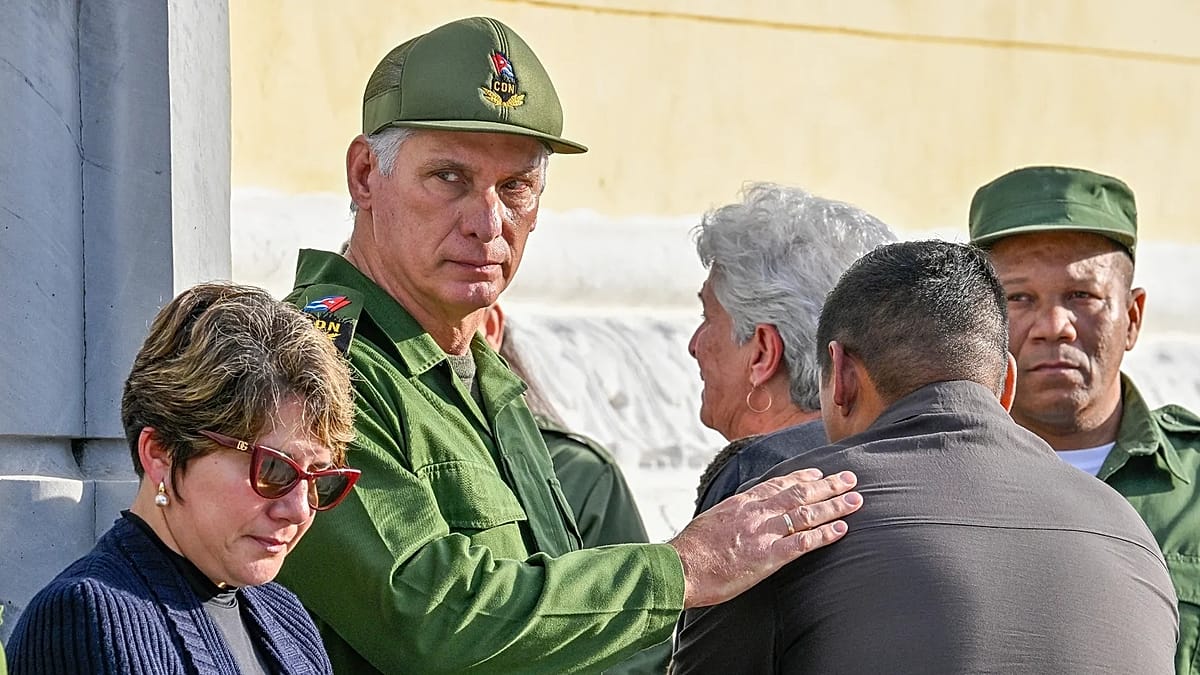
The Trump administration has escalated its campaign against Cuba's leadership by imposing sanctions on President Miguel Díaz-Canel, his wife, and three other individuals, including a son of former President Raúl Castro. The measures, announced on Thursday, freeze any property or bank accounts held in the United States by those designated, though analysts doubt significant assets exist there.
US Secretary of State Marco Rubio, a Cuban-American who has long advocated for a hard line against Havana, signed the statement justifying the sanctions, claiming the individuals “direct or fund the regime and its efforts to mobilise its radical revolutionary movements in the United States and around the world.” The move drew swift condemnation from Havana, with Díaz-Canel calling it “political blindness” that “adds to the coercive measures applied in recent weeks against our country, designed to harm the Cuban people.”
Sanctions Target Castro Family Members
Among those listed is Alejandro Castro Espín, the only son of former President Raúl Castro and Vilma Espín. He served as an adviser to Cuba's Defense and National Security Commission and was present during the historic March 2016 meeting between Raúl Castro and then-US President Barack Obama in Havana. His son, Raúl Alejandro Castro Calis, was also included in the sanctions.
Richard Feinberg, a former US national security adviser on Latin America and professor emeritus at the University of California, San Diego, told European Pulse that it is “pretty unlikely” that Cuba's president or others have assets in the US financial system. “These sanctions could be seen as preliminary to an intervention or increasing pressure on the regime to cut a deal,” Feinberg said, adding that the rhetoric from Trump and Rubio “could take you in either direction.”
The sanctions follow Trump's signing of an executive order expanding measures against the island, part of a broader strategy that has included an energy blockade preventing petroleum supplies to Cuba. That blockade has contributed to severe blackouts, food shortages, and economic collapse across the island this year. The US also announced criminal charges against Raúl Castro last month, adding weight to Trump's threats of military action.
Trump, asked on Thursday whether the sanctions were meant to accelerate Cuba's collapse, told reporters, “We just want them to be a nicely run country.” He described Cuba as “starving” with “no energy, no oil, no money, nothing,” and suggested it could become “beautiful resorts.” When pressed on whether the island is close to collapsing, he said, “It's sort of collapsed,” and added that “we're going to handle that as soon as we've finished” military operations in Iran. “I like to do one thing at a time,” he said.
Trump has previously pledged a “friendly takeover” of Cuba if its leadership does not open the economy to American investment and expel US adversaries. Rubio, who has maintained a tough stance against Cuba's socialist regime, has expressed scepticism about reaching a diplomatic solution with the current administration. He has defended the escalating sanctions, the largest of which targets Grupo de Administración Empresarial S.A., a business conglomerate operated by the Cuban Revolutionary Armed Forces.
Díaz-Canel responded on X, accusing Trump of making “new threatening statements against Cuba” and saying “these measures are aimed at reinforcing the blockade and escalating the conflict between Cuba and the United States.” He added, “The aggression and perversion of the US government will clash with our resolve to confront the worst-case scenarios and resist the imperial onslaught.” Cuba's foreign minister described the sanctions as “the latest example of the US interventionist plan to portray Cuba as a threat to US national security.”
The European Union has not yet formally responded to the latest US actions, but the bloc has historically opposed extraterritorial sanctions like the US embargo on Cuba. The situation has already prompted Spanish hotel groups Meliá and Iberostar to exit Cuba as US sanctions bite, highlighting the economic ripple effects across European businesses.



