The United States military launched a fresh wave of strikes across southern and western Iran overnight on Monday, escalating a confrontation that risks disrupting global oil shipments through the Strait of Hormuz. The operation, which began at 2100 GMT on Sunday, follows roughly 140 strikes the previous night and marks a significant intensification of hostilities between Washington and Tehran.
US Central Command (CENTCOM) said the latest strikes hit “dozens of targets,” including Iranian military air-defense systems, coastal radar sites, missile and drone capabilities, and small boats. The stated objective is to “degrade Iran’s ability to continue attacking international shipping flowing through the Strait of Hormuz.”
Iranian state media reported that strikes targeted large areas across southern and western Iran, including Qeshm Island and the port city of Bandar Abbas near the strait, as well as Khuzestan province, which borders Iraq. Additional strikes hit Farur Island, east of Qeshm in the Gulf, where officials said a telecommunications worker was killed and two others wounded. “Following the attack of the American enemy on Monday morning… one person was martyred and four others were injured,” the official IRNA news agency reported.
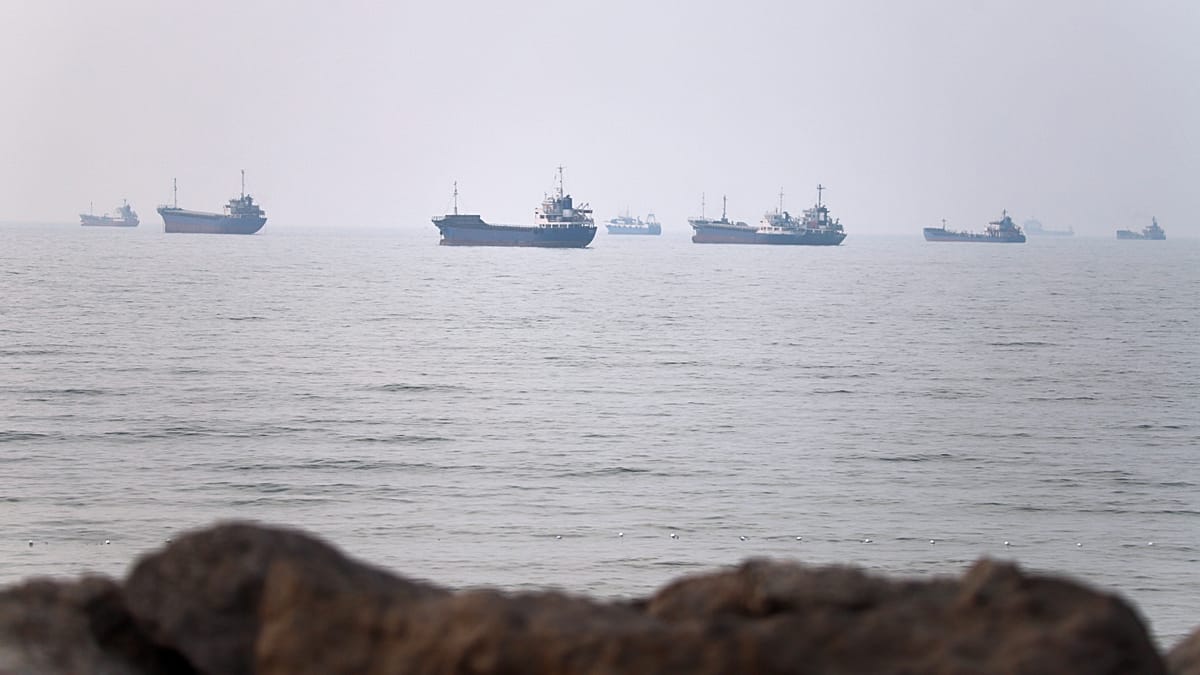
The renewed fighting began early Sunday when Iran attacked a commercial vessel in the Strait of Hormuz, forcing its crew to abandon ship after it caught fire. Iran’s Revolutionary Guards subsequently announced that “the Strait of Hormuz will be closed until further notice and until the end of American interventions in this region,” according to IRNA. CENTCOM countered on social media that the strait remains “open to all vessels seeking to lawfully transit.”
Regional Fallout and European Concerns
Iran’s Revolutionary Guards also struck targets in Bahrain, Jordan, and Kuwait overnight, according to Iranian state media. Kuwait reported that three of its northern land border posts were damaged in an attack and that an offshore drilling platform was hit by a hostile drone, injuring one person. Air raid sirens sounded again in Bahrain on Monday, with the interior ministry urging residents to take shelter.
The escalation comes as an interim agreement between Washington and Tehran, aimed at ending their broader war, appears increasingly fragile. The conflict has already drawn in Gulf states and raised alarms across Europe, which relies heavily on oil and liquefied natural gas transiting the Strait of Hormuz. The International Energy Agency has warned that a blockade of the strait would devastate European economies, as the IEA chief cautioned in a recent analysis.
European leaders, already grappling with energy security concerns following Russia’s war on Ukraine, now face the prospect of a prolonged disruption in Gulf energy supplies. The situation also complicates NATO’s posture, as Trump’s Iran strikes overshadowed a recent NATO summit where allies pledged record defense spending.
Meanwhile, the broader regional instability has coincided with other crises, including Iran burying its late Supreme Leader amid renewed clashes that threaten a fragile ceasefire. For European policymakers, the dual challenge of managing transatlantic relations and protecting continental energy interests has never been more acute.
As the standoff continues, the human cost is mounting. Iranian authorities reported that Monday’s strikes killed at least one civilian and injured several others. The US military has not commented on civilian casualties, but CENTCOM reiterated that its operations are focused on military targets and aimed at restoring freedom of navigation in one of the world’s most critical maritime chokepoints.