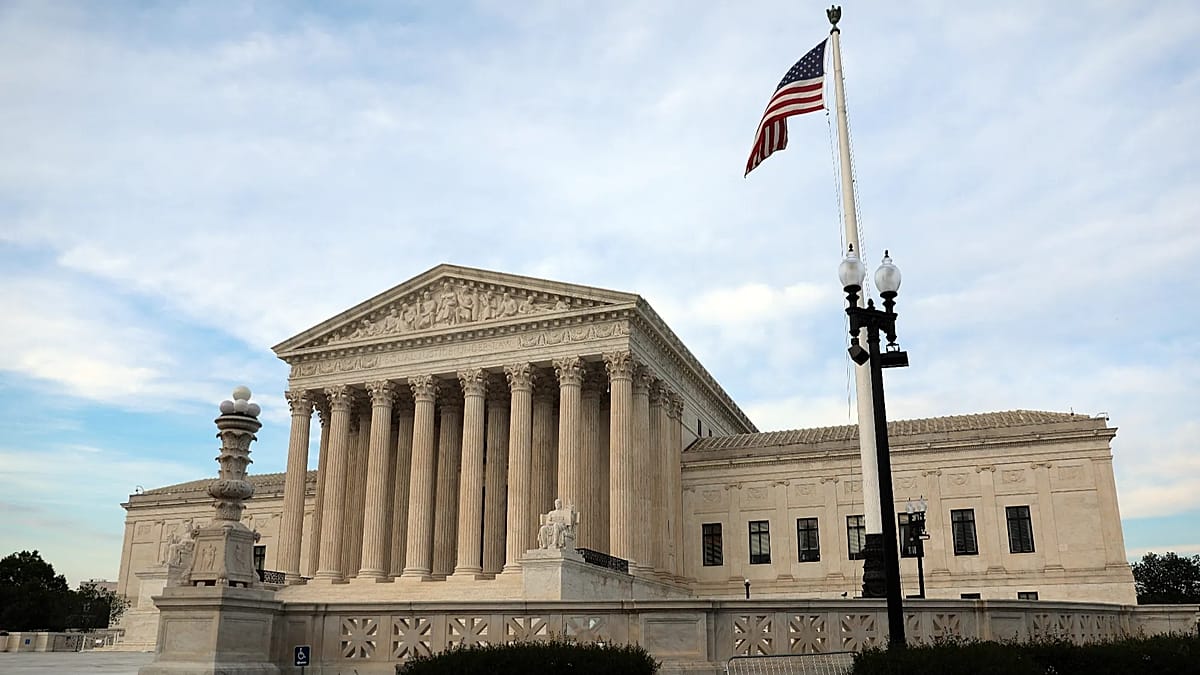
The US Supreme Court on Monday turned down President Donald Trump's emergency request to impose new restrictions on mail-in voting for the upcoming midterm elections, bringing a swift end to a last-minute legal battle as ballots were already being distributed in several states.
The decision means states can continue sending out mail ballots under the same rules they have used for years—procedures that have accounted for roughly a third of all votes cast in recent federal elections. The ruling is a significant setback for Trump, who has repeatedly claimed without evidence that mail voting is vulnerable to fraud.
A narrow ruling with broader implications
The Court's brief order gave no detailed reasoning, but the majority indicated that the administration's push to implement the restrictions this year would likely fail in lower courts. Justices Samuel Alito and Clarence Thomas dissented, with Alito arguing that the Postal Service has broad authority to regulate the mail and likely has the power to enforce the restrictions.
Justice Brett Kavanaugh, while agreeing that the restrictions should not take effect for the midterms, suggested he might side with the administration if the issue returns to the Court later. The ruling does not settle the legality of the plan, leaving the door open for future challenges.
The administration had sought to require states to adopt a uniform envelope style and submit voter lists to an online portal, with the Postal Service empowered to refuse delivery to non-compliant states. Election officials across the country said such a sweeping overhaul was impossible in the weeks before the election, especially as Alabama, North Carolina, and Wisconsin had already begun mailing ballots.
In states that vote predominantly by mail, the decision was met with relief. Washington's Secretary of State Steve Hobbs, a Democrat, said the ruling allows officials to continue working toward a safe and accurate election without having to upend processes to meet unrealistic requirements. Arizona's Democratic Secretary of State Adrian Fontes echoed that sentiment, stressing that access and security are not mutually exclusive.
Utah's Republican Lieutenant Governor Deidre Henderson, who oversees elections in her state, said on social media that Utahns can now have confidence that the 2026 election will proceed as normal.
The White House and Justice Department did not immediately respond to requests for comment, but they have previously framed the restrictions as commonsense measures to protect election integrity. Voting rights groups and Democratic state officials challenged the plan in court, arguing that the president lacks constitutional authority to set election rules that would virtually eliminate mail voting on the eve of a major election.
A whistleblower report warned that the new requirements could lead to millions of ballots never being sent, as the not-yet-operational portal had a single bar code error that could invalidate an entire batch. The League of Women Voters, a plaintiff in the case, called the proposal an extraordinary attempt to interfere with voting and said it would have thrown elections into chaos. CEO Celina Stewart said voters should never be caught in the middle of political power warfare.
Lower courts had already blocked the plan, including a preliminary injunction from a judge nominated by Trump himself. The administration appealed to the Supreme Court, arguing that federal control of the Postal Service gives it the authority to set rules for mail ballot handling. While the federal government won an early procedural victory, the justices declined to rule on the legality of the plan.
For now, the ruling provides a measure of stability for the midterm elections, but the broader debate over mail voting is far from over. As the US heads into a pivotal vote for control of Congress, the decision underscores the ongoing tensions between federal authority and state election administration—a theme that resonates beyond American borders, as European observers watch how democratic processes evolve in the world's largest economy.