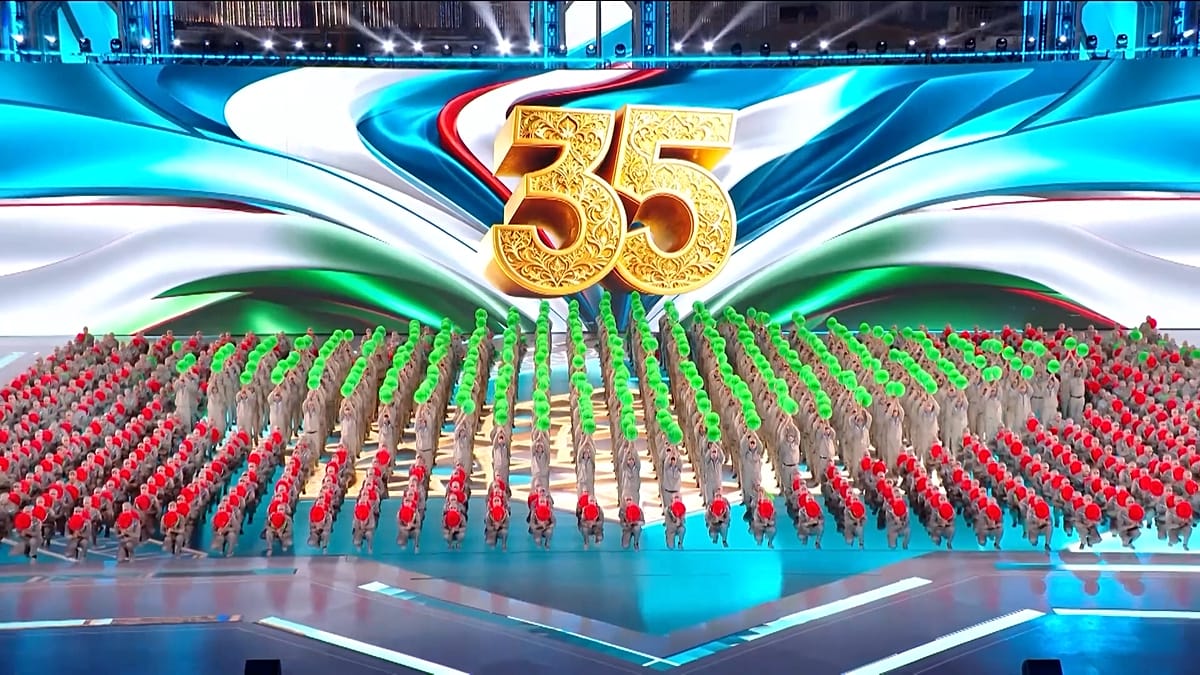
Uzbekistan celebrated the 35th anniversary of its independence on September 1 with a spectacular event in New Tashkent, the capital's newly developed district. The festivities combined live music, traditional and contemporary dance, performances by international artists, and a large-scale drone show that lit up the night sky.
The celebration reflects a broader transformation underway in the Central Asian nation, which has been opening up to the world since Shavkat Mirziyoyev became president in 2016. Under his leadership, Uzbekistan has pursued economic liberalisation, improved regional relations, and sought to attract foreign investment, including from European partners.
A showcase of reform and openness
The New Tashkent venue itself symbolises the country's ambitions. The district is part of a major urban development project designed to modernise the capital and accommodate future growth. By hosting the independence day celebrations there, the government underscored its commitment to a forward-looking agenda.
The drone show, a highlight of the evening, featured hundreds of synchronised drones forming images of national symbols, historical landmarks, and messages of unity. Such displays have become increasingly popular across the region, but Uzbekistan's effort was notable for its scale and precision.
International artists joined local performers, adding a global flavour to the proceedings. This mix of local tradition and international appeal mirrors Uzbekistan's broader strategy of engaging with the world while preserving its cultural heritage.
The anniversary comes at a time when Uzbekistan is deepening ties with Europe and its neighbours. Earlier this year, Uzbekistan and Azerbaijan signed a friendship treaty aiming to boost bilateral trade to $1 billion, a sign of growing regional cooperation. European leaders have also taken note of Tashkent's reform drive, with several EU countries expanding diplomatic and economic exchanges.
For Europeans, Uzbekistan's trajectory offers a compelling case study in post-Soviet transformation. The country has moved away from decades of isolation, embracing a more pragmatic foreign policy and seeking to position itself as a hub between Asia and Europe. Its independence day celebrations are not just a national holiday but a statement of intent.
As the drone lights faded over New Tashkent, the message was clear: Uzbekistan is proud of its past but focused on the future. For a continent that values stability and cooperation, the continued evolution of this Central Asian state remains a story worth watching.