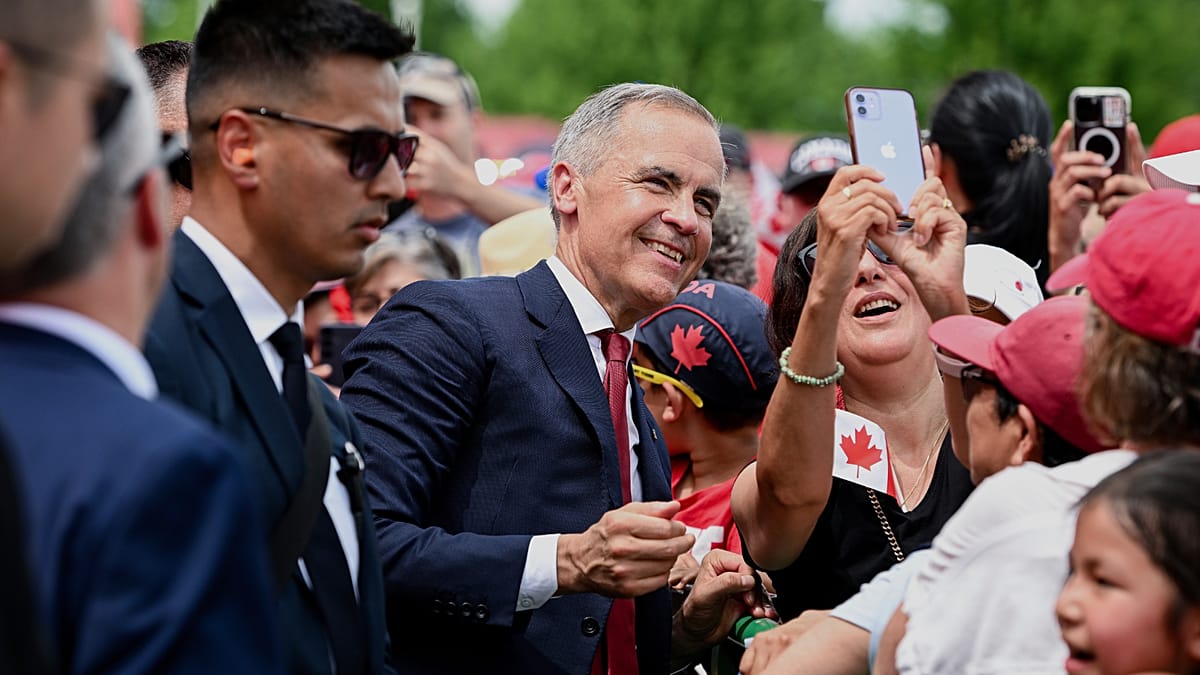
In downtown Vancouver, the reaction to Prime Minister Mark Carney's proposal for Canada to pursue an 'associate member' status with the European Union was a mix of cautious optimism and pragmatic realism. Carney, who made the announcement during a visit to the city, framed the initiative as a strategic hedge against over-dependence on the United States, arguing that deeper institutional and economic ties with Europe would bolster Canada's sovereignty and global standing.
"We need to diversify our partnerships, and Europe is a natural partner," Carney told a small audience, adding that the EU shares Canada's values on democracy, rule of law, and multilateralism. The proposal, which would be the first of its kind, has already sparked discussions in Brussels and Ottawa about what such a status might entail.
On the streets of Vancouver, residents offered a range of perspectives. "I think it's a great idea," said Maria, a local café owner. "We can't put all our eggs in the American basket. Europe has a lot to offer, and we have a lot to offer them." Her sentiment was echoed by several others, who saw the move as a way to strengthen Canada's independent voice on the world stage.
However, many were quick to note the stark asymmetry in trade volumes. "The US is our biggest partner by far," pointed out James, a logistics worker. "The EU is important, but it's not even close. I just wonder how much this will really change things." According to recent data, Canada's trade with the EU accounts for roughly 10% of its total trade, compared to over 60% with the US.
What 'associate membership' could mean
The concept of EU associate membership is still being defined, but it would likely involve closer regulatory alignment, enhanced market access, and possibly participation in certain EU programs, such as Erasmus+ for student exchanges. Carney has been clear that full membership is not on the table, as he ruled out joining the bloc in a recent interview, citing geographic and political realities.
The proposal has not been without controversy. In Washington, President Donald Trump has reportedly threatened tariffs in response, viewing the move as a challenge to US influence. Brussels, however, has sought to downplay such concerns, with officials insisting that the bid is not a hostile act but rather a natural deepening of an existing partnership.
For many Vancouverites, the geopolitical dimension is less important than the practical benefits. "If it means more options for trade, more cultural exchange, and maybe easier travel, I'm all for it," said Sarah, a university student. "But I don't think it's going to change our relationship with the US overnight."
Others expressed skepticism about the timing. "Carney is a former central banker, he knows the numbers," said Tom, a retired economist. "This is a long-term play, not a quick fix. The EU is a complex bureaucracy, and negotiating a new status could take years."
The proposal has also drawn comparisons to other countries exploring closer ties with the EU. Australia, for instance, has cooled on the associate member idea, preferring to focus on a traditional free trade agreement. That has led some analysts to question whether Canada's ambitions are realistic.
Despite the uncertainties, the mood in Vancouver was largely positive. "I think it's a bold move," said Elena, a recent immigrant from Europe. "It shows that Canada is thinking about its future beyond the US. And for me, it would make me feel more connected to my home continent."
As the proposal moves forward, the coming months will be crucial. Ottawa and Brussels are expected to begin formal discussions, and the outcome could reshape Canada's place in the world. For now, Canadians like those in Vancouver are watching closely, hopeful but aware of the challenges ahead.