The international jury of the Venice Biennale resigned on Thursday, just days before the world’s oldest and most prestigious contemporary art fair opens its doors. The five-member panel, led by president Solange Farkas and including Zoe Butt, Elvira Dyangani Ose, Marta Kuzma, and Giovanna Zapperi, offered no explanation for the highly unusual step.
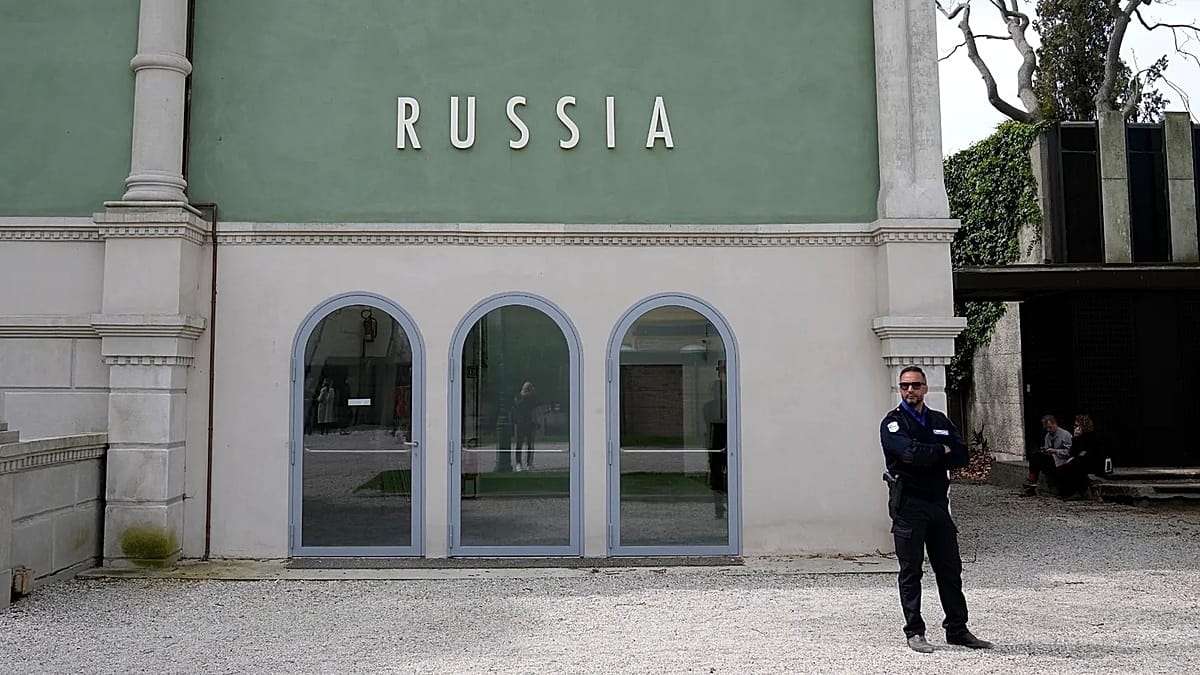
The resignations come amid a deepening political dispute between Italy’s government and the Biennale’s leadership over Russia’s participation in the 60th International Art Exhibition. Cultural Ministry officials visited the Biennale on Wednesday to gather information about the reopening of the Russian Pavilion, which has been closed since Russia’s full-scale invasion of Ukraine in 2022.
Italian Prime Minister Giorgia Meloni, asked about the resignations, reiterated that the government did not agree with the Biennale’s decision to allow Russia to participate. However, she acknowledged the Biennale’s autonomy. “I don’t know if the resignations are connected to the Culture Ministry’s decision to send inspectors to Venice,” she said.
Cabinet Minister Matteo Salvini welcomed the jury’s departure, calling it a “great idea” to let the exhibition’s spectators decide the winners. “So it will be an autonomous and democratic Biennale,” he said. “It doesn’t get any better than that.”
EU Funding Cut and Political Pressure
Last week, the European Union slashed a €2 million grant to the Biennale over Russia’s participation. It is the first time since the 2022 invasion that Russia has taken part in the exhibition. Russian artists withdrew in 2022, and the country did not present an exhibition in 2024, instead lending its permanent pavilion to Bolivia. Russia last participated in the International Art Exhibition in 2019.
The Biennale defended its position in a statement, saying it “does not have the authority to prevent a country from participating. Any country recognised by the Italian Republic may request to participate.” Since Russia owns the pavilion built in 1914 in the historic Giardini, it was required only to notify the Biennale of its request.
“La Biennale di Venezia rejects any form of exclusion or censorship of culture and art,” the statement continued. “The Biennale, like the city of Venice, continues to be a place of dialogue, openness and artistic freedom, encouraging connections between peoples and cultures, with the constant hope for an end to conflicts and suffering.”
The jury was due to select winners of the prestigious Golden Lion and other prizes on the official opening day, 9 May. Following the resignations, the Biennale announced that visitors will now choose the winners of two awards: Best Participant in the curated exhibition “In Minor Keys” and Best National Participation among the 100 national pavilions. The awards will be presented on the closing day, 22 November.
The controversy highlights the ongoing tension between cultural institutions and political authorities over Russia’s presence in European events. The EU’s decision to cut funding reflects broader concerns about legitimising Russia’s cultural diplomacy while the war in Ukraine continues. For more on the EU’s stance, see EU Must Not 'Humiliate' Itself by Seeking Direct Talks with Russia, Kallas Warns.
The Biennale, which comprises a main exhibition alongside national pavilions curated separately by participating nations, remains a symbol of artistic freedom and international dialogue. Yet this year’s edition is overshadowed by geopolitical disputes that threaten to undermine its founding principles.