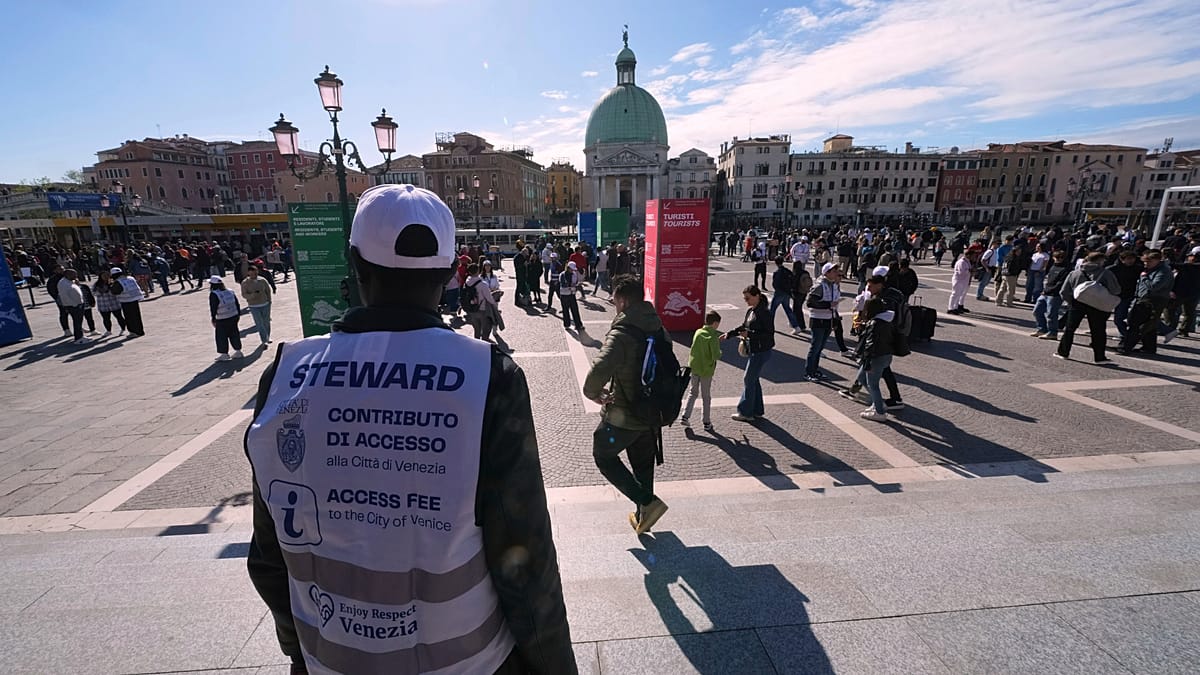
Venice, one of Europe's most iconic yet fragile destinations, is considering a dramatic increase in its day-tripper entry fee. Newly elected mayor Simone Venturini has announced plans to ask the Italian government for permission to raise the fee to €50 on certain high-traffic days, aiming to curb the overwhelming tide of tourists that threatens the city's delicate infrastructure and quality of life.
The current system, introduced in 2024, charges €5 for advance bookings and €10 for last-minute entries. But data from the first 42 days of application this year, reported by Italian newspaper Il Gazzettino, reveals that less than half of the 514,710 contributions paid were at the discounted rate. Of those, 245,503 visitors paid €5, while 268,207 paid €10—a sign that the price differential is too small to encourage advance planning or discourage impulsive visits.
"The problem is the numbers," Venice's budget councillor Michele Zuin told Italian press. "There's not much difference between €5 and €10. If it were more significant, the effect would be different."
Hospitality Industry Backs the Hike
The proposal has found support among local hospitality groups. Daniele Minotto, director of Venice's Association of Hoteliers (AVA), welcomed the move. "Venturini's proposal is welcome. This could lead to a way to apply the fee as an incentive/disincentive for the most problematic days," he said. "With a sliding rate and a much higher cap, applied every day, we could impact traffic." Minotto also noted that €50 is not excessive compared to entry fees for major archaeological sites worldwide.
Councillor Zuin emphasized that increased revenue from the tax could directly benefit residents. "If this money increases, we will invest it to offset the costs that citizens and businesses incur for tourism," he said.
Year-Round Extension Under Consideration
The current trial, which runs over 60 days in April, May, June, and July during peak hours from 8:30 am to 4 pm, is set to conclude after this year. "This will be the third and final year of testing. After the summer, we'll have to make decisions to give the measure a more definitive shape," Zuin confirmed. The council is evaluating whether to extend the fee to the entire year or include additional dates, such as during the Venice Carnival, when the city is exceptionally crowded.
Exemptions remain for residents, Venetian-born visitors, students, workers, and tourists with hotel or lodging reservations. Visitors can reserve their day on a dedicated platform, paying €10 for last-minute access under current rules.
The debate over Venice's entry fee comes amid broader discussions about managing tourism in European heritage cities. The city's Biennale, a major cultural event, continues to draw global attention, as seen in recent protests over Russia's participation at the EU Commission presses Venice Biennale over Russia's participation. Meanwhile, the Venice Biennale 2026 promises to dazzle with avant-garde performances.
As Venice seeks to balance its cultural vibrancy with sustainable tourism, the proposed fee hike signals a more aggressive approach to managing visitor numbers. Whether €50 will be enough to deter day-trippers—or simply become another cost absorbed by tourists—remains to be seen.