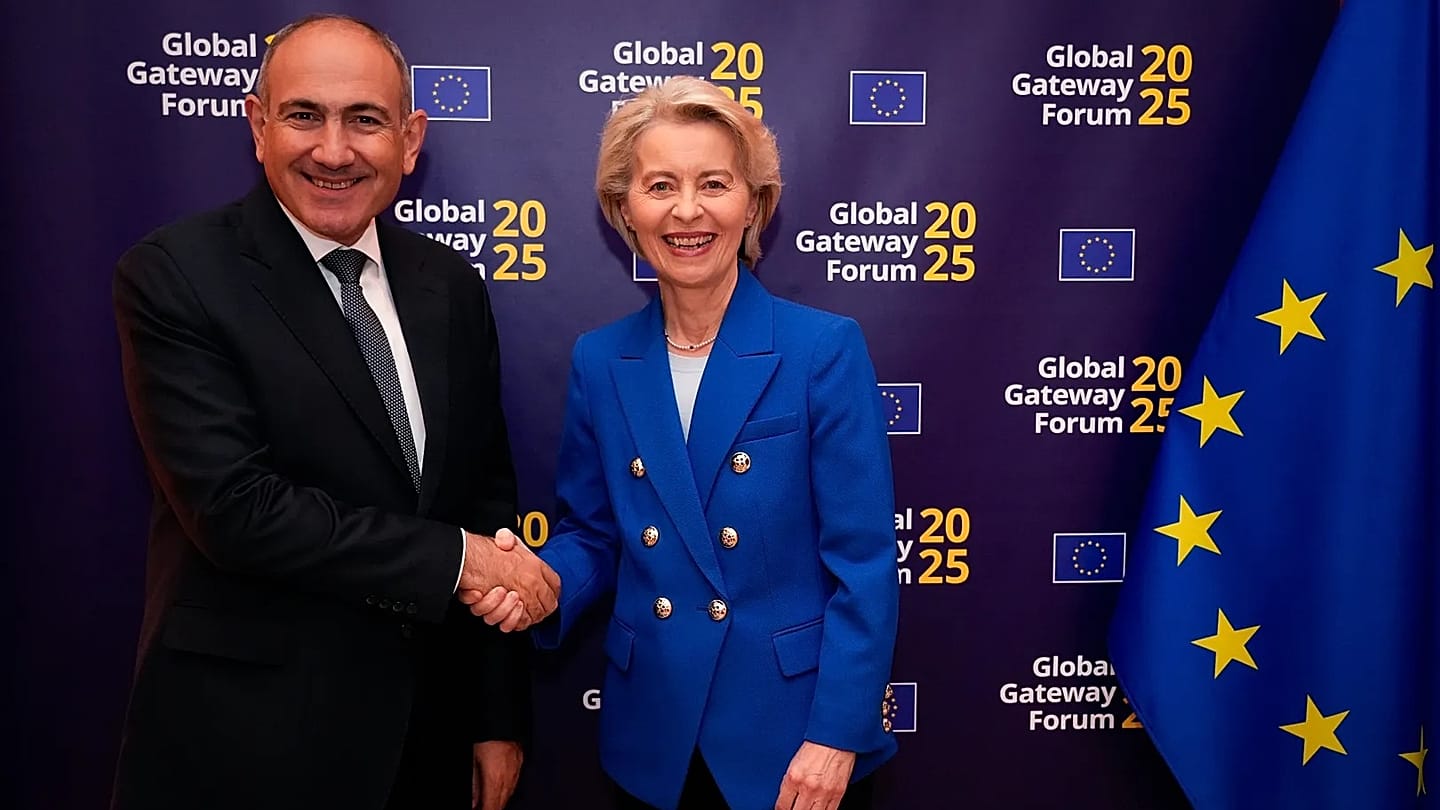
European Commission President Ursula von der Leyen will travel to Yerevan in the coming days to meet Prime Minister Nikol Pashinyan, sources confirmed. The visit is designed to capitalise on Armenia's recent pro-European Union vote, which handed Pashinyan a clear mandate to steer the country closer to Brussels.
The trip comes as the EU prepares to roll out a support package for Armenia, aimed at strengthening democratic institutions, boosting economic resilience, and deepening political dialogue. The package is part of a broader strategy to engage with countries in the South Caucasus that are seeking closer ties with Europe, particularly as Russia's influence in the region wanes.
Armenia's Shift Towards Europe
Armenia's pivot towards the EU has been accelerating since the 2020 Nagorno-Karabakh war, which exposed the limits of its traditional alliance with Russia. Pashinyan's government has since pursued a multi-vector foreign policy, balancing relations with Moscow, Tehran, and Brussels. The recent referendum, in which a majority of Armenians voted in favour of EU integration, has given the government a strong popular mandate to pursue this course.
Von der Leyen's visit is expected to focus on concrete deliverables, including visa liberalisation talks, trade facilitation, and support for Armenia's energy transition. The EU has already been a key partner in Armenia's reform efforts, providing technical assistance and financial aid through the European Neighbourhood Instrument.
“This is a historic moment for Armenia and for Europe,” a senior EU official said. “The Armenian people have made their choice clear, and we are ready to meet them halfway.”
The visit also signals the EU's intent to counterbalance Russian and Iranian influence in the South Caucasus. While Armenia remains a member of the Russian-led Collective Security Treaty Organization (CSTO) and the Eurasian Economic Union, its government has increasingly looked to the West for security guarantees and economic partnerships.
Regional Implications
Armenia's pro-EU shift has not gone unnoticed in neighbouring Azerbaijan and Turkey. Baku has expressed concern that closer EU-Armenia ties could complicate the ongoing peace process between the two countries. However, EU officials insist that the support package is not directed against any third party and that the bloc remains committed to fostering regional stability.
In a related development, Armenia and Azerbaijan telecoms signed a landmark internet transit deal earlier this month, which could pave the way for broader connectivity projects. The EU has been a strong advocate for such initiatives, viewing them as a means to build trust and interdependence between the two rivals.
Von der Leyen's visit also comes at a time when the EU is reassessing its engagement with the wider neighbourhood. The bloc has recently deepened ties with Kazakhstan, as Kazakhstan seeks deeper EU ties, and has been exploring new partnerships in Central Asia and the Caucasus.
For Pashinyan, the EU support package is a crucial lifeline as his government grapples with economic challenges, including high inflation and a trade blockade imposed by Azerbaijan. The EU has already provided emergency humanitarian aid and is now looking to offer longer-term development assistance.
“Armenia is at a crossroads,” said a political analyst in Yerevan. “The EU visit is a strong signal that Europe is willing to invest in Armenia's future, but the real test will be in implementation.”
The visit is expected to take place within the next two weeks, with a joint press conference and the signing of several agreements. Von der Leyen will also meet with civil society representatives and business leaders to discuss the practical aspects of the partnership.
As the EU continues to navigate a complex geopolitical landscape, Armenia's pro-European vote offers a rare opportunity to expand the bloc's influence in a region long dominated by other powers. Whether this translates into lasting change will depend on the ability of both sides to deliver on their promises.