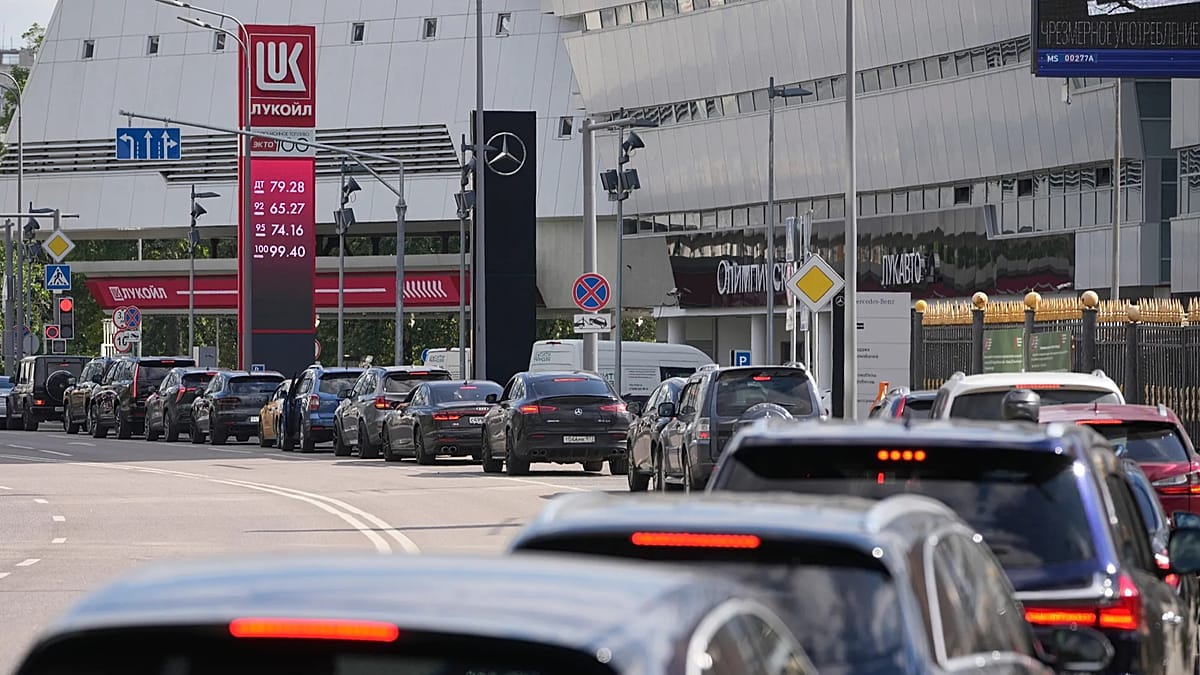
The US Treasury Department has prolonged a sanctions exemption for Lukoil, the Russian oil major, permitting its branded service stations outside Russia to keep trading until 24 April 2027. The new licence replaces an earlier arrangement that had been due to lapse later this month, and it applies to outlets in several countries, including the United States.
The extension is not unconditional. The Treasury kept in place a prohibition on the transfer of funds to any person or account located in the Russian Federation, a carve-out designed to stop the waiver from becoming a channel for capital flowing back to Moscow. A second licence issued on the same day authorises specified transactions involving Lukoil's Bulgarian subsidiaries through the same April 2027 deadline, giving the company's operations in the Black Sea EU member state a measure of legal certainty.
A diesel deal that unsettled Europe
The waiver lands barely a week after President Donald Trump announced, via social media, an agreement with Moscow to supply diesel to American and global markets. Under the arrangement as described by the White House, Russia would release 300,000 tonnes of diesel immediately, a further 500,000 tonnes in November and one million tonnes thereafter. The Treasury then issued a temporary licence to smooth those deliveries.
European foreign ministers reacted with unusual bluntness. The EU's chief diplomat, Kaja Kallas, argued that the arrangement hands Putin a strategic win, while Italy's prime minister, Giorgia Meloni, called it very risky and a legitimisation of Moscow. The objections reflect a broader fear in European capitals that Washington is loosening the economic pressure campaign at precisely the moment Russia is escalating its assault on Ukraine.
That concern has been sharpened by events on the ground. Overnight Russian strikes on Kyiv killed one person and wounded around twenty, and a missile hit a power plant in the capital without, according to President Volodymyr Zelensky, any prior warning from allies. Separate ballistic attacks on Kyiv and a strike on a university in Rivne injured twenty-five people. For EU ministers, the contrast between Russian missiles falling on Ukrainian cities and Russian diesel flowing to global markets is difficult to reconcile.
Energy markets under strain
The timing is awkward for another reason: oil prices remain elevated as the conflict in the Middle East enters its eighth month. Energy costs climbed sharply after the United States and Israel launched attacks on Iran in late February, and Tehran's retaliation included shutting the Strait of Hormuz, the chokepoint through which a substantial share of the world's crude normally passes. In that environment, any additional supply carries weight in Washington — and any signal of sanctions relief carries weight in Brussels.
Lukoil itself sits at the centre of the tension. The company is one of Russia's largest private oil producers, with retail networks scattered across Europe and beyond, and its foreign stations have been a recurring headache for regulators trying to tighten the screws on Moscow without disrupting local fuel supply. The Treasury's decision effectively prioritises continuity of service over the stricter line favoured by several EU member states.
European officials have signalled they will not follow Washington's lead. EU ministers have pushed back on the Trump-Putin diesel arrangement and vowed to keep sanctions in place, insisting that the bloc's own restrictive measures remain untouched. That divergence raises practical questions for Lukoil's European footprint, particularly in Bulgaria, where the company's refineries and retail network are woven into the national fuel market and where any change in the licensing picture would be felt quickly at the pump.
What happens next
For now, the Treasury's licences give Lukoil's non-Russian operations a runway stretching more than two years. But the political runway is shorter. The waiver is likely to feature in transatlantic discussions over the coming weeks, and European governments may look for ways to tighten their own enforcement even as Washington loosens its grip.
The deeper question is whether the transatlantic sanctions regime can hold together when its two largest architects are pulling in different directions. Washington appears to be betting that limited, carefully fenced relief can stabilise energy markets without financing the Kremlin. Brussels appears to believe the opposite. Lukoil's petrol stations, scattered from the Balkans to the American suburbs, will be an unlikely test of which view prevails.