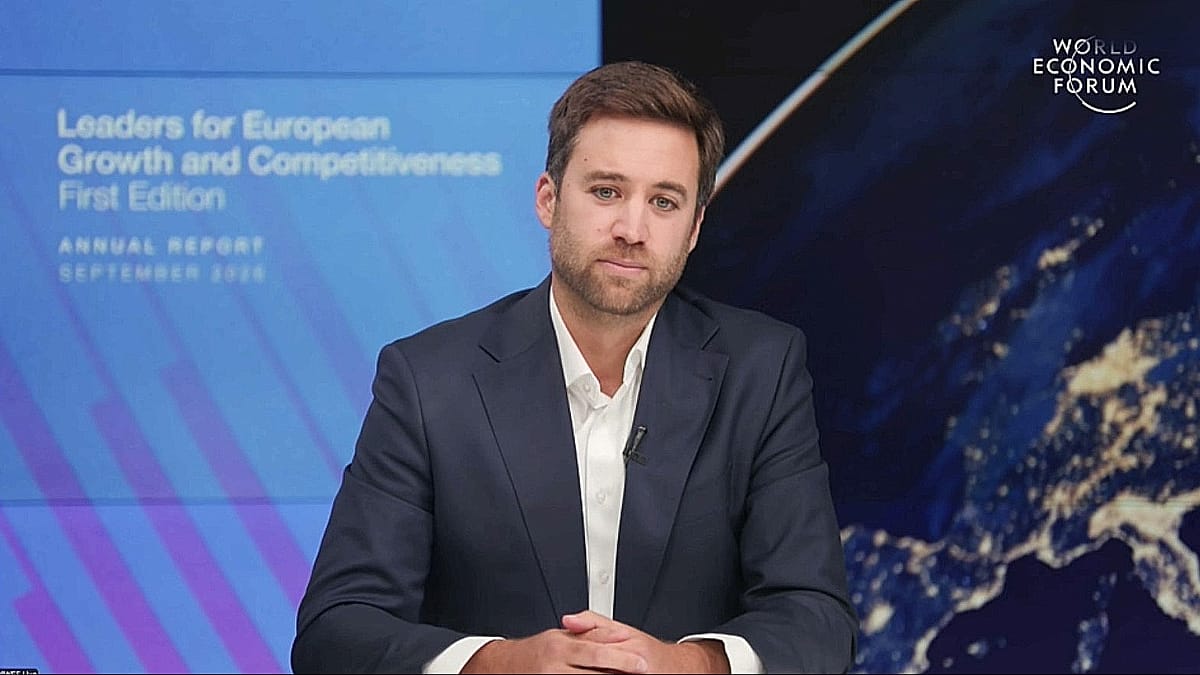
Andrew Caruana Galizia, who leads the Europe and Eurasia division at the World Economic Forum, has a clear message for the continent: stop looking outward for solutions and start perfecting what you already have. In his view, the single most effective move for Europe is to concentrate on its own internal market, rather than chasing global ambitions that may never materialise.
Speaking at a recent forum, Caruana Galizia acknowledged that Europe faces structural limits. "There are certain areas where Europe will never be able to be self-sufficient, like critical raw materials," he said. This dependency, he argued, makes it all the more important to leverage the strengths that Europe does possess—chief among them, its vast and wealthy consumer base.
The savings paradox
Caruana Galizia highlighted a striking paradox: Europeans are exemplary savers, yet they end up poorer than their American counterparts. "Europe has the best savers in the world," he said. But despite this, the "real tragedy" is that Europeans are "poorer than Americans." Even though Europeans save "twice as much as Americans," they are "unable to build up wealth at the same rate as Americans."
This wealth gap, he suggested, stems not from a lack of thrift but from structural inefficiencies in how Europe's financial markets and economies are organised. The fragmentation of the EU's capital markets, for instance, prevents savings from being channelled into productive investments that could generate returns comparable to those seen in the United States.
Caruana Galizia's comments come at a time when European policymakers are grappling with how to boost competitiveness. The European Commission has long talked about completing the single market for capital, but progress has been slow. Meanwhile, the bloc faces external pressures from global trade tensions and the need to secure supply chains for critical materials.
Focus on the internal market
For Caruana Galizia, the answer is not to retreat into protectionism but to make the internal market work better. "The best thing Europe can do is focus on its own internal market," he insisted. This means removing barriers to trade and investment within the EU, harmonising regulations, and encouraging cross-border entrepreneurship.
He pointed out that Europe's internal market, with its 450 million consumers, is one of the largest in the world. If fully integrated, it could rival the US in scale and dynamism. Yet, in practice, many businesses still face significant hurdles when operating across borders, from differing tax regimes to complex legal systems.
The World Economic Forum official also touched on the importance of innovation and technology. He noted that Europe has the potential to lead in areas like green technology and digital services, but only if it can create an environment where startups can scale up quickly. This requires not just capital but also a regulatory framework that encourages risk-taking.
Caruana Galizia's remarks resonate with recent debates in Brussels about the future of the European project. Some leaders, such as French President Emmanuel Macron, have called for a more ambitious integration agenda, while others, like the German government, have been more cautious. The criticism of Ursula von der Leyen's leadership for lacking urgency and focus underscores the challenges of achieving consensus.
Nevertheless, the idea of deepening the internal market has broad support across the political spectrum. It is seen as a way to boost growth without requiring massive fiscal transfers, which are politically sensitive. By making it easier for companies to operate across the EU, the bloc could unlock significant economic potential.
Caruana Galizia also warned against complacency. He noted that while Europe has strong social safety nets and high living standards, these are under threat if the economy stagnates. The recent market volatility and the uneven impact of interest rate hikes on eurozone mortgage markets highlight the fragility of the current situation.
In the end, Caruana Galizia's message is one of self-reliance and pragmatism. Europe cannot control global commodity prices or the policies of other major economies, but it can control how it organises its own house. By focusing on the internal market, Europe can build a more resilient and prosperous future.
As the continent navigates a complex geopolitical landscape, the advice from the World Economic Forum is clear: look inward, fix what is broken, and leverage the strengths that already exist. Whether European leaders will heed this advice remains to be seen, but the logic is hard to dispute.