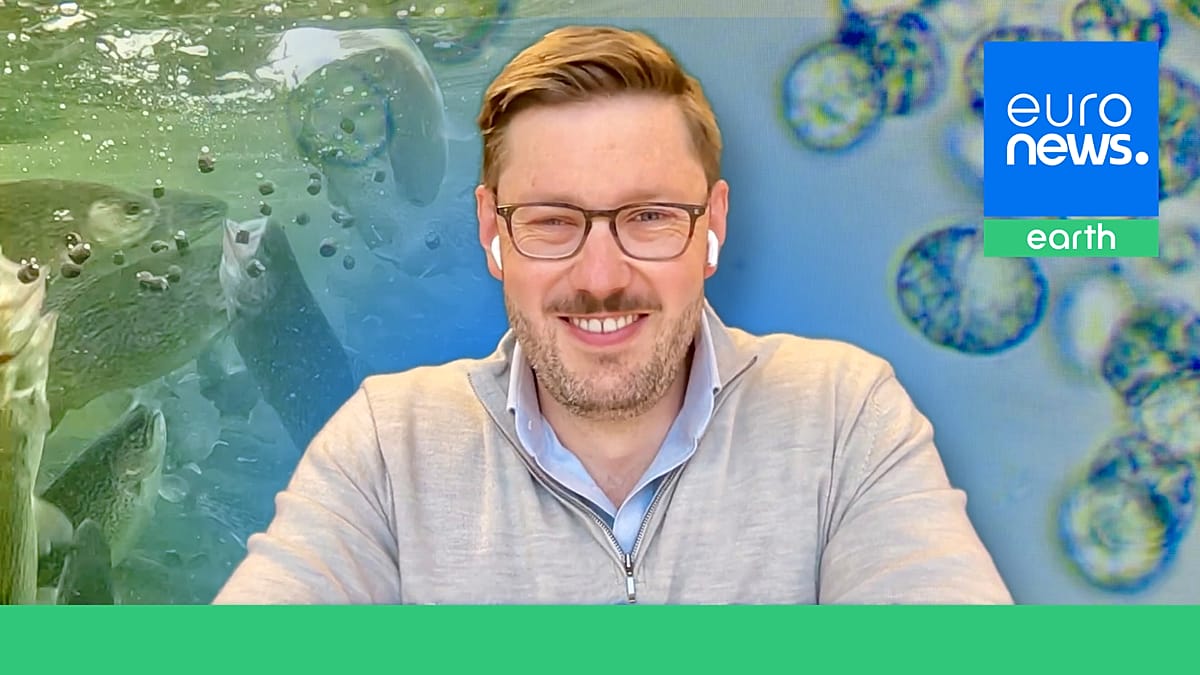
Aquaculture has overtaken wild capture as the world's primary source of fish for human consumption. But the industry's growth masks a troubling dependency: farmed salmon and other carnivorous species require omega-3 fatty acids, and nearly all of that comes from fish oil extracted from wild-caught fish.
Douglas Martin, founder and CEO of MiAlgae, is blunt about the limits of the ocean. "The sustainable limits of what you can catch out of the ocean at the moment have been reached," he says. "You can't physically catch any more out of the seas."
This creates a paradox: the more aquaculture expands, the more pressure it puts on wild fish stocks, undermining the environmental credibility of farmed fish. The solution, Martin argues, lies not in catching more fish but in going back to the very source of omega-3—microalgae.
From algae to omega-3 without the middleman
Oily fish don't actually produce omega-3 themselves; they accumulate it from the algae they consume. MiAlgae cuts out the fish entirely. "The algae are the ones that actually produce the omega-3s," Martin explains. "If you can produce the algae and you can grow that algae, you can get the omega-3s without actually having to go through the whole food chain."
The challenge has always been cost. Growing algae on high-grade feedstocks makes the economics unworkable against cheap wild fish oil. MiAlgae's innovation is to feed algae on a low-value industrial byproduct: the liquid waste from Scotch whisky distilleries.
Whisky production leaves behind a liquid that is 92% water and byproducts after the alcohol is extracted. Distilleries across Scotland generate billions of litres of this waste annually. MiAlgae channels it into stainless steel tanks where algae cells feed on the nutrients.
"It's a bit like brewing," Martin says. "You take a very small number of algae cells and you take all the whisky byproducts and some other bits and you put them into these big stainless steel tanks and you let the algae feed on all of that nutritious goodness."
Scaling up to make a dent in global demand
MiAlgae's current product is dried algae, bagged and shipped to aquafeed and pet food manufacturers as a direct substitute for wild fish ingredients. The pet food sector is the primary market for now, with aquafeed customers in the pipeline.
The company is building its first full commercial production site, which Martin says will produce thousands of tonnes per year. That sounds substantial, but it's still a fraction of global demand. "In the omega-3 world that's a good start, but a drop in the bucket," he admits. "So we've got lots more fish to save still."
On price, Martin acknowledges the challenge of matching fish oil at current scale, but frames the comparison in terms of value per unit of omega-3. "We're looking to be cost parity with any fish oil that's coming out of the world," he says.
MiAlgae reached the finals of the Earthshot Prize in 2024, a platform Martin credits with boosting the company's credibility. "Having the Earthshot Prize behind us has been a huge win for us," he says.
As commercial scale production approaches and industry interest grows, MiAlgae is positioning itself as a systemic answer to one of aquaculture's most entrenched—and least visible—sustainability problems. The approach also aligns with broader European efforts to reduce waste and improve resource efficiency, such as Germany's push to cut renewable curtailment and EU battery storage initiatives. For a continent that prizes both its whisky and its marine ecosystems, this could be a double win.