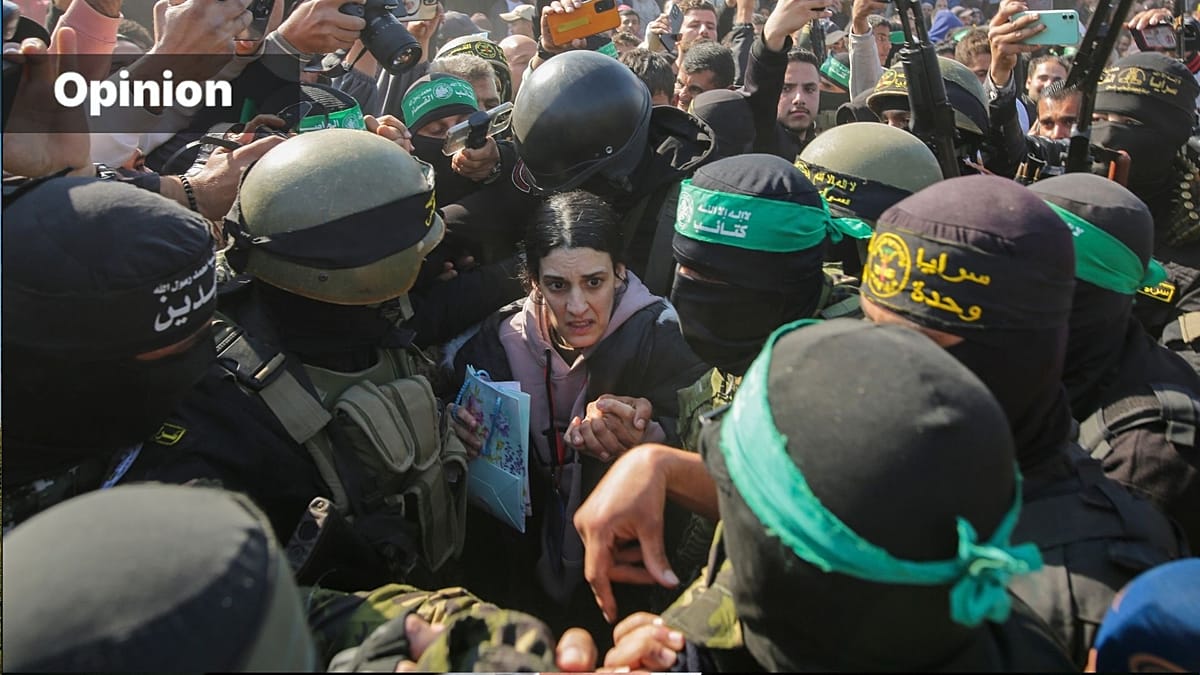
On the third anniversary of the Hamas attack on Israel, Sacha Roytman Dratwa, CEO of the Combat Antisemitism Movement, recalls the moment he learned of the massacre—and the disturbing reactions that followed within hours.
Dratwa was in Belgium with his grandfather, a Holocaust survivor, when the first images from southern Israel began to emerge on October 7, 2023. For his family, the word "genocide" was not abstract; it was part of their history. Watching the unfolding horror, he felt a profound helplessness—unable to protect the people being murdered, raped, and abducted.
The attack by Hamas and other armed groups killed approximately 1,200 people and took 251 hostages. But on that first day, the scale was still unclear. Dratwa and his grandfather were trying to comprehend what they were seeing.
The immediate celebrations
What struck Dratwa most was not just the attack itself, but the speed with which celebrations erupted. On October 8, while Israeli forces were still fighting Hamas gunmen inside Israeli territory—the ground offensive in Gaza would not begin until October 27—demonstrations in New York, Sydney, and other cities were already chanting "Glory to the Martyrs," "Free Palestine," and "From the River to the Sea."
In Times Square, protesters held signs declaring "Zionism is genocide." In Sydney, outside the Opera House, some chanted "Where's the Jews?" These were not expressions of concern for Palestinian civilians, Dratwa argues. They were celebrations of violence against Jews.
For Dratwa, the personal shock was immense. He was sitting with a Holocaust survivor, trying to absorb the news of a massacre, while seeing others treat that same event as something to celebrate. He wanted recognition of the victims before their deaths became another argument.
"I wanted someone looking at those images to see the people in them," he writes.
The meaning of slogans
October 8 changed the questions Dratwa asks when he hears "Free Palestine." What does the speaker mean? Are they advocating for Palestinian freedom and safety? Or are they describing the murder of Israeli civilians as liberation?
He insists that slogans alone cannot answer these questions. They require attention to what a speaker actually says and does. The same applies to the word "genocide." Its use on October 8 cannot establish or disprove allegations about later actions in Gaza, but it belongs to the record of that moment.
For someone whose grandfather survived the Holocaust, the word carries enormous weight. That family history does not settle every subsequent allegation, but it demands that the word be treated seriously, with evidence and attention to what is actually being alleged.
As the anniversary approaches, Dratwa's colleagues at the Antisemitism Research Center have been collecting materials from commemorations. Some groups pair "3 years of genocide" with "3 years of resistance" and "for our martyrs." Others present October 7 as a date for mourning Palestinians without naming the Israelis murdered or the people abducted that day.
Choosing October 7 as an anniversary raises a specific question: what does the organizer say happened on that day? Dratwa believes it is a way to deny the violence against Jews and to focus instead on a narrative of resistance.
He concludes that celebrating the massacre is not solidarity—it is inhumanity. Solidarity with Palestinians does not require denying or celebrating the murder of Israelis. It requires recognizing the humanity of all victims.