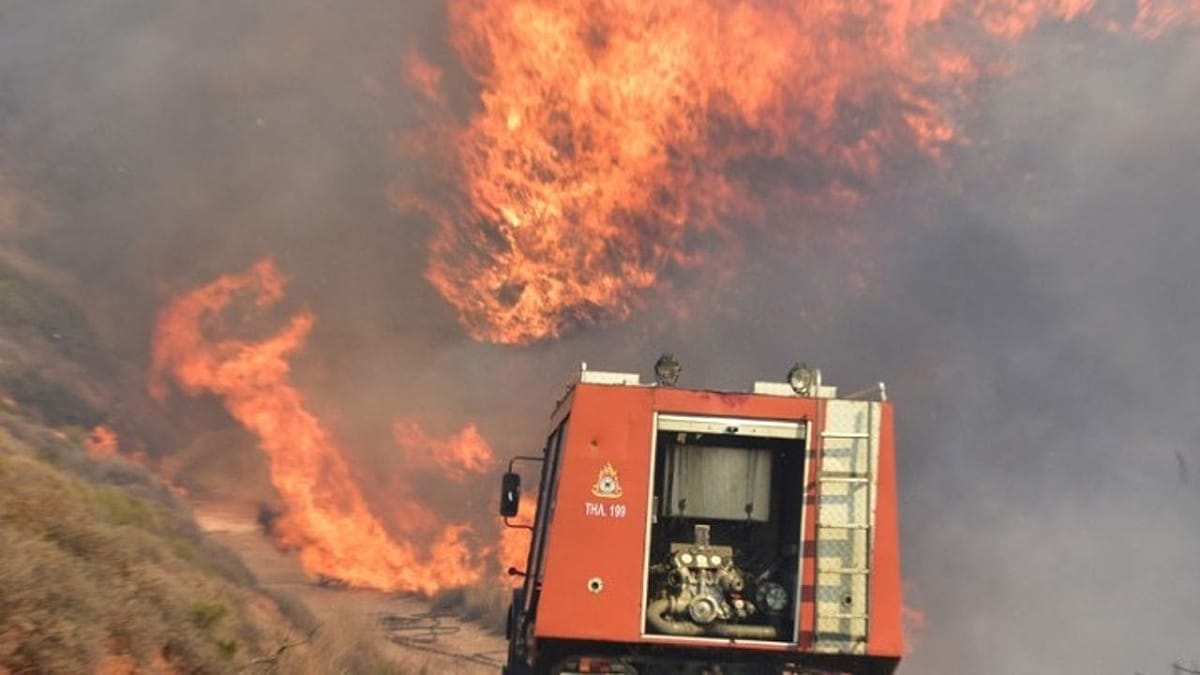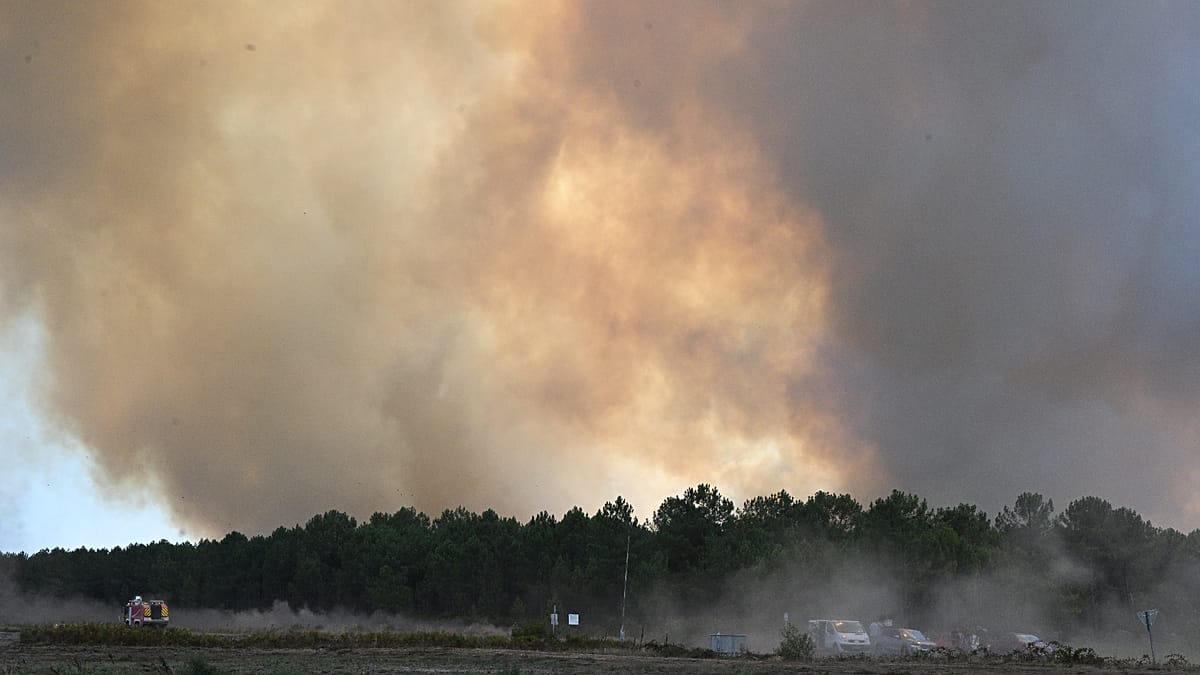
As climate change intensifies wildfires and heatwaves across Europe, the air we breathe is becoming more hazardous. The World Meteorological Organization (WMO) warns that extreme fires are releasing microscopic pollutants that threaten to undo decades of progress in improving air quality on the continent.
In its latest Air Quality and Climate Bulletin, the UN agency highlights a troubling trend: while regulations in Europe and North America have successfully cut emissions of fine particulate matter (PM2.5) from industry and transport, exposure to fire-related PM2.5 has actually increased. These particles, smaller than 2.5 micrometres in diameter, can penetrate deep into the lungs and bloodstream, posing serious health risks.
A toxic cocktail from burning vegetation
Lorenzo Labrador, from the WMO's Global Atmosphere Watch network, stresses that microparticles generated by burning vegetation are “much more toxic” than those from other sources, even car exhaust. “In places where there are relatively powerful forest fires, we find a lot of fine particle pollution,” he says. The smoke can travel hundreds of kilometres, affecting people and wildlife far from the flames.
Yet conventional risk models may be underestimating the danger. The WMO notes that models based on total PM2.5 concentrations could underestimate wildfire-attributable mortality by up to 93 per cent. One study cited in the bulletin found that extreme fire-smoke events have tripled globally since the 1990s, contributing to nearly 100,000 additional deaths per year between 2010 and 2018 – and that figure may be conservative.
Ground-level ozone is another growing concern. It accumulates when temperatures rise and atmospheric conditions stagnate, as seen during recent heatwaves in Europe, China, and the southeastern United States. The WMO warns that increased ozone exposure could lead to tens of thousands of premature deaths, particularly from respiratory diseases.
Microplastics and black carbon: hidden threats
Aerosol particles, including black carbon (soot) and microplastics, are also on the WMO's radar. Black carbon deposited on snow and ice reduces their ability to reflect sunlight, accelerating melting. Microplastics, formed when plastic waste breaks down, are now found virtually everywhere – in the air, soil, and oceans. A simulation in the bulletin estimates there are 51 million tonnes of microplastics on land and 22 million tonnes in the ocean, which in turn release particles into the atmosphere.
“As plastic production and, critically, mismanaged plastic waste, continues to increase,” monitoring the airborne paths of microplastics will be “crucial”, the report says. These pollutants are not sufficiently monitored, despite being widespread and potentially harmful to ecosystems.
The economic case for joint action
A separate report from the UN Environment Programme (UNEP) and the Climate and Clean Air Coalition (CCAC) makes a compelling economic argument for tackling climate change and air pollution together. Every $1 invested in climate and clean air action can return $15, far higher than addressing them separately. These gains span health systems, productivity, and avoided climate damage.
“For too long, we have treated climate action as a cost to be managed and air pollution as the unfortunate outcome of development,” says Inger Andersen, Executive Director of UNEP. “This report shows the opposite: clean air is a key driver of development, health, food and energy security, and climate stability – an asset we must invest in.”
The report targets emissions in six sectors – energy, industry, transport, agriculture, residential cooking and heating, and waste management. By 2050, these measures could halve global carbon dioxide emissions and prevent 144 million premature deaths linked to air pollution.
For Europe, the message is clear: climate action is not a burden but a survival strategy. As Ursula von der Leyen has urged the EU to brace for simultaneous climate crises, the need for coordinated policies has never been more urgent. The WMO's Labrador puts it simply: “Air quality and climate change can't be dealt with separately. If one worsens, the other does too.”
With wildfires becoming more frequent and intense across the Mediterranean and beyond, from Greece to Spain, European governments must invest in prevention and resilience. The science is clear: tackling air pollution and climate change together is not just an environmental imperative, but an economic and public health one.