BRUSSELS — Europe cannot treat climate policy as a luxury it can drop when economic or security pressures mount, a senior European Commission official has warned, arguing that decarbonisation is now inseparable from the continent's ability to protect itself and compete globally.
Speaking on the sidelines of the Bruegel think tank's annual meetings on Wednesday, Jan Dusik, director general of the Commission's climate department, pointed to Russia's full-scale invasion of Ukraine and recent disruptions around the Strait of Hormuz as reminders of how dependent Europe remains on imported oil and gas. Those vulnerabilities, he said, make the push for cleaner energy a matter of strategic survival, not just environmental stewardship.
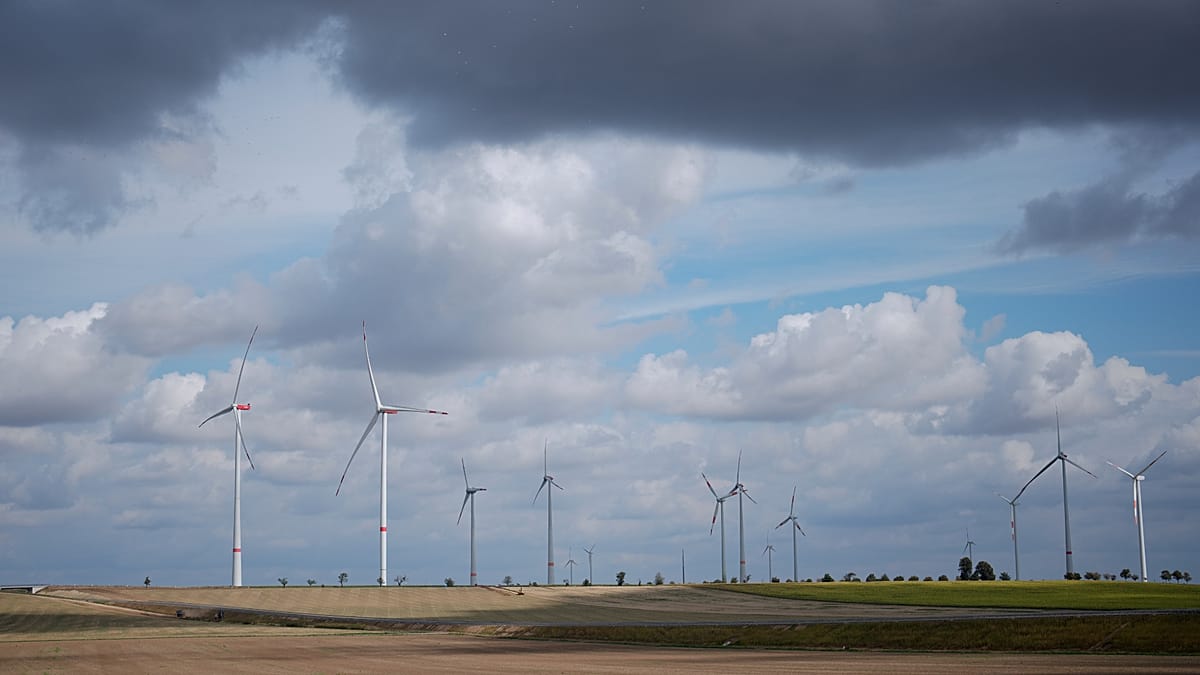
“Climate policy must survive, because we want to survive in Europe,” Dusik said, rejecting arguments that the EU should weaken its green agenda to ease pressure on industry. He insisted that faster electrification and the development of domestic energy sources would reduce exposure to volatile fossil-fuel markets that have driven up bills and undermined the bloc's industrial competitiveness.
The comments come as climate policy faces growing political resistance, with critics in several member states claiming that EU targets place an unfair burden on manufacturers competing against Chinese and American rivals. The Commission, however, is pressing ahead with a phased rollout of post-2030 measures, aiming for net-zero emissions by 2050 even as scepticism grows about whether that goal remains realistic.
Credibility gap over 2050 target
Pierre Wunsch, governor of the National Bank of Belgium, delivered a blunt assessment of the EU's credibility problem. “Most people will tell you we're not going to be in net zero in 2050. That's what I hear. And so it creates some cognitive dissonance, because by pretending we are going there, but having a lot of people believing we're not going there, you lose the credibility of the instruments,” he told the Bruegel audience.
Dusik acknowledged the challenge but insisted the EU executive remains committed to its trajectory. The first concrete step came in July with a proposed review of the Emissions Trading System (ETS), the bloc's carbon market. Next month, the Commission will present a climate resilience framework to help Europe cope with heatwaves, floods, and other impacts. By the end of 2026, it plans to unveil the full post-2030 climate package, detailing how the EU will meet its 2040 emissions-cutting target of 90% net reduction.
On the ETS, Dusik rejected suggestions that Brussels is “playing with numbers” by allowing flexibilities, existing allowances, and future carbon removals while still aiming for that 90% cut. He said the system is designed as a whole and will ultimately have to add up to the EU's overall carbon budget. “There are moments where we look at how the legislation is implemented, and we are doing adjustments as we have done for the market stability reserve, as we are doing for the benchmarks in the ETS, which does not jeopardise that total carbon budget that we should have in 2040 or 2050. It needs to add up and this is designed to add up,” he said.
The official suggested that price, rather than the sheer quantity of allowances, will become the key driver. As the number of permits declines through the 2030s, prices are expected to rise, giving companies a stronger financial incentive to invest in cutting emissions rather than pay for pollution.
Carbon credits: complement, not substitute
The Commission is also preparing to introduce additional flexibility through carbon removals and international credits. But Dusik stressed that these should complement, not replace, European investment. International credits could lower the overall cost of meeting targets, but Brussels does not want a system where European firms simply buy reductions abroad instead of investing in clean technology at home.
“This needs to be done in a very smart way, knowing what the amount of credit is available, how it complements rather than replaces domestic investments. Because after all, we are also interested in investing in Europe, rather than purchasing investments abroad. So it needs to be the right mix,” he said.
Adaptation is becoming unavoidable, Dusik admitted. After a summer marked by extreme weather across the continent, the Commission's resilience framework will prepare Europe for a world where climate impacts become more severe. Even if the world fails to stay within the Paris Agreement's 1.5°C goal, he argued, every fraction of additional warming matters because it translates into higher economic and social costs.
“This doesn't mean that we will give up on the Paris targets. It means that we have to recognise that the challenge is going beyond being able to stay under the one and half degree target,” Dusik said. “At the same time, we know that every fraction of a degree is a massive impact, a massive cost for the whole society, and the longer and the further we get into the overshoot, the more of the problem it will be.”
One of the sharpest criticisms has focused on how governments spend ETS revenues. The Commission's analysis found that only around 5% of those revenues are actually returned to industry for decarbonisation. Since the ETS was launched in 2005, it was never meant to function simply as a tax on polluters. With a growing climate finance gap, Brussels wants more of the money generated by carbon pricing to flow back into the transition itself — into hydrogen, batteries, carbon capture and storage, and other industrial investments.
The debate over climate policy is set to intensify as the Commission prepares its next legislative steps. For officials like Dusik, the choice is stark: invest in a cleaner, more resilient Europe now, or pay a far higher price later. As von der Leyen has warned, Europe must brace for simultaneous climate crises, and the response cannot be to retreat from the green agenda.