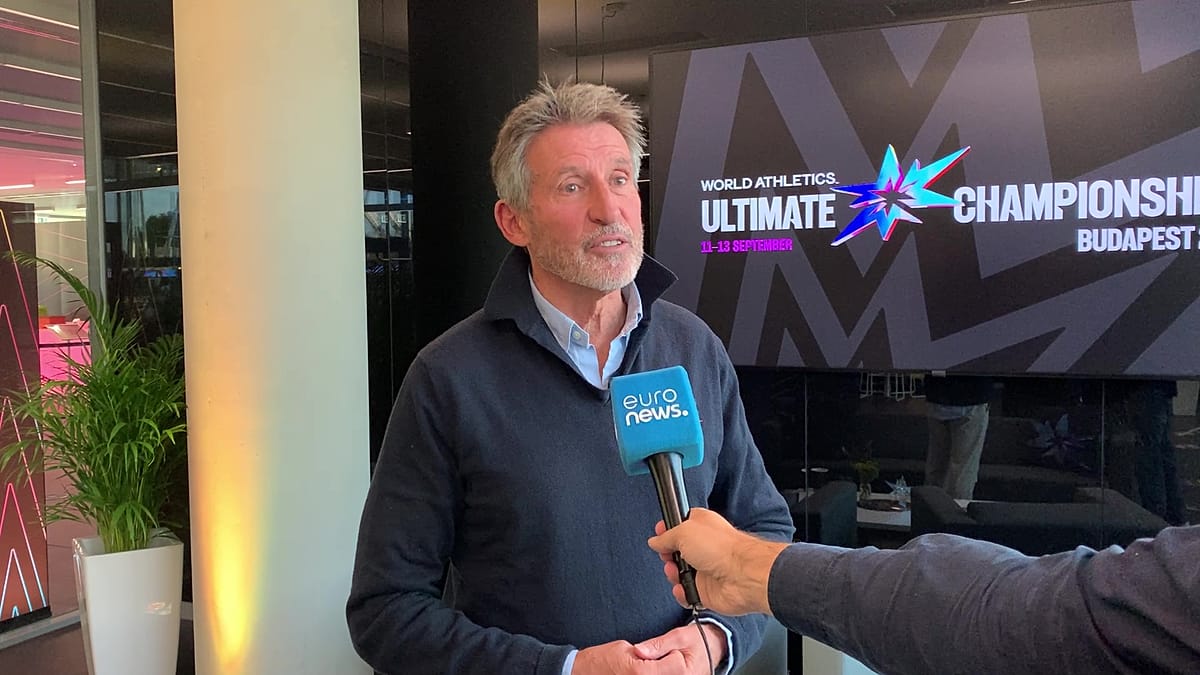
World Athletics president Sebastian Coe has made it clear that the global governing body for track and field will not relent in its exclusion of Russian and Belarusian athletes. In an interview with Euronews on the sidelines of the Ultimate Championship in Budapest, Coe reaffirmed the organisation's position, which has remained unchanged since March 2022.
The International Olympic Committee (IOC) eased its own restrictions over the summer, leaving individual federations to decide their stance. While some sports, including wrestling, judo, fencing, and aquatics, have relaxed their rules, World Athletics has held firm. "We will maintain our position and we will defend our position," Coe said, leaving no room for ambiguity.
Legal pressure from Moscow
The Russian Athletics Federation has been fighting the ban through legal channels. In recent months, it lodged two appeals with the Court of Arbitration for Sport (CAS) in Lausanne, arguing that the exclusion harms the sport's development in Russia and restricts athletes' rights. Last week, Russian athletes also appealed to the human rights commissions of the IOC and the United Nations, claiming their careers are being destroyed.
Coe's response was characteristically resolute. "Fighting for the integrity of competition and the integrity of competitors and the primacy of an international federation to decide how it determines eligibility is not a personal issue, it is one of philosophy," he said.
The Russian Athletics Federation's executive director, Boris Yarisevsky, has described the ban as "Coe's personal obsession." He told Russian media that the sanctions are unprecedented and hinder the development of athletics in Russia, particularly for young athletes who cannot compete internationally. "We are seeking the lifting of the sanctions through the courts and are preparing our next steps to restore justice," he said.
Coe, a former Olympic champion who won four medals at the 1980 Moscow and 1984 Los Angeles Games, dismissed the personal attack. He emphasised that the decision is rooted in a broader principle of protecting the integrity of competition, a stance that has been consistent since Russia's full-scale invasion of Ukraine.
A legacy beyond the ban
Beyond the ongoing controversy, Coe is focused on the legacy he will leave when his term as World Athletics president ends in 2027. The Ultimate Championship, a new event held in Budapest, is central to that vision. The competition featured 381 athletes from 65 countries, a stark contrast to the traditional world championships with over 2,000 participants.
"I hope it's a very, very strong legacy because we're looking at the sport in a very different way," Coe said. "We want this to feel different, to look different, particularly for the athletes. The prize money is significantly larger than we've ever had before, $10 million."
The event, which concluded with fireworks over the Hungarian capital, is designed to determine the best of the best in a more exciting and innovative format. Coe believes the lessons learned will influence future world championships and potentially the Olympic programme. "I think there are things we're going to learn from this that we're gonna be able to take into our world championships, maybe the Olympic program, around event presentation, around just being more exciting and more innovative in the stadium and what it looks like on television," he explained.
Coe's presidency has been marked by his firm stance on Russia, a position that has drawn both praise and criticism. As he prepares to hand over the reins, the ban remains a defining issue, one that he insists is not personal but philosophical. The coming months will test whether his successor, Kirsty Coventry, who was elected in a process held in Ancient Olympia, will uphold the same line.
The broader geopolitical context adds weight to the decision. Recent incidents, such as a Russian drone striking a passenger train near the Polish border, underscore the ongoing threat to European security. Coe's stance aligns with a growing sentiment across the continent, as leaders like Latvia's prime minister warn against any sign of weakness.
For now, World Athletics stands apart from the IOC's more conciliatory approach. Whether that will change remains to be seen, but Coe's message is unequivocal: the ban is here to stay.