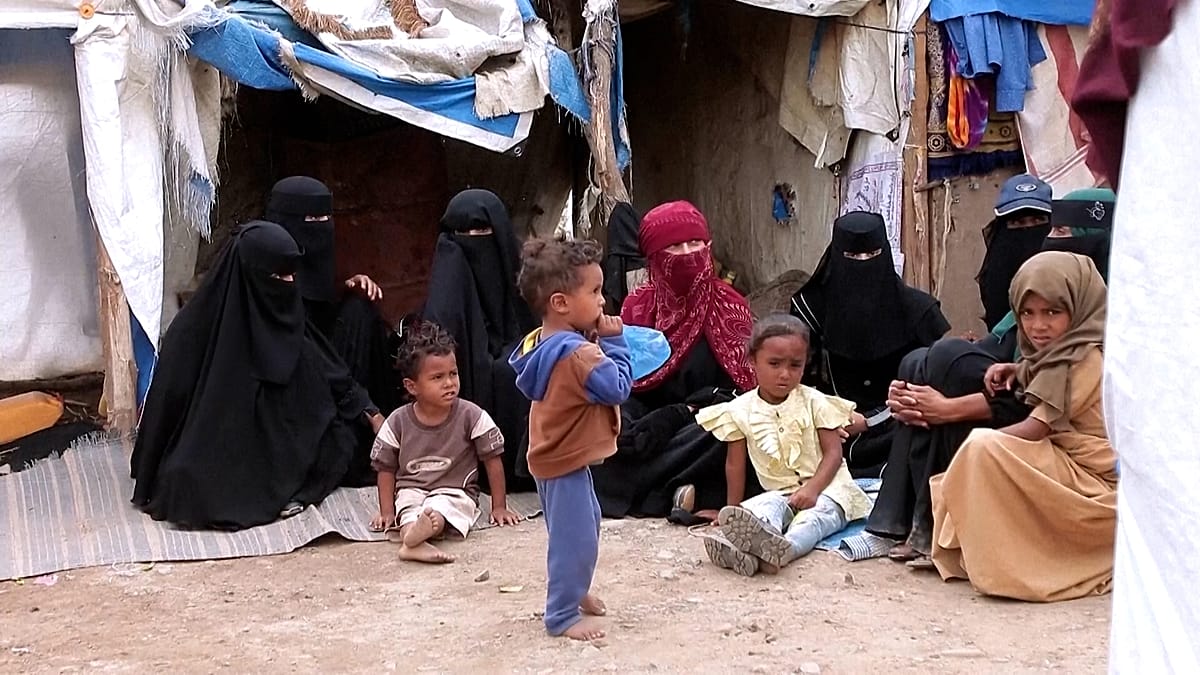
The fragile ceasefire in Yemen has collapsed under a wave of renewed fighting, triggering a fresh humanitarian crisis. According to the United Nations, more than 125,000 people have been displaced in just the past two weeks, many of them seeking refuge at the makeshift Al Kadha camp near the southwestern city of Taiz.
The escalation comes as Houthi forces have seized the strategic port of Mokha and are advancing toward the Bab el-Mandeb strait, a critical chokepoint for global shipping. The offensive has shattered hopes for a durable truce and threatens to reignite a conflict that has already devastated the country.
Displacement and dire conditions
At Al Kadha camp, thousands of families are arriving with little more than the clothes on their backs. The camp, already overcrowded, is struggling to provide basic necessities such as shelter, food, and clean water. Humanitarian agencies warn that the influx is overwhelming their capacity, and the approaching summer heat is likely to worsen conditions.
"People are exhausted and traumatized," said a local aid worker, speaking on condition of anonymity. "They have fled from one front line to another, hoping to find safety, but the violence is following them."
The UN has called for an immediate cessation of hostilities and unhindered access for humanitarian convoys. However, with the Houthi advance showing no signs of slowing, the prospects for a negotiated settlement appear increasingly remote.
Regional and European implications
The renewed conflict has significant implications beyond Yemen's borders. The Bab el-Mandeb strait is a vital artery for global energy supplies, and any disruption could have ripple effects on European energy prices. The European Union has been closely monitoring the situation, with some member states urging a coordinated response to prevent a broader regional crisis.
In Brussels, diplomats are discussing contingency plans, including the possibility of naval escorts for commercial vessels. The instability also raises concerns about migration flows, as displaced Yemenis may attempt to reach neighboring countries and, eventually, Europe. The EU's recent debates on asylum policy, such as the suspension of asylum rights after the Ceuta border surge, highlight the sensitivity of such issues.
The conflict also intersects with broader geopolitical rivalries. The Houthi seizure of Mokha and their push toward the strait have drawn warnings from regional powers, and there are fears that the fighting could spill over into a wider proxy confrontation.
A humanitarian catastrophe in the making
The UN's displacement figures are stark, but the full scale of the crisis may be even larger. Many families are moving to areas that are difficult to reach, and aid agencies report that access is increasingly constrained by the fighting. The collapse of the ceasefire has also undermined previous efforts to establish humanitarian corridors.
"We are seeing a repeat of the worst days of this conflict," said a UN spokesperson. "The international community must act now to prevent a catastrophe."
For the people of Yemen, the renewed violence is a devastating setback. After years of war, many had hoped that the ceasefire would hold and allow them to begin rebuilding their lives. Instead, they are once again on the move, facing an uncertain future.
The situation in Yemen is a stark reminder of the fragility of peace in the region. As the Houthis advance, the risk of a prolonged conflict grows, with consequences that will be felt far beyond the Arabian Peninsula.