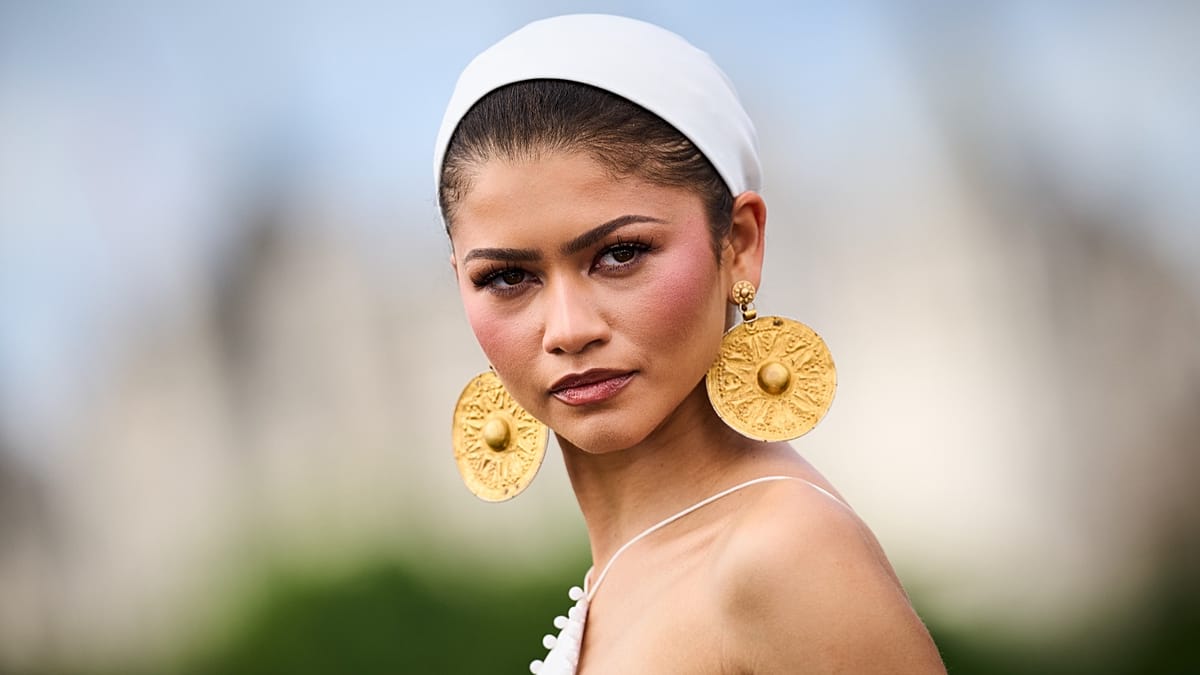
At a London photocall for Christopher Nolan's The Odyssey, Hollywood star Zendaya appeared in gold disc earrings that quickly drew fire from archaeologists and historians. The pieces — 3,000-year-old Iranian medallions attributed to the Ziwiyeh hoard, a collection discovered in northwest Iran in the late 1940s — were remounted with diamonds and 18-karat gold by London jeweller Glenn Spiro. They are owned by Barron London, a Mayfair-based gallery.
Critics argue that wearing such artefacts on a red carpet treats cultural heritage as a status symbol and perpetuates neocolonial practices. Dr Z the Archaeologist, an Instagram creator with around 43,000 followers, called the choice "gross" and said it "fetishises the past." She noted that the earrings were "likely looted from Iran" and worn by an American actress from a country that recently bombed Iran.
Ancient historian Dr Carla Ionescu wrote on Substack that she spends her life in museums where the first rule is not to touch artefacts. "If I were Zendaya, I wouldn't put an ancient artefact on my body unless I knew its provenance," she said. One social media user compared the incident to Kim Kardashian wearing Marilyn Monroe's dress at the 2022 Met Gala, which was subsequently damaged.
Europe's Role in Disputed Persian Heritage
The Ziwiyeh hoard was discovered in 1947 near the village of Ziwiyeh in what is now Kurdistan province, northwest Iran. According to a 2015 research paper, remaining pieces were removed from Iran in the 1960s and sold on the antiquities market. They are now scattered across museums and private collections worldwide.
European institutions hold significant Iranian artefacts of disputed provenance. The Louvre in Paris houses items excavated under concessions from the Qajar court, including pieces from Persepolis. The British Museum in London, along with collections in Germany and Austria, also hold Persian material. The Oriental Institute at the University of Chicago held thousands of cuneiform tablets from Persepolis for over eight decades before partial returns were negotiated.
Iran's efforts to reclaim objects have seen limited success. In 2019, nearly 1,800 Persepolis tablets were shipped back to Tehran after lengthy legal proceedings. Three years later, ancient glazed bricks looted during the Iran-Iraq war and stored in a Swiss bank vault were returned to Tehran's National Museum after a Swiss police seizure. Tehran has not publicly claimed the specific gold discs worn by Zendaya.
Barron London stated that the earrings "are responsibly stewarded in accordance with their documented provenance and all applicable legal requirements," adding that lending them was "never for commercial purposes" and aimed to "honour the remarkable artistry of ancient Iranian goldsmiths."
The controversy also echoes broader debates about cultural heritage and repatriation. For European readers, it raises questions about the continent's museums and galleries that house disputed artefacts, from the British Museum's Parthenon Marbles to the Louvre's Persian collections. As film-inspired travel to ancient sites grows, so does scrutiny of how these objects were acquired.
Meanwhile, US streamer IShowSpeed performed at the 2026 World Cup final in New Jersey wearing a jacket bearing a Faravahar symbol, a Zoroastrian emblem. That sparked separate debates about Persian cultural identity and appropriation, though the focus remains on the Zendaya incident as a flashpoint for wider issues of looted artefacts and neocolonialism.