In the heart of western Turkey, the province of Afyonkarahisar is quietly building a case for itself as one of Anatolia's most layered destinations. Here, hot-air balloons rise at dawn over the Phrygian Valley, where rock-cut monuments date back more than three millennia. Below, thermal waters that have attracted bathers since antiquity still feed a thriving spa culture. And in local kitchens, the poppy seed—so central to the region's identity that it appears in the very name of the province—remains the star of a cuisine that UNESCO has now placed on its list of intangible cultural heritage.
Green Cappadocia, without the crowds
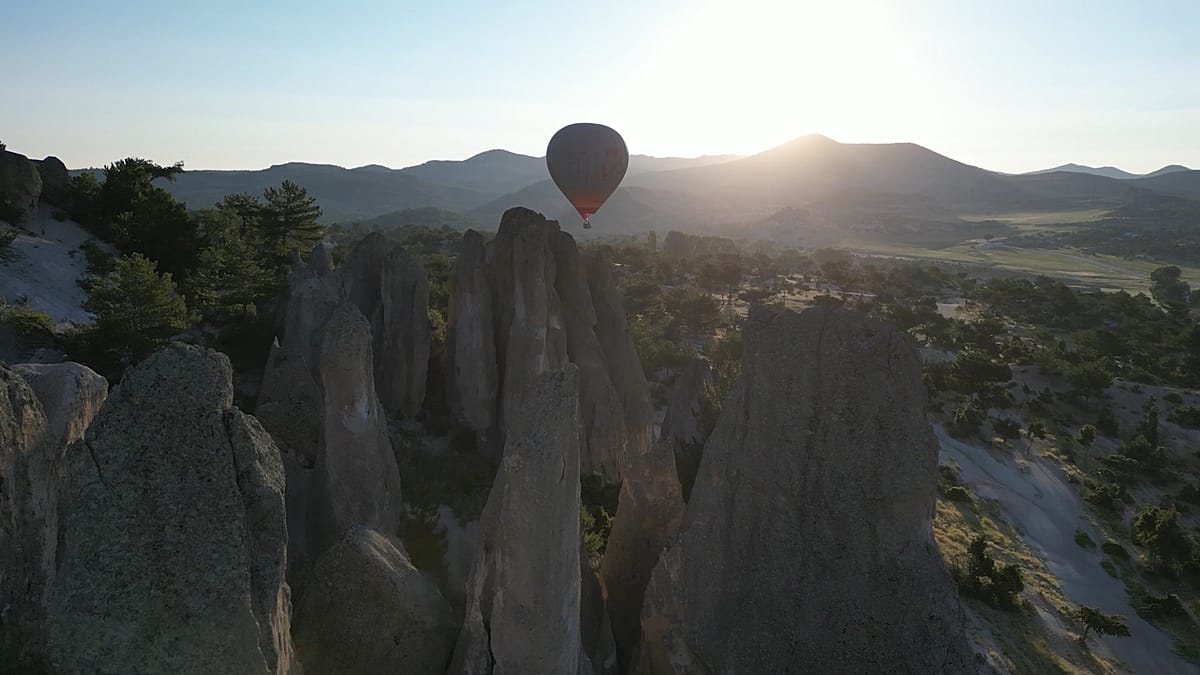
Balloon pilot Kemal Eryılmaz likens the landscape to a less crowded version of Turkey's famous fairy-chimney region. “We could call this place Green Cappadocia,” he says, pointing to the verdant valleys and the weathered rock faces that the Phrygians once carved into temples, facades, and monumental inscriptions. The Phrygian civilization, which flourished here around 1200 BC, left behind an open-air gallery of rock-cut art that still feels remarkably intact.
Floating above the valley at sunrise, passengers see a patchwork of orchards, fields, and limestone ridges, with the snow-capped peak of Mount Emir in the distance. Unlike the crowded skies over Göreme, Afyonkarahisar's balloon flights offer a more intimate encounter with the ancient landscape—one that rewards early risers with a sense of discovery rather than a queue of competing baskets.
The healing waters of the “Healing City”
Afyonkarahisar has long been known as the “Healing City,” a nickname earned through its abundant thermal springs. The waters have drawn visitors since 1200 BC, when the Phrygians first built baths around them. Today, modern spa hotels continue that tradition, offering treatments in pools fed by mineral-rich sources.
Hakan Siyah, of the Grand Özgül Termal hotel, explains the appeal: the waters are “especially rich in sulphur, calcium, magnesium, and iron.” These minerals are believed to ease everything from rheumatic pain to skin conditions, and the local tourism industry has built an entire wellness economy around them. For travellers, the ritual is simple: soak, rest, and repeat, often with a view of the surrounding hills.
Poppy seeds: a culinary heritage
In the village of Ayazini, the poppy seed is not just an ingredient—it is a link to generations of family tradition. Chef Meryem Açıkgöz rolls out katmer, a thin, flaky pastry filled with poppy seeds, butter, and sugar, by hand. “This belongs to the Afyon region, passed down from our ancestors,” she says. The dish is a breakfast staple, often served with strong Turkish tea, and its preparation is a slow, deliberate craft.
Poppy seeds appear across the local repertoire: in breads, pastries, halva, and even as a topping for yogurt. The region's cuisine has been recognised by UNESCO for its distinctiveness, and visitors can sample these dishes in family-run eateries or at the annual Afyonkarahisar Gastronomy Festival, which celebrates the province's culinary heritage.
For those who want to explore further, the region's historical layers extend beyond the Phrygian era. The city of Afyonkarahisar itself is crowned by a Byzantine castle, and nearby ruins from Roman and Ottoman periods add depth to any itinerary. The recently opened museum inside Trajan's Baths in Rome offers a parallel glimpse of Roman bathing culture, but here in Afyonkarahisar, the experience is live and immersive.
Getting to Afyonkarahisar is straightforward: it lies on the high-speed rail line between Ankara and İzmir, making it an easy detour for travellers exploring central or western Turkey. The province also offers hiking trails through the Phrygian Valley, where visitors can walk among the rock-cut monuments and even stay in cave hotels that echo the region's ancient past.
For younger travellers, the DiscoverEU programme provides free rail passes to 18-year-olds, which could make Afyonkarahisar an affordable stop on a broader European journey. And for those who prefer to travel at their own pace, the region's quiet roads and small villages reward spontaneity—much like the secret GPS routes in the Faroe Islands that encourage drivers to wander off the main paths.
From balloon to bath to griddle, Afyonkarahisar offers a rare combination of natural beauty, ancient history, and living culinary tradition. It is a place that asks visitors to slow down, take a deep breath, and savour the layers—both geological and cultural—that have made this corner of Turkey so distinctive.