From the weekend of 12–13 September, visitors to Rome can step inside the monumental ruins of Trajan's Baths on Colle Oppio to see two extraordinary Roman artworks that have been hidden for centuries. The new museum, inaugurated by Mayor Roberto Gualtieri, brings together the largest partially intact fresco and mosaic from the Roman era, both of which have undergone extensive restoration.
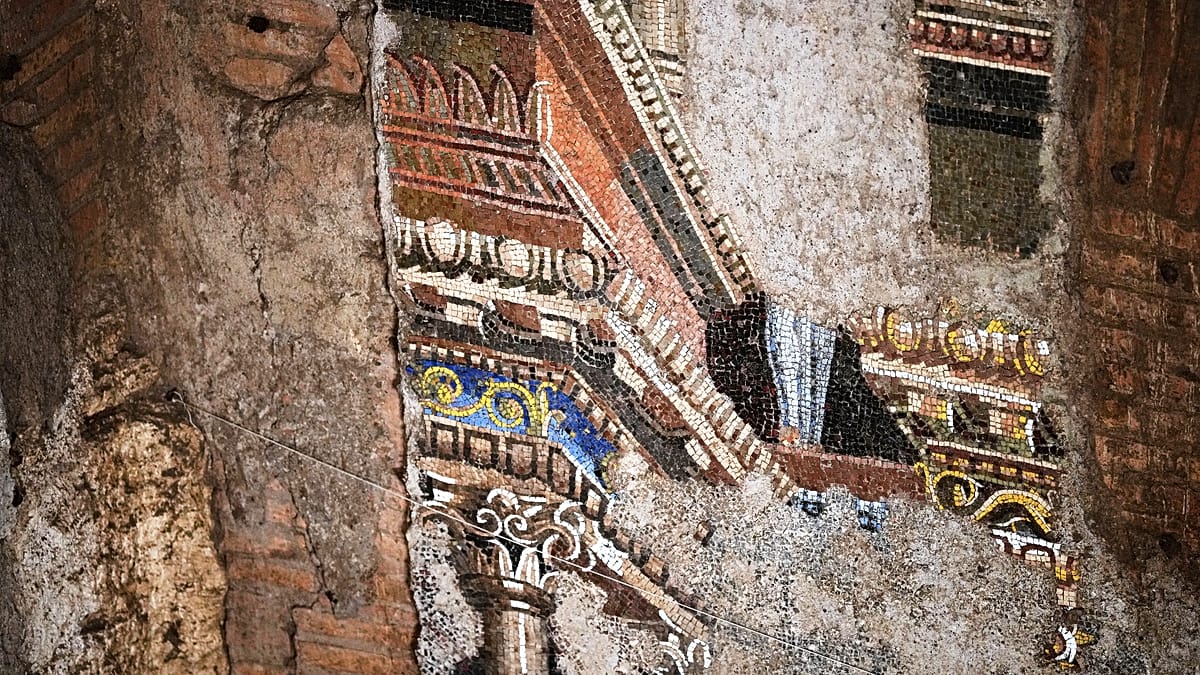
The centrepiece is the Great Mosaic, known as “The Muse and the Philosopher,” and the Painted City, a ten-square-metre fresco depicting an aerial view of an ancient city. Gualtieri described the ensemble as “a unique stratification that recounts more than a century of archaeological history, from the Neronian-Flavian age to that of Trajan.”
A window into imperial Rome
Trajan's Baths, designed by the architect Apollodorus of Damascus and inaugurated on 22 June AD 109, once covered around 60,000 square metres. The complex included bathing halls, porticoes, and spaces for physical and intellectual pursuits. Its construction incorporated earlier structures, including part of the Domus Aurea, Nero's lavish palace, which explains the layered archaeological remains visible today.
The Painted City, discovered in 1998, belongs to a building that predates the baths, dating from the first century AD. It offers a rare bird's-eye view of a Roman city, complete with insulae (apartment blocks) and other architectural details. Gualtieri called it “perhaps the largest surviving wall-fresco representation of a view of a city,” noting its outstanding beauty and documentary value.
The Great Mosaic, set in a grand hall overlooking a nymphaeum, depicts a Roman harbour in intricate detail. Scholars debate whether it represents a real port, possibly that of Claudius, or an imagined one. After restoration, the exposed section reaches five metres in height, but excavations beneath the decoration suggest the original walls soared to around twelve metres, indicating the scale of the original space.
Preserving the past for the future
To protect these fragile masterpieces, visits will initially be limited. On the opening weekend, small groups will be admitted by reservation for free guided tours. From 2 October, the site will be open from Friday to Sunday, with six daily time slots and a maximum of 15 visitors per slot. This experimental approach will help authorities gauge the impact of footfall on the artworks.
“These are the two star attractions, truly unique, which will be on display while their surroundings continue to be excavated,” Gualtieri said, adding that the Superintendency will keep researching the site. The restoration, funded under the PNRR – Caput Mundi programme, also created new pedestrian routes, panoramic rest areas, and a tiered seating system for concerts and events.
Rome's latest cultural offering joins a wave of heritage projects across Europe, from the discovery of a painted Egyptian tomb by a Spanish team to the repatriation of ancestral remains by an Oxford museum. The new museum underscores the continent's commitment to making ancient history accessible while ensuring its survival.
As Rome continues to unearth its layered past, the Baths of Trajan now offer a rare glimpse into the artistic and urban life of the empire at its height. For those planning a visit, the experience promises to be both intimate and awe-inspiring, a journey through two millennia of history.