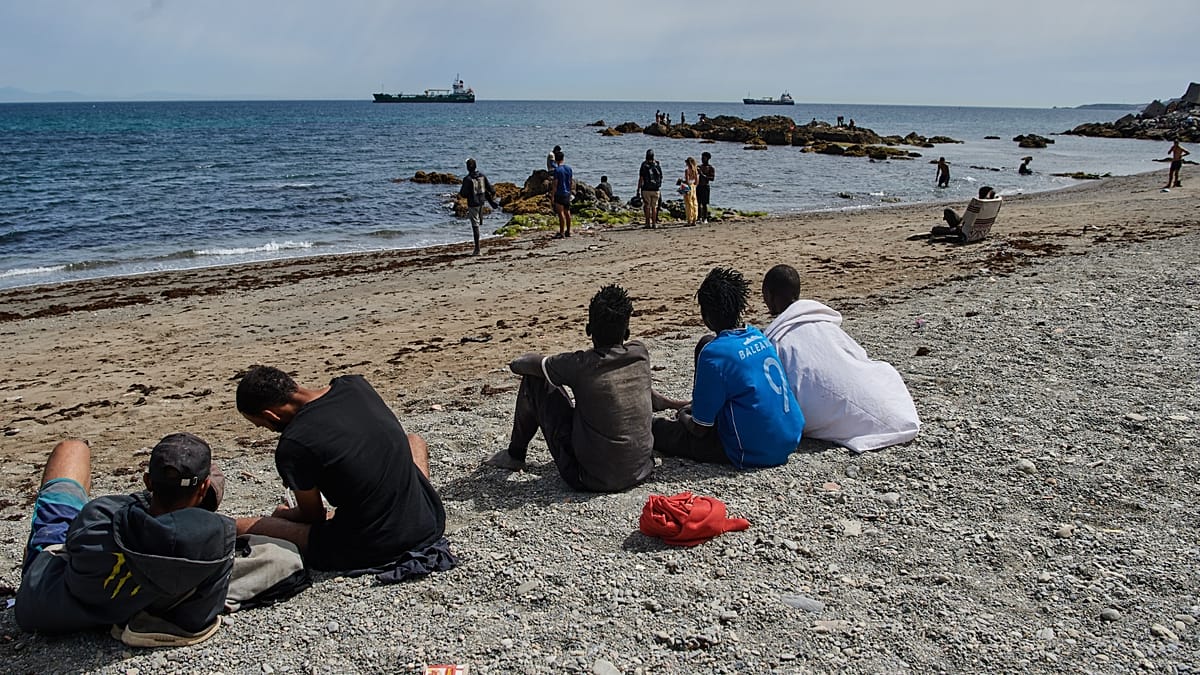
When tens of thousands of people crossed from Morocco into the Spanish enclave of Ceuta last week, social media became a battleground of authentic footage and deliberate misinformation. Alongside genuine reports of the mass movement—which Spanish authorities put at roughly 72,000 people—a wave of AI-generated images and recycled videos began circulating, often with captions that distorted the reality on the ground.
One striking example was a photograph shared on YouTube, X, Reddit, and Instagram, purporting to show a Moroccan soldier raising a large rock above a migrant climbing an embankment. The image was credited to Reuters, but the news agency has not published it. An analysis using OpenAI's verification tool indicated that the picture was generated with OpenAI software. Despite this, many Instagram users took it at face value, with comments like “Where is our love, humanity and compassion?”
The incident itself, however, may have been real. Several videos filmed from different angles appear to show a confrontation near Fnideq, the Moroccan town adjacent to Ceuta, matching the scene in the AI image. AFP reported clashes involving Moroccan security forces in the area, and their footage shows officers in riot gear similar to that depicted in the fabricated photo.
Floating shoes and old boat clips
Another widely shared image claimed to show dozens of shoes floating in the sea. It was posted on X, Instagram, Facebook, and Threads, and was even used by some Moroccan news outlets. OpenAI's verification tool again identified it as AI-generated. Reuters did publish a genuine photograph of a float and shoes on the shoreline near El Tarajal beach in Ceuta, but that was a different image.
A video that resurfaced in the context of the crisis purported to show migrants arriving by small boats on the coast of Andalusia in southern Spain. A reverse image search, however, revealed that the clip is at least three years old and has been reposted multiple times with similar misleading claims. It has no connection to the Ceuta surge.
The spread of such content complicates an already tense situation. Ceuta, though Spanish territory, is separated from mainland Spain by the Mediterranean and the Schengen border. Those who remained in the enclave after the surge face an unclear legal pathway, with no reported means of onward travel, despite many expressing a desire to reach the mainland.
The episode underscores the challenges of verifying information in real time during a fast-moving migration crisis. As social media rumours helped trigger the surge, the subsequent wave of fakes has made it harder for the public to discern fact from fiction.
Meanwhile, the diplomatic fallout continues. Spain's government has faced questions over its handling of the crisis, with critics questioning Prime Minister Pedro Sánchez's role in EU policy. Morocco has charged 25 people in connection with the border surge, and tensions between Rabat and Madrid remain high.
For now, the focus in Ceuta is on recovery and the fragile calm that has returned to the streets. But the digital debris of the crisis—the AI images and recycled clips—will likely linger, a reminder of how easily misinformation can shape public perception of a complex humanitarian event.