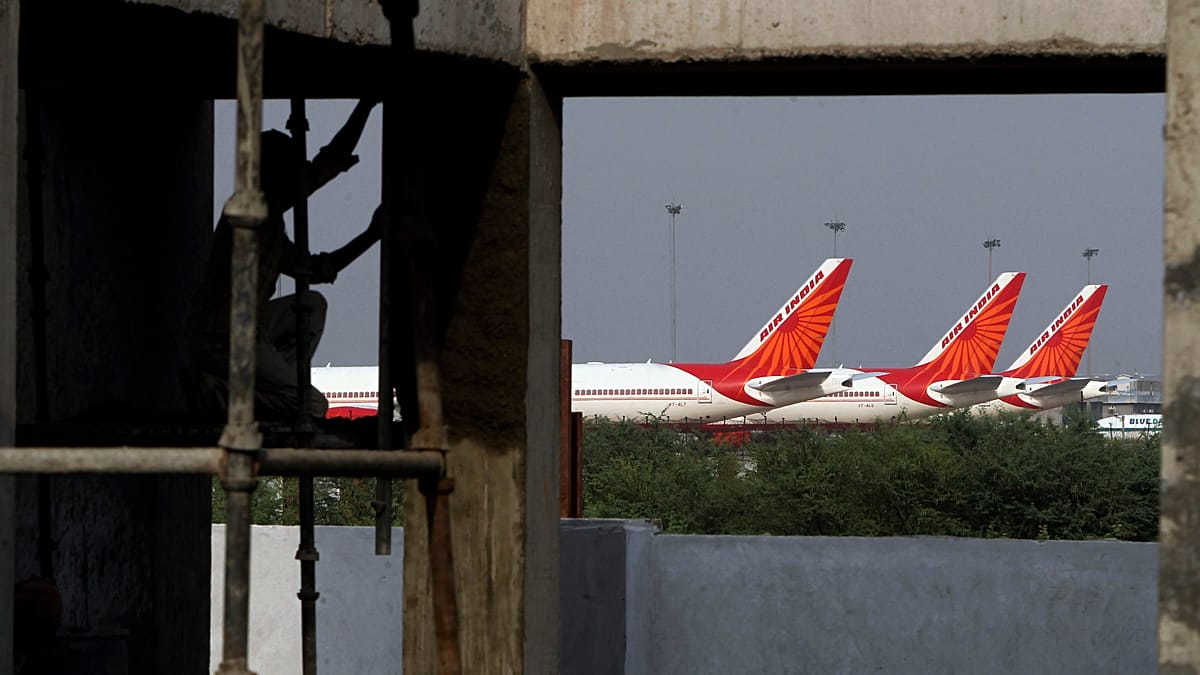
An investigation into an Air India flight that suddenly lost altitude last month has revealed a complex chain of events involving a triple hydraulic failure and a pilot who tested positive for psychoactive substances.
Flight AI2379, an Airbus A320 travelling from Phuket, Thailand, to New Delhi on 4 August, was cruising over Indian airspace when it experienced a sudden altitude upset. The aircraft, carrying 137 passengers, six cabin crew and two pilots, dropped 292 feet after initially climbing 372 feet, according to a preliminary report released on Friday by India's Aircraft Accident Investigation Bureau (AAIB).
The report states that the aircraft detected a triple-hydraulic failure, which caused the autopilot to disengage and triggered a stall warning for two seconds. The hydraulic systems subsequently recovered, and the aircraft returned to normal operating conditions. Twenty-four people on board were injured during the incident.
While the mechanical failure was transient, the investigation has also focused on the flight crew. Both pilots were tested for psychoactive substances following the incident. The report notes that the pilot in command (PIC) returned a non-negative result in the initial test, and a confirmatory blood test also came back non-negative. The co-pilot tested negative in both tests.
The AAIB report describes the confirmation of psychoactive substance use as a "serious concern." Air India has reportedly ordered one-time drug tests for all its pilots in response.
European aviation context
The incident comes amid heightened scrutiny of flight safety in the region. European aviation authorities have long maintained strict protocols for crew drug and alcohol testing, with random checks mandated under EU regulations. The case of Air India highlights the challenges faced by carriers operating across multiple jurisdictions, where enforcement and oversight can vary.
In Europe, the European Union Aviation Safety Agency (EASA) requires airlines to implement drug and alcohol testing programmes for safety-sensitive personnel. The findings from the Air India investigation may prompt European regulators to review their own procedures, particularly for flights originating from or passing through regions with less stringent testing regimes.
Meanwhile, the broader safety of civilian aviation has been a topic of concern, with Ukrainian President Volodymyr Zelenskyy recently warning that Russian skies are becoming unsafe for civilian flights. The Air India incident, though unrelated, underscores the importance of robust safety systems.
The AAIB's preliminary report does not draw conclusions about the cause of the hydraulic failure, but it notes that the aircraft's systems returned to normal after the brief malfunction. The investigation is ongoing, with the final report expected to include a detailed analysis of the hydraulic system and the crew's actions.
For the 137 passengers on board, the incident was a harrowing experience. The sudden drop, which lasted only seconds, left two dozen people injured, some requiring hospital treatment upon landing in New Delhi.
Air India has not publicly commented on the drug test results, but the airline's decision to conduct one-time tests for all pilots suggests a proactive approach to addressing the issue. The airline, which was privatised in 2022 and is now owned by the Tata Group, has been working to modernise its operations and improve safety standards.
The case also raises questions about the effectiveness of current drug testing protocols in the aviation industry. While the AAIB report does not specify which substance was detected, it highlights the need for rigorous screening and follow-up procedures.
As the investigation continues, the European aviation community will be watching closely. The incident serves as a reminder that safety is a shared responsibility, and that even brief lapses can have serious consequences.