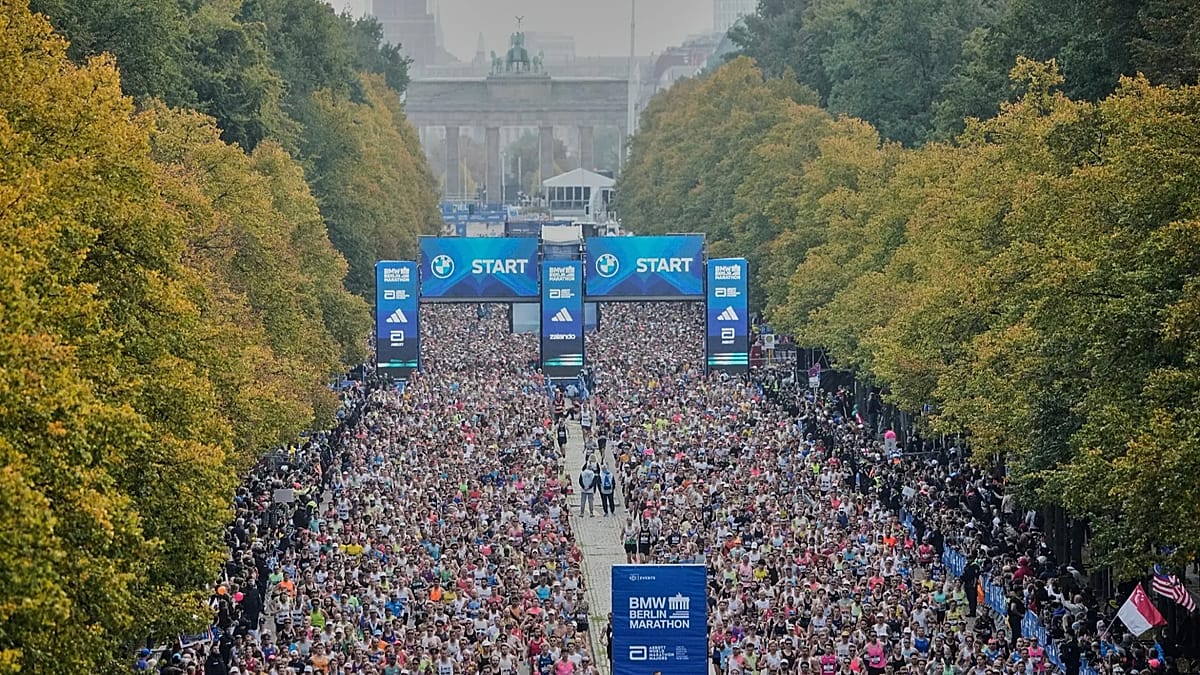
Air pollution is not just a health hazard—it can also cost runners precious minutes on race day. A new study from the University of Leicester has found that higher concentrations of nitrogen dioxide (NO₂) in the air are associated with slower finishing times in some of the world's most prestigious marathons.
Researchers examined more than 2.7 million race performances from the Berlin, Boston, Chicago, London, New York City, and Tokyo marathons between 2010 and 2024. The results, published in the journal Sports Medicine, show that for every microgram per cubic metre (µg/m³) increase in NO₂, men's finish times slowed by 1.43 minutes and women's by 1.56 minutes on average.
On a day with high pollution—where NO₂ levels reached 10.3 µg/m³ compared with a low of 5.2 µg/m³—finish times were roughly seven to eight minutes longer. The effect was most pronounced among recreational runners, whose times increased by 2.12 minutes per µg/m³, while elite runners saw only a 0.34-minute slowdown.
Urban marathons, urban pollution
Nitrogen dioxide is primarily emitted by vehicles, industrial processes, and other fossil-fuel combustion. It is known to impair lung function, cause airway inflammation, and trigger adverse cardiovascular responses. The study's lead author, James Donaldson, noted that the findings highlight the hidden impact of urban air quality on athletic performance.
London recorded the highest median race-day NO₂ concentration at 10.9 µg/m³, while Berlin had the lowest at 6.1 µg/m³. However, there is good news for the British capital: NO₂ levels on marathon day have fallen substantially since 2010, reflecting broader improvements in air quality.
Bryan Williams, chief scientific and medical officer at the British Heart Foundation, which supported the study, said: "Despite the known harms of air pollution, it is important to note that levels of nitrogen dioxide and PM2.5 on marathon day in London appear to have fallen substantially since the 2010 event, which is great news for heart health."
Why recreational runners are hit harder
The disparity between elite and non-elite runners may stem from several factors. Slower runners spend more time on the course, inhaling polluted air for longer. They are also more likely to train in the same urban environments where marathons are held, leading to chronic exposure. Elite runners, by contrast, often prepare in cleaner, rural settings and compete internationally.
Donaldson added: "The physiological adaptations that result from the high-intensity training undertaken by elite athletes may offer some protection against the harmful effects of air pollution."
Despite the findings, Williams stressed that exercise remains overwhelmingly beneficial. "The fact remains that exercise is still very beneficial for your cardiovascular health—it can reduce the risk of heart and circulatory diseases by up to 35 per cent," he said, urging people not to be discouraged from running.
The study adds to a growing body of evidence on the health impacts of air pollution, which also include links to cancer and other diseases. It also echoes concerns about environmental pollution in Europe and its broader effects on public health.
For city planners and race organisers, the findings suggest that improving air quality could have tangible benefits for athletes and spectators alike. As European cities like London and Berlin continue to tackle pollution, marathon runners may find themselves crossing the finish line a little faster.