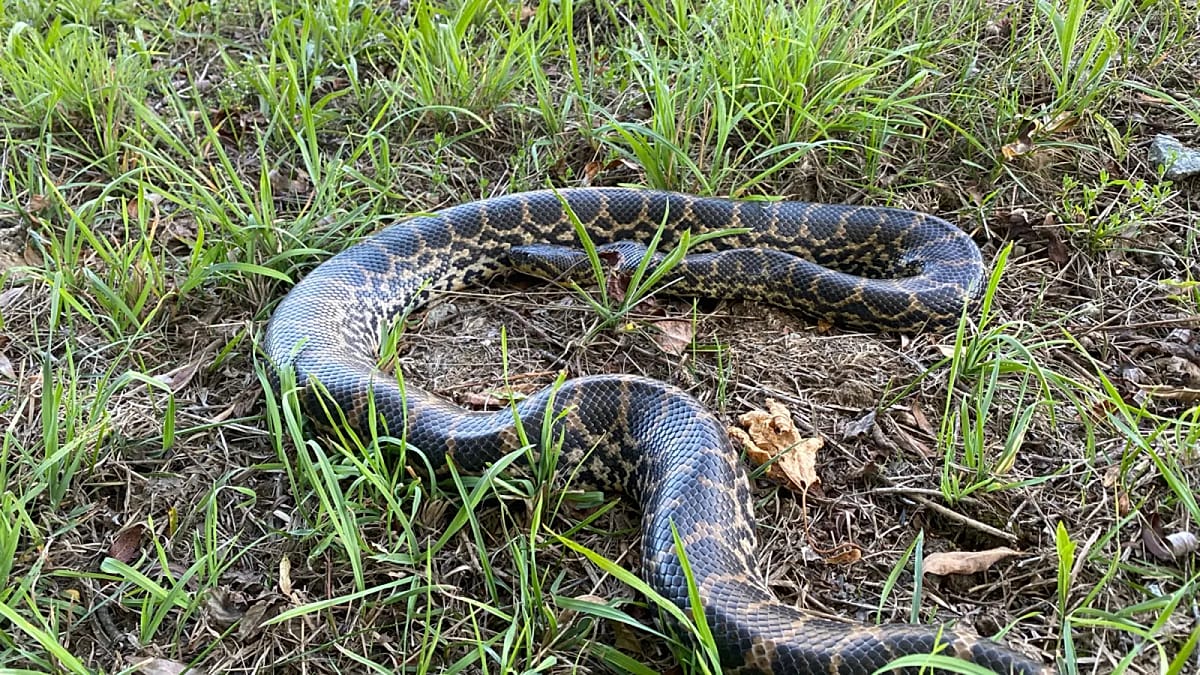
A routine stroll along the Danube in Lower Bavaria turned into an unexpected wildlife encounter last week. A 66-year-old woman spotted a large snake basking on the riverbank near Kirchroth, in the district of Straubing-Bogen. Its size alone told her this was no ordinary sighting. “It was a longer snake than the ones we have here,” she later told police.
Grass snakes and Aesculapian snakes are common in the region, and the latter can grow to nearly two metres. But this specimen was clearly different. Police and firefighters arrived, accompanied by a reptile specialist who quickly identified the animal as an anaconda, a constrictor native to South America's tropical wetlands.
The snake, measuring more than two metres, appeared to have been kept in captivity for some time. It offered no resistance during capture, suggesting it was accustomed to human handling. Authorities have not yet determined how it ended up on the Bavarian shore, but the case has raised questions about the illegal keeping of exotic pets.
Strict rules for dangerous animals
Under Bavarian law, keeping an anaconda is permitted only under stringent conditions. Large constrictors are classified as “dangerous animals of a wild species,” requiring special permits and proof of secure housing. In practice, such permits are rarely granted, and most anacondas in private hands are kept without authorisation.
Anacondas are among the world's largest snakes. They can reach up to nine metres in length and weigh as much as 200 kilograms. Their diet shifts with age and size: smaller individuals, especially males, feed mainly on birds. As females grow and reach sexual maturity, they take on larger prey, including capybaras, young deer, and even caimans. They kill by constriction, coiling around their victim until it suffocates, then swallowing it whole.
The discovery has drawn attention to the broader issue of exotic animal ownership in Europe. While the anaconda in Bavaria was likely a released or escaped pet, similar incidents have occurred across the continent, from pythons in the UK to alligators in Germany. Authorities urge anyone who can no longer care for such animals to contact specialised shelters rather than release them into the wild.
The Danube, Europe's second-longest river, has been the scene of other unusual finds in recent years. Record low waters have exposed fossils and WWII wrecks, and a Wehrmacht motorcycle from the Danube revived Budapest siege history. But a live anaconda is a first for the Bavarian stretch of the river.
Local authorities have not said whether the snake's owner will face charges. The animal has been taken to a reptile sanctuary, where it will be cared for pending a legal decision. For now, the Danube's banks are once again safe for walkers—at least from constrictors.