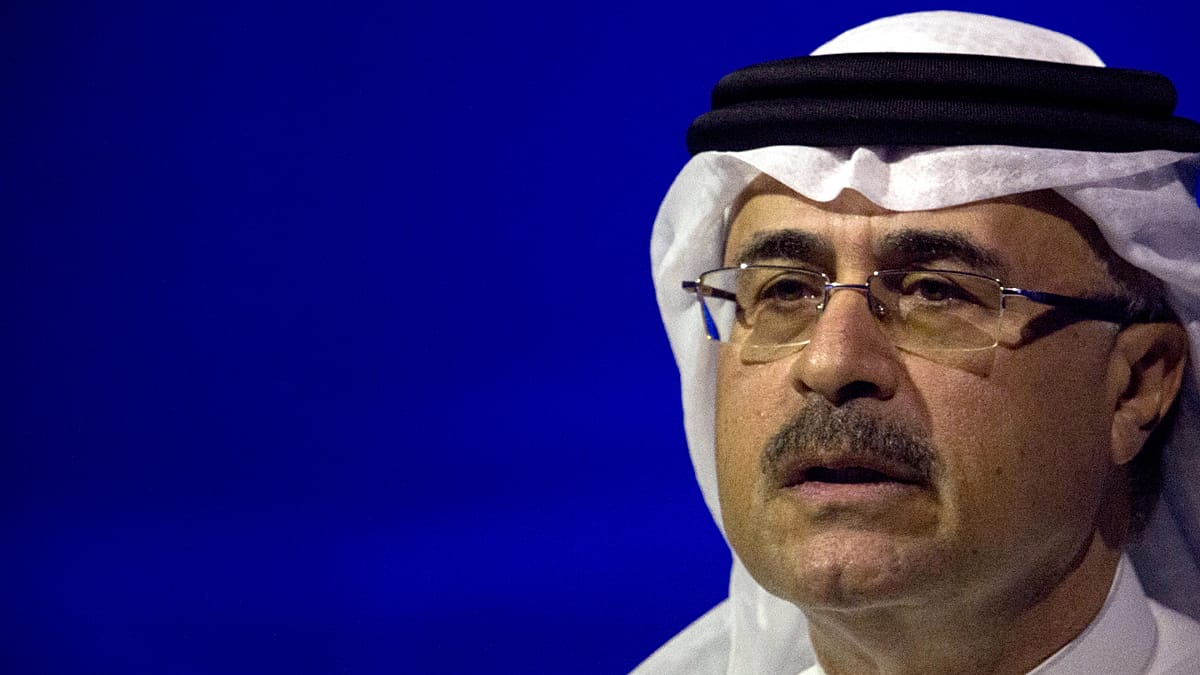
London — The head of Saudi Aramco, the world's largest oil company, has issued a stark warning about the fragility of global oil supplies. Speaking at the Energy Intelligence Forum in London on Monday, CEO Amin Nasser said that the world's oil stockpile system is already under severe strain, seven months into the conflict between the US and Iran.
Nasser pointed to the effective closure of the Strait of Hormuz, a narrow waterway that normally carries about 20% of the world's oil and liquefied natural gas. The disruption has drained inventories that could have cushioned further supply shocks, driving up prices and hurting the global economy.
“The supply resilience cushion is scarily thin,” Nasser told the two-day conference, attended by energy leaders from across the sector. He stressed that headline figures for commercial reserves are misleading, noting that less than 10% of reported stocks are actually available for use. Much of the remainder represents the minimum volume needed to keep infrastructure operational.
A two-year rebuild
According to Nasser, global oil inventories stood at roughly 10 billion barrels at the start of the crisis. Since then, nearly 3 billion barrels of supply have been lost—about half of what would normally transit the Strait of Hormuz in that period. More than 1 billion barrels have been withdrawn from onshore commercial inventories to offset the losses, leaving less than 6 billion barrels, much of which is “not practically available.”
Nasser described these inventories as “the last major tool in the box.” He warned that tapping reserves only buys time and does not address long-term supply-demand imbalances. “These volumes could help the world through one winter, but they do not amount to a lasting solution,” he said. Rebuilding stocks after the strait fully reopens could take up to two years, he added.
The warning comes as G7 countries, in coordination with the International Energy Agency (IEA), agreed on Friday to release 100 million barrels of diesel and crude oil to ease supply concerns. Nasser suggested that such releases are insufficient, noting that total inventories do not reflect what can actually be delivered to the market. “That's why you find they're struggling with 100 million barrels,” he said.
Regional exports recover via alternative routes
Despite the ongoing attacks on ships in the Strait of Hormuz, crude exports from the Middle East Gulf region, excluding Iran, returned to pre-war levels in September, according to maritime tracking firm Kpler. At least 16.5 million barrels per day left the region between 1 and 28 September, matching the pre-war average, and 10.5 million barrels per day above March's monthly average.
The recovery was driven by changes to export routes. Some 40% of those exports now bypass the Strait of Hormuz, compared with 17% before the war, with pipelines in Saudi Arabia and the United Arab Emirates providing key alternatives. Most crude that still crosses the strait is transferred to tankers offshore.
Nasser said Aramco is meeting its customers' requirements, citing the use of international storage facilities and the speed with which it has repaired infrastructure damaged during the conflict. The company is also seeking additional export routes and new storage facilities abroad to reduce its reliance on a single channel to reach global markets.
Saudi oil facilities have been hit by several attacks launched by the Houthis in Yemen since fighting resumed between the Saudi-led coalition and the Iran-backed Houthi fighters. These attacks have underscored the vulnerability of the region's energy infrastructure.
The warning from Aramco carries particular weight for Europe, which relies heavily on imported energy. European nations have been diversifying their energy sources, but the continent remains exposed to global oil price volatility. As analysts have noted, Europe's diesel stockpile covers only about ten days of global demand, highlighting the fragility of the supply chain.
Nasser's comments also resonate with broader concerns about energy security. NATO's secretary-general has warned that the alliance's model is unsustainable without greater European action on defense and energy. The current crisis underscores the need for Europe to accelerate its transition to more resilient energy systems.