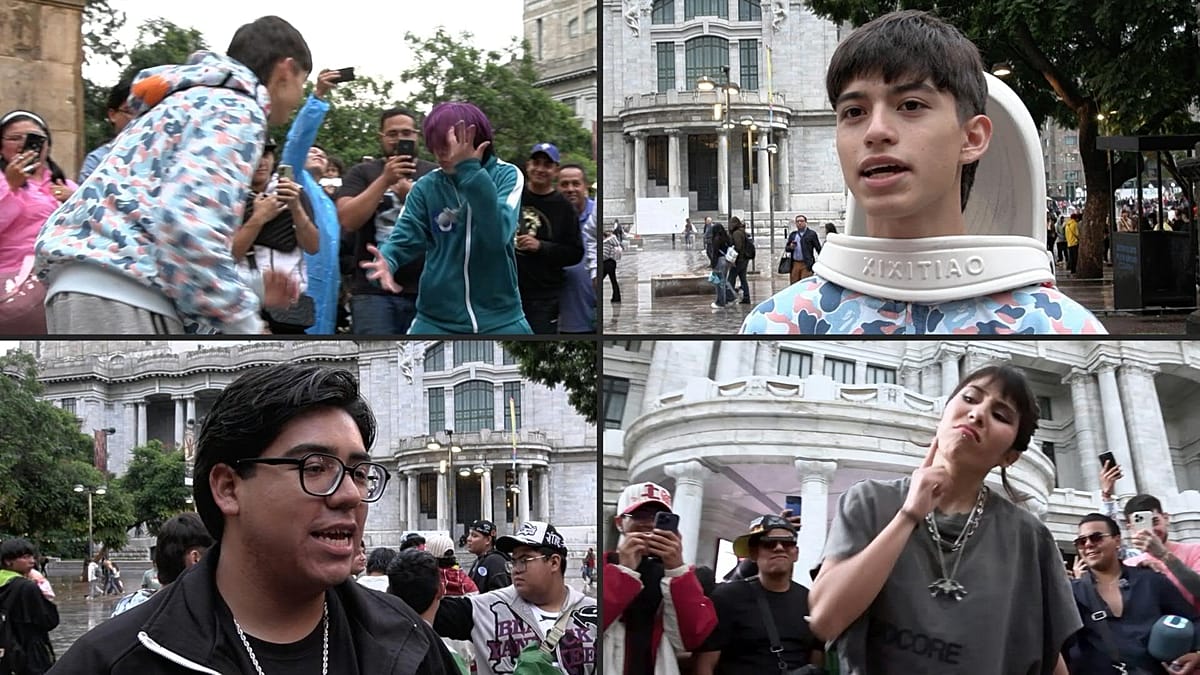
In Mexico City's bustling streets, a new kind of duel is unfolding. Teenagers face off in what they call 'Aura Battles' – a social media phenomenon where confidence, creativity, and a willingness to look foolish are the ultimate weapons. The trend, which has exploded across platforms like TikTok and Instagram, is now crossing the Atlantic and finding resonance among young Europeans.
At its core, an Aura Battle is a playful contest where participants take turns performing exaggerated, humorous, or surprisingly graceful moves to prove they have the most 'aura' – a slang term for charisma and self-assurance. Judges score based on originality, entertainment value, and sheer nerve. The winner takes home a cash prize, but for many, the real reward is the boost to their self-esteem.
Sixteen-year-old Kaled Rosales Salazar, who recently won a battle in Mexico City, sees it as a liberating experience. 'I do like being myself, you know, making a fool of myself,' he says. 'I don't really care what people think or say about me, because no matter what you do or don't do, people are going to criticize you anyway. So I thought, why not? If I could do this for free at home, I might as well do it for a reward, right?'
His victory earned him 2,000 Mexican pesos (about €100), but the psychological payoff appears far greater. The trend taps into a broader cultural shift among Generation Z, who are increasingly turning to digital platforms to build confidence and community.
What makes a winning aura?
Fourteen-year-old Carlos Irving Quintana, known online as 'Thanos,' explains the judging criteria. 'It's based on who does the most creative, funniest and most entertaining moves, on the "respect," I mean playful, tongue-in-cheek moves that are funny.' The emphasis is on wit and originality rather than polished performance – a stark contrast to the highly produced content that dominates much of social media.
Organiser Aldhir Gonzalez, who helped bring the battles to life, believes the trend is fundamentally about self-belief. 'Whoever has the most confidence. I would say it's kind of a battle of ego and self-confidence, not ego in a negative sense, but rather who has the confidence to believe they're the best, to dance the best and show off their moves. I think that's the real battle right now.'
Gonzalez and his team spotted the trend gaining momentum online and moved quickly to organise live events. The result has been a series of gatherings that blend street performance, comedy, and social media virality. As the battles grow, they are attracting attention far beyond Mexico's borders.
In Europe, where youth unemployment and economic uncertainty remain pressing concerns, the trend offers a low-cost, high-reward outlet for self-expression. Cities like Madrid, Barcelona, and Berlin have seen informal Aura Battle meetups emerge, often organised through WhatsApp groups and Instagram stories. The format adapts easily to local cultures – in Paris, participants add a touch of theatrical flair; in London, the humour is drier and more self-deprecating.
The rise of Aura Battles coincides with a broader European conversation about mental health and social connection among young people. A recent movement among young Europeans to rethink traditional life paths reflects a similar desire for authenticity and control. Aura Battles offer a playful, public way to practice vulnerability and confidence – skills that are increasingly valued in both personal and professional spheres.
Some observers draw parallels to other viral challenges, but Aura Battles stand out for their emphasis on positive self-presentation. Unlike dares that court danger or humiliation, these contests are designed to build participants up. The cash prizes, while modest, add a tangible incentive that fuels participation and viewership.
As the trend continues to spread, organisers are considering expanding to more European cities, with potential events in Amsterdam and Milan. They hope to partner with local youth centres and schools to promote the battles as a tool for building confidence and community. 'We see this as more than a game,' says Gonzalez. 'It's a way for young people to find their voice and their place in the world.'
For now, Aura Battles remain a grassroots phenomenon, but their rapid growth suggests they may become a staple of youth culture on both sides of the Atlantic. In an era where digital validation often feels hollow, these face-to-face contests offer something refreshingly real: a chance to be seen, heard, and celebrated for simply being yourself.