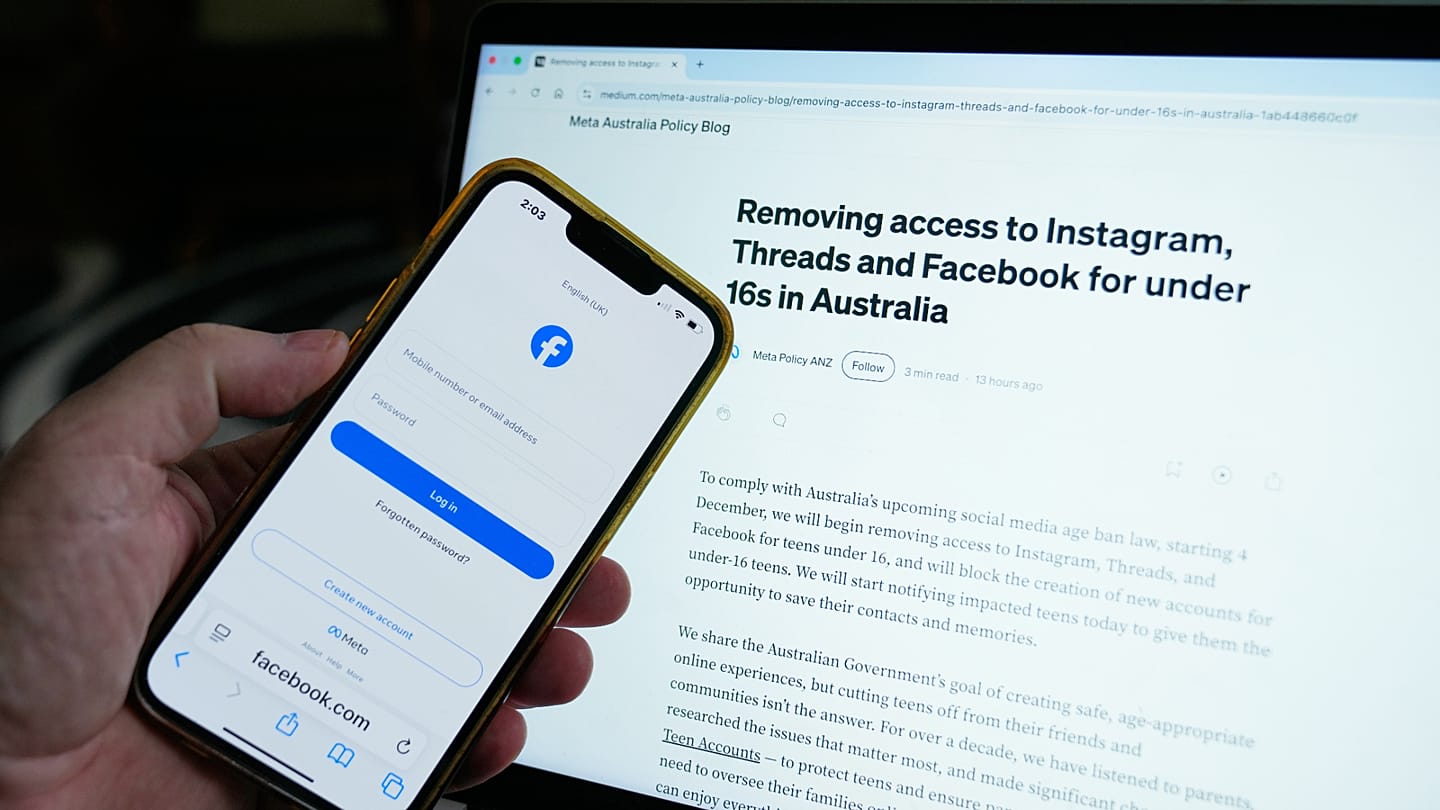
Australia is escalating its crackdown on social media platforms after a world-first ban on under-16s failed to curb youth usage. The government announced it will double fines for companies that do not enforce the age restriction, following data showing that seven in ten minors remained active on Facebook, Instagram, Snapchat, and TikTok three months after the law took effect.
Communications Minister Michelle Rowland accused tech giants of “taking the Mickey” by failing to implement robust age-verification systems. The new penalties raise the maximum fine to AUD 50 million (approximately €30 million) per violation, up from AUD 25 million. The move comes as European policymakers closely watch Australia’s experiment, with several EU member states considering similar restrictions.
Teens Outsmart Age Checks
Research by the Australian eSafety Commissioner found that teenagers easily bypassed age-verification tools using simple methods such as altering birth dates, using virtual private networks (VPNs), or borrowing adult accounts. The report highlighted that platforms like TikTok and Snapchat have not introduced mandatory age checks at login, relying instead on self-reported data.
“The current system is a sieve,” said Dr. Elena Marchetti, a digital policy researcher at the University of Melbourne. “Teens are digitally literate and find workarounds within minutes. Without biometric or government-issued ID verification, the ban is largely symbolic.” The findings echo concerns in Europe, where a growing debate over social media bans for teens has intensified, particularly after data showed girls are most affected by online harms.
Australia’s law, passed in late 2024, was the first globally to prohibit under-16s from creating accounts on major platforms without parental consent. It was hailed by child safety advocates but criticized by digital rights groups as overly broad and difficult to enforce. The new fines aim to pressure companies to adopt stricter measures, such as facial recognition or ID uploads.
European Implications
The Australian experience offers a cautionary tale for European regulators. The European Union’s Digital Services Act (DSA) already requires platforms to assess risks to minors, but does not impose a blanket age ban. Several countries, including France and Germany, have debated raising the minimum age for social media use to 15 or 16, but have hesitated due to enforcement challenges.
“Australia’s failure shows that bans alone are not enough,” said Markus Reinisch, a digital policy analyst at the European Policy Centre in Brussels. “Europe should focus on platform design and algorithmic transparency rather than age gates that teens can easily bypass.” The EU is also exploring European alternatives to US Big Tech, such as the W Platform, which emphasizes privacy and age-appropriate content.
In the UK, which left the EU in 2020, the Online Safety Act imposes a duty of care on platforms but stops short of an age ban. The Brexit legacy continues to shape Britain’s regulatory approach, with some lawmakers calling for a more aggressive stance similar to Australia’s.
Australia’s doubled fines may still prove insufficient. Critics argue that tech giants treat penalties as a cost of doing business. “For Meta or ByteDance, a €30 million fine is a rounding error,” said Dr. Marchetti. “What would hurt is a loss of access to the European market, which is why the DSA’s enforcement is more consequential.”
The Australian government has vowed to introduce legislation requiring platforms to use age-estimation technology, such as analyzing user behavior or facial features, to detect underage users. Privacy advocates warn such measures could infringe on civil liberties and create databases of children’s biometric data.
As Europe’s heatwave moves east, putting strain on Ukraine’s energy grid, the continent’s policymakers are also grappling with digital challenges. The Australian case underscores that regulating social media for minors is a complex task with no easy solutions. Whether Europe follows suit with bans or opts for more nuanced rules will depend on the outcome of ongoing trials and public pressure.