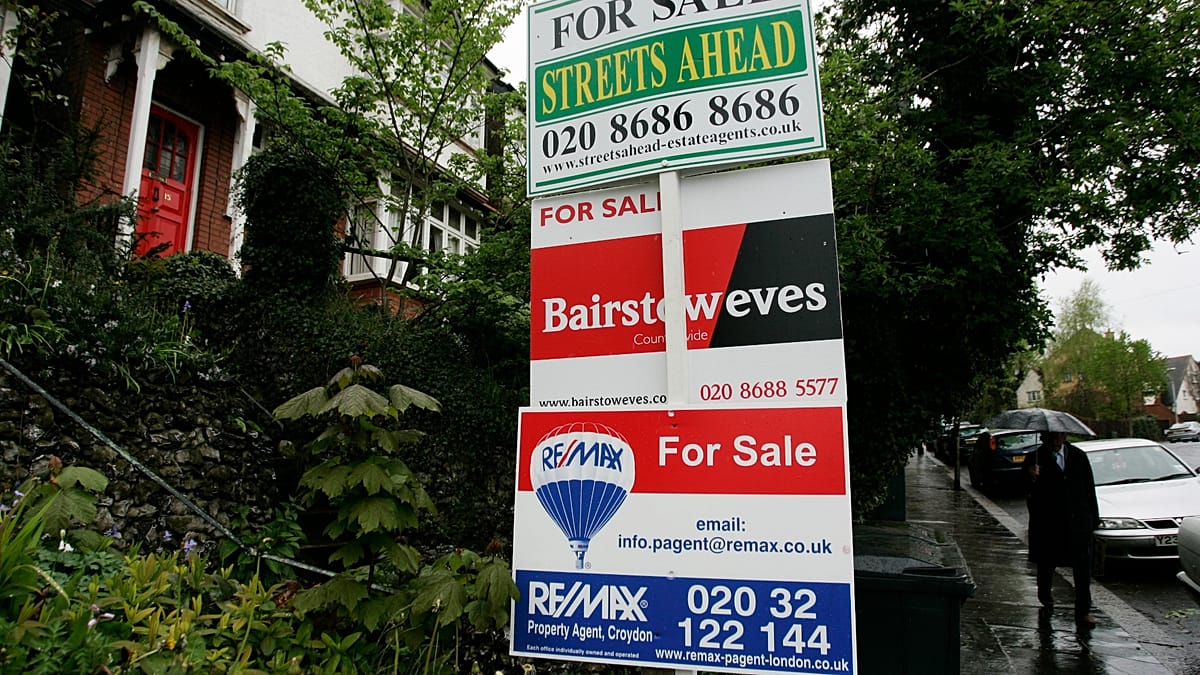
Homeownership rates across the European Union have declined slightly, with 68.5% of households living in owner-occupied homes in 2025, down 2.2 percentage points from 2010, according to Eurostat. The figures vary dramatically, from 47.2% in Germany to 93.8% in Slovakia. But a new survey from RE/MAX Europe sheds light on a related question: at what age do Europeans actually buy their first home?
Across 23 European countries, the average age of a first-time buyer is 31.3 years, according to the RE/MAX European Housing Trend Report 2025. The range is wide: from 28 years in Malta to 34.7 years in Switzerland and Greece. The data, based on over 21,000 adults surveyed, highlights how affordability, family support, and cultural norms shape the path to homeownership.
Five Largest Economies: UK Buys Young, Germany Buys Late
Among Europe's five largest economies, the United Kingdom has the lowest average age for first-time buyers at 28.4 years, tied with Luxembourg for the second-lowest overall. More than half (53%) of UK adults aged 18–34 receive financial help through cash gifts or inheritance, which may explain the early entry into the market. In contrast, Germany has the highest average age among the five, at 33.6 years—5.2 years later than the UK.
“In Germany, renting is much more widely accepted as a long-term housing choice, with its stronger tenant protections and greater housing stability,” said Michael Polzler, CEO of RE/MAX Europe. Among German respondents aged 18–34, 69% rent their home, compared with 38% across Europe. Spain follows with an average age of 30.9 years, while France (32.5) and Italy (32.8) both exceed the European average.
Family Support and Cultural Norms
Polzler noted that in Italy and Spain, young adults often stay in the family home until age 26—three years later than the European average—which helps them save but delays homeownership. In France, young adults typically move out at the European average age of 23, but only 33% receive family financial help to buy a home, compared with 48% across Europe. “This lower level of family assistance may be one reason why many French buyers take longer to get onto the property ladder,” he said.
Turkey ranks third-latest with an average age of 34.1, followed by Czechia (33.2), Poland (32.7), Bulgaria (32.5), Slovenia (32.2), and Croatia (32.1). At the other end, Hungary (28.5) and the Netherlands (28.8) complete the top five earliest, with Austria (29.1), Portugal (29.8), and Finland (29.9) also below 30. Ireland (30.8) sits just below the European average.
Youngest Buyers: UK Leads, Greece Lags
The survey also examined the share of buyers under 25. The UK has the highest proportion at 40.2%, meaning two in five first-time buyers purchase by age 25. Greece has the lowest, at 12.1%. When combining the 18–25 and 26–35 age groups, only 50.4% of Greeks buy their first home by 35, compared with the European average of 69.5%. Switzerland (53.2%) and Turkey (56%) also have low shares. At the other extreme, Luxembourg (87.8%), the Netherlands (85.2%), the UK (84.6%), and Hungary (82.8%) see over 80% of first-time buyers by age 35.
Interestingly, Euronews Business found no correlation between the average age of first-time buying and overall homeownership rates. For instance, Germany's late buying age coexists with a low ownership rate, while Slovakia's early buying age aligns with high ownership—but the pattern is not consistent across all countries.
The findings come amid a broader housing crisis across Europe, with rising prices and rents straining affordability. For more on rental disparities, see Eurostat Data Reveals Stark Rent Disparities Across European Capitals. Meanwhile, extreme weather events like the recent heatwave have also impacted housing conditions; see Red Heat Alerts Across Western Europe as Temperatures Exceed 40°C.