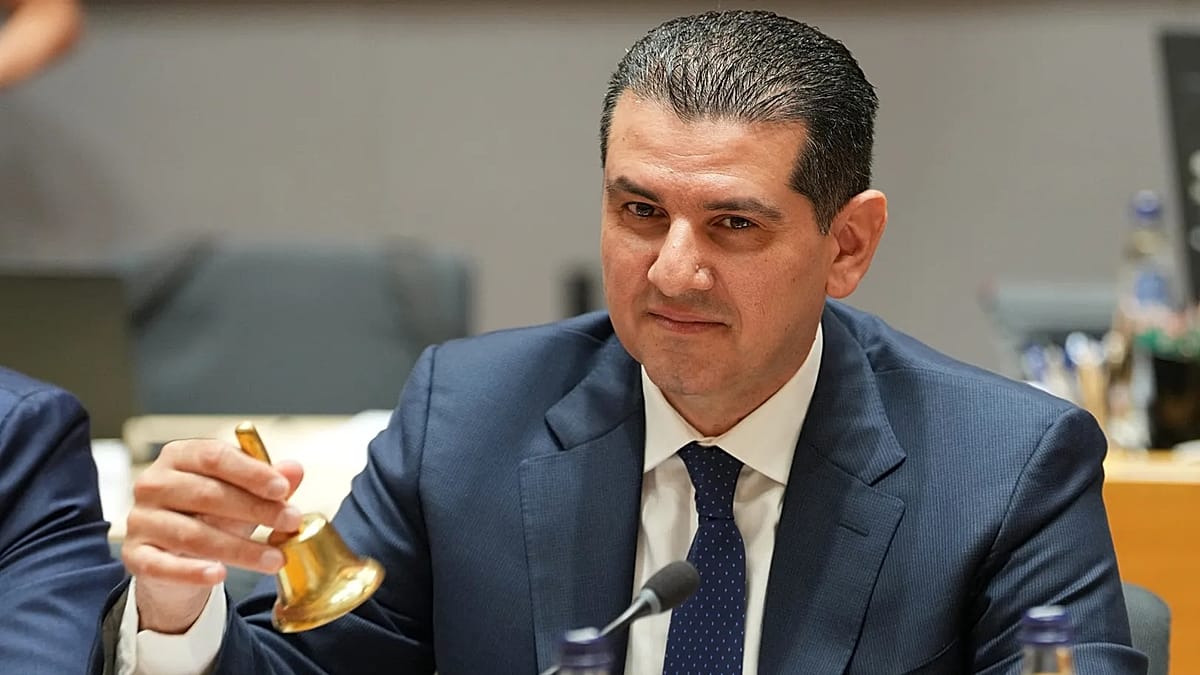
Nicosia has welcomed the entry of French investment group Meridiam as the majority shareholder in the Great Sea Interconnector, the project that aims to link Cyprus to Greece's electricity grid via a subsea cable. Energy Minister Michalis Damianou described the move as a "vote of confidence" in the scheme, which has faced years of delays and cost revisions.
Speaking after the signing of the agreement in Athens on Thursday, Damianou said Meridiam's participation brings "new momentum" to the project and confirms the shared political will of Cyprus and Greece to advance electricity interconnection. The deal was signed between Meridiam, the project's developer IPTO (the Greek grid operator), and its subsidiary Great Sea Interconnector (GSI).
The minister stressed that the Republic of Cyprus has not yet committed to becoming a shareholder. "Our final decisions will be based on the findings of the European Investment Bank," he said, adding that the EIB's due diligence study will also determine the project's final cost. The EIB is currently assessing the project's financial and technical viability, and its approval is seen as a prerequisite for Nicosia's participation.
Strategic significance for Cyprus and the region
The Great Sea Interconnector is designed to end Cyprus's energy isolation by connecting it to the European grid through Greece. Once completed, it would allow the island to import and export electricity, improving security of supply and enabling greater integration of renewable energy. For Greece, the link strengthens its role as an energy hub in the eastern Mediterranean.
Meridiam, a Paris-based infrastructure investor with a strong presence in Europe, the United States and Africa, specialises in long-term public infrastructure projects. Its entry is expected to bring international know-how and financial credibility to GSI, which has struggled to secure funding. The company's involvement is also seen as a signal to other investors that the project is bankable.
In parallel, a tripartite agreement was signed between IPTO, GSI and the French cable manufacturer Nexans. The three parties will work together to accelerate construction, with priority given to completing seabed surveys. These surveys are critical for determining the cable route and avoiding geological hazards in the Mediterranean.
The project has faced criticism over its escalating costs, which have risen from an initial estimate of around €1 billion to more than €2 billion. The EIB's due diligence is expected to provide a definitive figure, which will be crucial for Cyprus's decision. Damianou noted that the government is awaiting the study before making any commitments.
Beyond the Greece–Cyprus link, IPTO is also advancing a separate interconnection between Cyprus and Israel. The cost–benefit study for that project has been completed and will be submitted to the regulatory authorities of both countries in the coming days. That connection would further integrate the eastern Mediterranean into the European energy network.
The development comes amid broader concerns about energy security in Europe, particularly after disruptions to traditional supply routes. The low water levels on the Danube have forced emergency measures in central Europe, highlighting the fragility of the continent's energy infrastructure. The Great Sea Interconnector is part of a wider effort to diversify and strengthen Europe's electricity grid.
Cyprus's energy isolation has long been a political and economic issue. The island relies on imported oil for most of its electricity, making it vulnerable to price fluctuations and supply disruptions. The interconnector is seen as a key step towards reducing that dependence and meeting the EU's climate targets.
Damianou's comments reflect cautious optimism. "Meridiam's entry is a vote of confidence," he said, but he reiterated that Nicosia's final decision will be based on the EIB's findings. The government is expected to make a decision later this year, once the due diligence is complete.
The project also has geopolitical implications, as it involves cooperation between Greece, Cyprus and Israel, and could help reduce the region's reliance on Russian energy. The reshaping of energy routes due to the Hormuz crisis has underscored the importance of alternative supply lines.
For now, the focus is on the technical and financial groundwork. The seabed surveys are expected to take several months, and construction is slated to begin next year. If all goes according to plan, the interconnector could be operational by 2029, bringing Cyprus into the European electricity market for the first time.