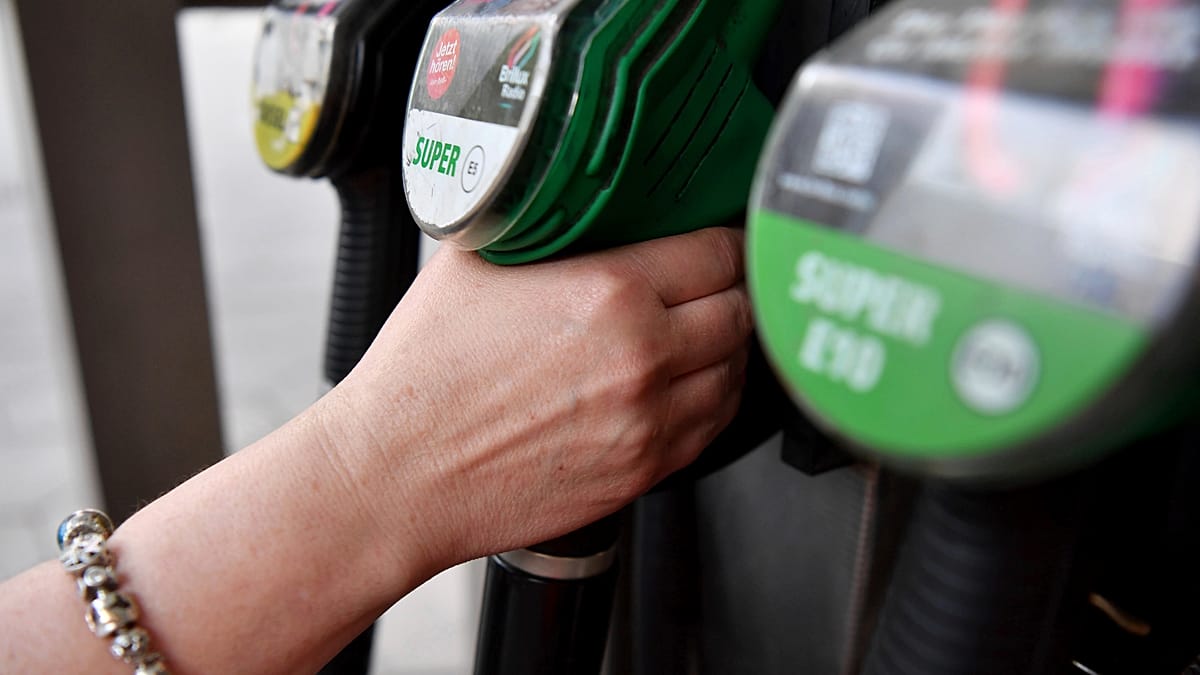
Filling a car in the European Union has rarely been more expensive. The weighted EU average for Euro-super 95 petrol hit €2.063 per litre on 14 September, the highest reading in the European Commission's price series since it began in 2005. The trigger was the outbreak of war with Iran at the end of February, which disrupted flows through the Strait of Hormuz. Brent crude, trading near $72 a barrel before the conflict, was quoted above $100 for next-month delivery on Monday. Refining margins have added further pressure: European Central Bank analysts estimate they contributed €0.17 per litre to petrol and €0.41 to diesel in the euro area during the third week of September.
Yet the single largest beneficiary of every fill-up is not the oil company but the treasury. Across the EU, taxes averaged €0.976 per litre, or 47.3% of the pump price. In seven member states the tax take exceeded €1 per litre. The structure is broadly similar everywhere: a fixed excise duty per litre, sometimes supplemented by carbon or stockholding levies, followed by value added tax charged on the total including those duties. Drivers therefore pay VAT on excise — a tax on a tax.
The ten heaviest petrol taxers
10. Latvia — €0.960 per litre. Riga raised its excise duty on unleaded petrol in January from €532 to €555 per 1,000 litres. A separate charge funding the country's emergency oil stocks adds just under seven cents, and VAT at 21% contributes €0.343.
9. Estonia — €0.963 per litre. Tallinn's excise stands at €0.593 per litre after May 2025 increases, though the government scrapped a further rise planned for May 2026 when prices spiked this spring. VAT at 24% adds €0.370, leaving tax at almost exactly half the €1.914 pump price.
8. Portugal — €0.978 per litre. The ISP, Portugal's main fuel tax, was €0.432 per litre in the week of 14 September, including the former road service contribution of 8.7 cents. A temporary discount kicks in when prices rise more than 10 cents above early-March levels, returning the extra VAT collected. A carbon levy adds €0.159 and VAT at 23% adds €0.387.
7. Italy — €1.049 per litre. Rome charges €0.673 per litre in excise duty, with petrol and diesel now aligned after the government cut petrol by 4.05 cents and raised diesel by the same amount in January. Diesel has been cut several times since late July to cushion the surge; petrol has not. VAT at 22% adds €0.376, meaning the state collects just over half of the €2.084 pump price.
6. France — €1.052 per litre. The excise formerly known as TICPE has stood at €0.690 per litre since 1 March. VAT at 20% adds €0.362. The debate over how far the state should lean on pump revenues is not confined to Paris: EU finance ministers weigh windfall taxes on energy firms as prices continue to climb.
5. Greece — €1.133 per litre. Athens levies €0.70 per litre on unleaded petrol, plus two small percentage-based charges — a customs-processing fee and a contribution to a special petroleum account — worth about 1.5 cents. VAT at 24% adds €0.418, bringing the total to 52.5% of the pump price, the largest share in the top ten.
4. Germany — €1.179 per litre. Berlin's energy tax is a fixed 65.45 cents per litre. The government temporarily cut it by 14.04 cents from 1 May to 30 June because of the war, but the full rate is back. A carbon price adds about €0.148, with CO2 certificates for fossil fuels auctioned since January within a corridor of €55 to €65 per tonne. VAT at 19%, one of the bloc's lowest, adds €0.376.
3. Finland — €1.193 per litre. Helsinki's fuel duty of €0.722 per litre has three components: an energy-content tax, a CO2 tax and a small security-of-supply fee. In January the carbon value used to calculate the CO2 tax was lowered from €62 to €56.8 per tonne. Finland's 25.5% VAT rate — the EU's second-highest after Hungary's 27% — adds €0.471 per litre.
2. Denmark — €1.230 per litre. Copenhagen has the EU's most expensive petrol at €2.564 per litre, but not its heaviest taxer. Fuel duties total 5.36 kroner per litre before VAT, about €0.717, split between an energy tax, a CO2 tax and a nitrogen oxides levy. VAT at 25% applies to a high pre-tax price of €1.334, adding €0.513 — the largest VAT amount in the EU.
1. The Netherlands — €1.270 per litre. No member state extracts more tax from a litre of petrol. The Dutch excise duty is €844.69 per 1,000 litres in 2026, the highest in the bloc, plus a stockholding levy of 0.8 cents. VAT at 21% adds €0.422. Every litre sold last week carried €1.270 in tax, 52% of a €2.434 pump price.
Why the ranking matters beyond the pump
The spread between the Netherlands and Latvia is roughly 31 cents per litre, enough to shape cross-border fuel tourism and to sharpen arguments in national capitals about how much fiscal room governments retain when crude prices spike. It also feeds into the wider Brussels conversation about energy taxation and the EU's long-term budget, where Ireland pushes for new EU taxes as the multiannual financial framework negotiations enter their decisive phase. For now, the arithmetic is simple: whatever the oil price does, roughly half of what European drivers pay at the pump never reaches the refinery.