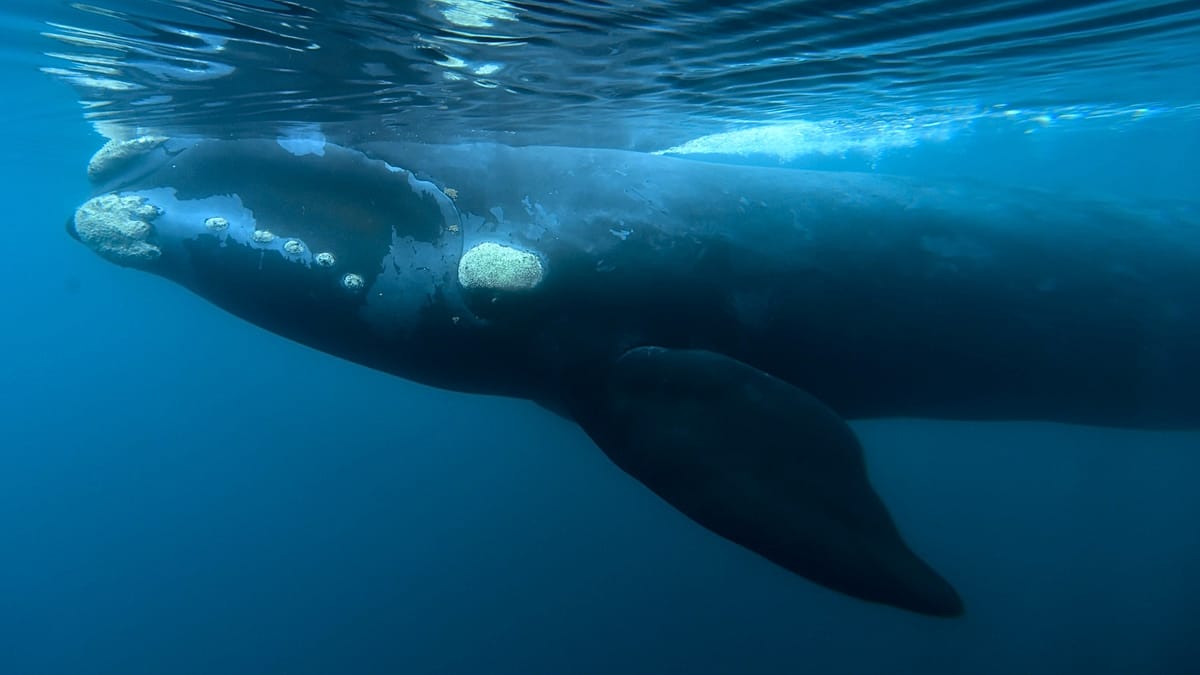
Marine biologists and provincial authorities in Argentina are racing to explain an exceptionally lethal calving season for southern right whales, after dozens of dead calves washed ashore this week along the coast of Chubut province in Patagonian Argentina. The deaths have been recorded since June and have unsettled researchers who monitor one of the South Atlantic's most important breeding refuges.
"The mortality rate among calves is quite high, especially this season," Mariano Coscarella, a researcher at the Marine Mammals Laboratory of the National Scientific and Technical Research Council (Conicet), told AFP. Coscarella and his colleagues have been documenting the strandings as they accumulate.
Erysipelas emerges as a leading hypothesis
Veterinarians are now examining whether erysipelas — an infectious disease caused by bacteria commonly found on the skin of these cetaceans — could be driving the deaths. Chubut's provincial government has said preliminary analyses point toward a common marine bacterium, though officials stress that the inquiry remains open and no definitive cause has been established.
Coscarella said the current evidence leans toward a natural explanation, but he cautioned that human activity cannot yet be excluded as a contributing factor. The provincial administration says it is coordinating closely with the scientific community to trace the origin of the episode.
The scale of the loss is significant. Hundreds of southern right whale calves have died in recent months, according to authorities, making this one of the deadliest seasons on record for the species in Argentine waters.
A vital calving ground under scrutiny
Puerto Madryn and the nearby Valdés Peninsula form one of the principal breeding refuges for the southern right whale. Each year, large numbers of the animals arrive in these waters to mate and raise their young. Adults can reach roughly 17 metres in length and weigh around 40 tonnes.
In 2025, a record 2,110 whales were counted in the area, including about 800 juveniles. This year the tally stands at 1,375 animals, among them nearly 400 calves, according to figures provided by Coscarella. The contrast between the two seasons has sharpened concerns about what is happening to the youngest members of the population.
Despite the high number of deaths recorded this season, Coscarella noted that the episode does not, for now, pose a medium-term threat to the region's whale population. Southern right whales were hunted to near-extinction in the 20th century before international protections allowed numbers to recover, and the species remains a flagship of South Atlantic conservation.
The investigation is being watched beyond Argentina. European marine researchers and conservation bodies have long tracked southern right whale populations as indicators of ocean health, and any bacterial or environmental cause identified in Patagonia could carry lessons for other cetacean habitats. The Valdés Peninsula itself is a UNESCO World Heritage site and a cornerstone of Argentina's wildlife tourism economy.
For now, scientists are urging patience. Samples from the dead calves are being analysed, and a clearer picture is expected in the coming weeks. Until then, the question of what is killing Patagonia's whale calves remains unresolved — and the coming calving seasons will determine whether this year's toll was an anomaly or the start of something more troubling.