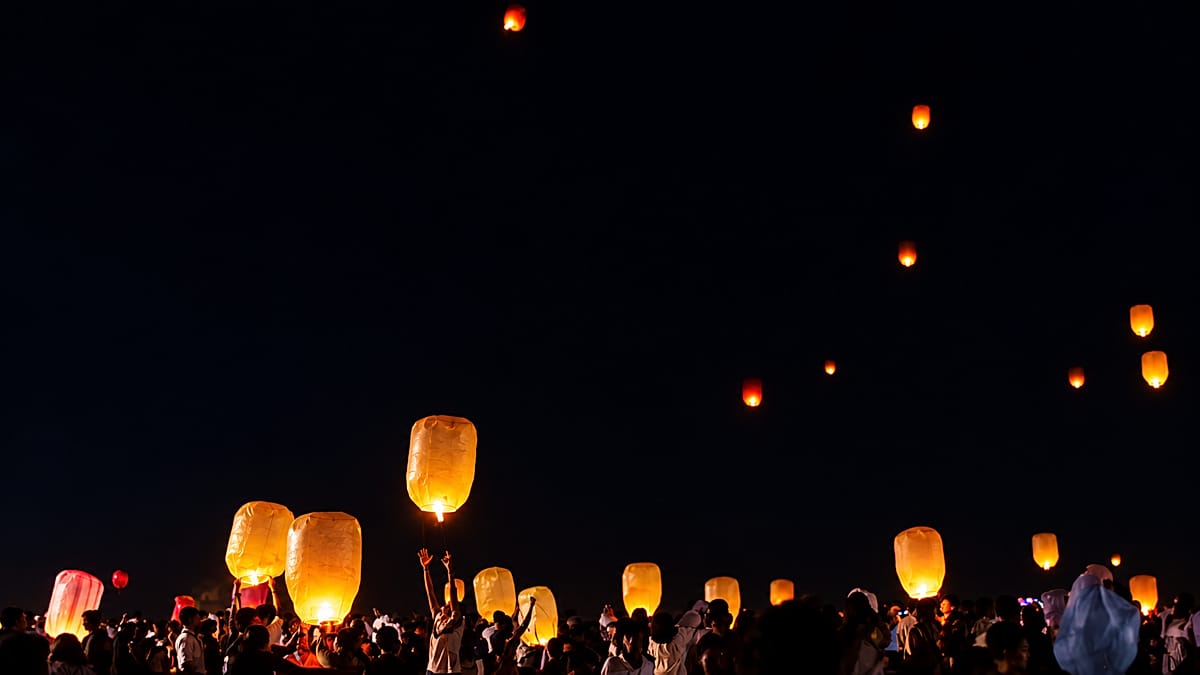
Bagan, Myanmar's ancient heartland, was bathed in a warm, flickering glow on the night of the Thadingyut festival, as hundreds of paper lanterns drifted upward past the silhouettes of centuries-old pagodas. Thousands of locals and travellers converged on the plain, a UNESCO World Heritage site, to witness the spectacle that signals the end of Buddhist Lent.
Thadingyut, also known as the Festival of Lights, is one of the most significant celebrations in Myanmar's Buddhist calendar. It commemorates the Buddha's return to earth after preaching in the heavens, and is marked by the illumination of homes, streets, and temples. In Bagan, the festival takes on a particularly dramatic dimension, with the vast archaeological landscape—home to over 2,000 surviving temples and stupas—serving as a backdrop for the floating lanterns.
A tradition that unites generations
For many attendees, the event is both a religious observance and a communal celebration. Families spread out on mats among the temple grounds, sharing food and stories as the sky slowly filled with lights. Young monks in saffron robes moved through the crowds, their presence a reminder of the deep spiritual roots of the occasion.
"It's a moment of peace and reflection," said Aung Myint, a resident of nearby Nyaung-U who has attended the festival for over two decades. "The lanterns carry our wishes and our gratitude. When they rise, we feel connected to something larger than ourselves."
The festival also draws international visitors, many of whom time their trips to coincide with the full moon of Thadingyut. Tour operators in Yangon and Mandalay report a steady increase in bookings for the period, as travellers seek authentic cultural experiences beyond the usual tourist trail.
Preserving heritage amid change
Bagan's temples, built between the 9th and 13th centuries, have survived earthquakes, wars, and the passage of time. The 2016 earthquake damaged more than 400 structures, prompting a major restoration effort supported by UNESCO and international experts. The festival, however, remains a living tradition that predates the modern restoration era.
Local authorities have worked to balance the event's popularity with the need to protect the fragile archaeological site. This year, designated viewing areas were set up to minimise foot traffic on the most delicate monuments, and lanterns were made from biodegradable materials to reduce environmental impact.
The spectacle in Bagan echoes similar light festivals across Asia, from Thailand's Loy Krathong to Diwali in India. For European travellers, such events offer a glimpse into cultural practices that have endured for centuries, much like the transhumance festival in Madrid, where sheep are herded through the city streets in a nod to ancient pastoral routes.
As the last lanterns faded into the night, the crowd dispersed slowly, leaving the temples to their silent vigil. For those who witnessed it, the image of Bagan's spires against a sky full of lights will linger long after the festival ends.
For travellers planning a visit, the festival is a reminder that some experiences transcend borders. As with planning a holiday on a budget, timing can make all the difference—and for those willing to venture off the beaten path, Myanmar's ancient capital offers an unforgettable reward.