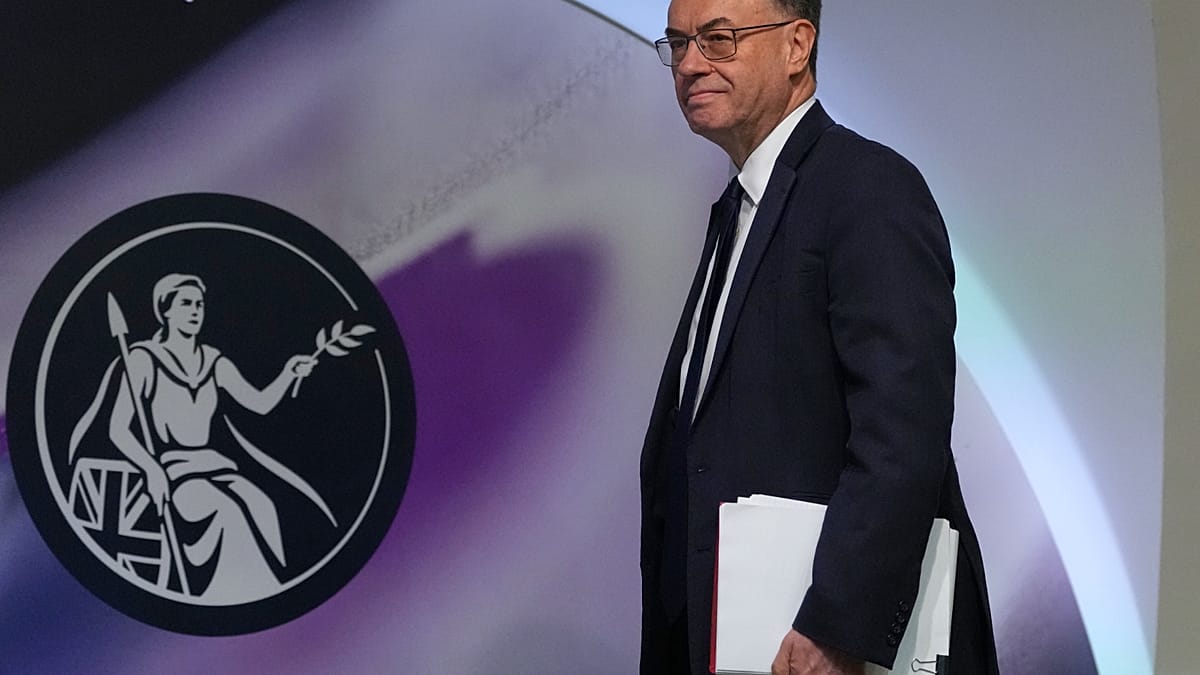
The Bank of England held its main interest rate at 3.75% on Thursday, extending a pause that began in December 2025, as policymakers weighed the inflationary effects of the Iran war against signs of economic resilience. Governor Andrew Bailey and the Monetary Policy Committee (MPC) were widely expected to keep rates on hold, maintaining a neutral stance on future moves.
The decision came a day after official data showed UK consumer prices rose 2.8% year-on-year in May, unchanged from April and below economists' forecasts of 3.0%. That left the headline rate at its lowest since early 2025, though still above the Bank's 2% target. Beneath the surface, transport costs surged to 6.8%, driven by higher fuel prices and air fares, while food inflation eased to 2.2% and housing costs moderated.
The stable inflation figure raised hopes that the price pressures from the spike in oil and gas after the Iran war began on 28 February may be less severe than anticipated. Economists expect no further rate hikes in coming months if falling energy prices continue to ease inflation. Bailey described the recent drop in oil prices as "encouraging," but cautioned that "the higher energy prices of the past four months mean there's already some inflationary pressure in the pipeline." He added that the Bank's job is to ensure that does not turn into sustained inflation above the 2% target.
The decision was not unanimous: two of the nine MPC members voted for a quarter-point increase, reflecting concerns that higher energy costs could still feed through into broader inflation. This split mirrors similar debates at other central banks, including the European Central Bank, which raised rates for the first time in three years amid war-driven eurozone inflation, and the Federal Reserve, which held steady but signalled a possible hike.
Labour market losing momentum
Thursday's labour market data painted a mixed picture. The unemployment rate dipped unexpectedly to 4.9% in the three months to April, down from 5.0% in the first quarter, yet payrolled employee numbers fell over the period, pointing to an underlying loss of momentum. Wage growth, a key metric for the Bank, held firm with regular pay excluding bonuses rising 3.4% on the year.
Richard Carter, head of fixed interest research at Quilter Cheviot, said: "The labour market is still continuing to lose momentum, with the latest figures showing a further cooling." Sanjay Raja, chief UK economist at Deutsche Bank, struck a similar note, cautioning that "it's clear that the labour market is not out of the woods yet," though he added that the mixed data buys the committee more time to wait and see how the economy evolves.
The combination of cooling headline inflation, a softening jobs market, and still-robust pay growth underscores the bind facing the MPC. Strong earnings keep alive the risk of second-round effects, where higher wages feed back into prices, even as hiring loses steam. This dynamic is not unique to the UK: across Europe, central banks are grappling with similar trade-offs, as seen in Spain, where inflation held at 3.2% for a third month, and in the Eurogroup, where fiscal policy is being urged not to undermine the ECB's inflation fight.
For now, the Bank of England's pause reflects a cautious approach, waiting for clearer signals on whether the war's energy shock will fade or persist. The next MPC meeting in August will be closely watched for any shift in tone.