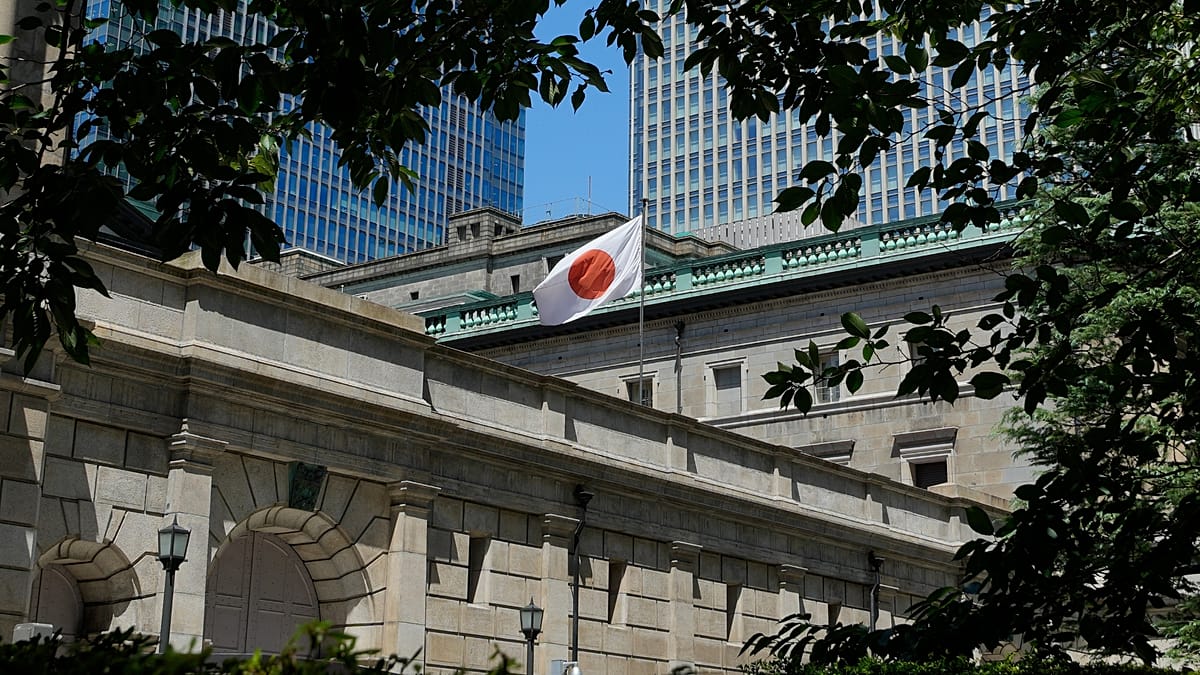
The Bank of Japan (BoJ) delivered its most aggressive monetary tightening in decades on Friday, raising its benchmark interest rate to 1.25% from 1.0%. This marks the highest level since 1994 and underscores the central bank's determination to normalise policy after nearly three decades of ultra-low or negative rates.
The decision, taken at the end of a two-day policy board meeting, was widely anticipated by markets. It comes as inflationary pressures in Japan intensify, driven largely by soaring energy costs linked to the ongoing war in Iran. For a resource-poor nation that imports nearly all of its oil, the spike in crude prices is a significant economic headwind.
A shift away from deflationary mindset
For years, the BoJ kept rates near or below zero to encourage borrowing and spending, aiming to pull the economy out of persistent deflation. That era is now firmly in the rear-view mirror. With inflation hovering around the central bank's 2% target, policymakers are pivoting towards a more conventional stance. However, the recent surge in prices, particularly for gasoline and oil-related products, has drawn complaints from consumers who feel the pinch of rising living costs.
The rate hike follows a similar move by the US Federal Reserve, which raised its key rate on Wednesday for the first time since 2023. The Fed's action, aimed at curbing stubbornly high inflation, has added to global monetary tightening. The BoJ's decision also comes amid sustained US pressure on Japan to address the yen's weakness. The two nations recently intervened jointly to support the currency, which had fallen to 160 yen per dollar earlier this year. After the BoJ's announcement, the dollar was trading at around 155 yen.
Analysts suggest that the BoJ may not stop here. With inflation expectations firming and the economy showing resilience, further rate increases could be on the horizon, possibly later this year or early next year. The Nikkei 225, Tokyo's benchmark stock index, rose after the decision, indicating that investors had largely priced in the move.
For Europe, the BoJ's tightening has indirect but notable implications. European bond yields have already been under pressure as Middle East tensions stoke inflation fears, and a higher yen could affect trade dynamics with the eurozone. Meanwhile, the European Central Bank continues to chart its own course, balancing inflation concerns against slowing growth. The BoJ's move is a reminder that central banks across the globe are grappling with similar challenges, even as their policy paths diverge.
As Japan steps away from its unconventional monetary experiment, the rest of the world watches closely. The success or failure of this normalisation will have ripple effects on global financial markets, from Frankfurt to London. For now, the BoJ's message is clear: the era of zero rates is over, and the fight against inflation is far from won.