Asian equities largely advanced on Friday, buoyed by a rebound on Wall Street and a retreat in global oil prices. The moves offered some relief to investors who had been rattled by a volatile week of central bank decisions and geopolitical tensions.
Japan's Nikkei 225 led the gains, climbing 1.9% to 65,332.57. The rise came after the Bank of Japan lifted its benchmark interest rate to 1.25% from 1.0%, the highest level in 31 years. The decision had been widely anticipated, following the Federal Reserve's own rate increase earlier in the week. Pressure from Washington on Tokyo to tighten policy has been mounting amid concerns over the yen's persistent weakness. The two governments recently intervened jointly to support the currency, though the effect has been limited.
In currency markets, the dollar strengthened to 157.11 yen from 155.95 yen, while the euro edged up to $1.1487 from $1.1480.
Regional markets mixed but mostly higher
South Korea's Kospi jumped 2.3% to 6,866.83, while Australia's S&P/ASX 200 was nearly flat, slipping less than 0.1% to 8,731.50. Hong Kong's Hang Seng added 0.7% to 24,769.80, and the Shanghai Composite rose 1.0% to 3,916.08.
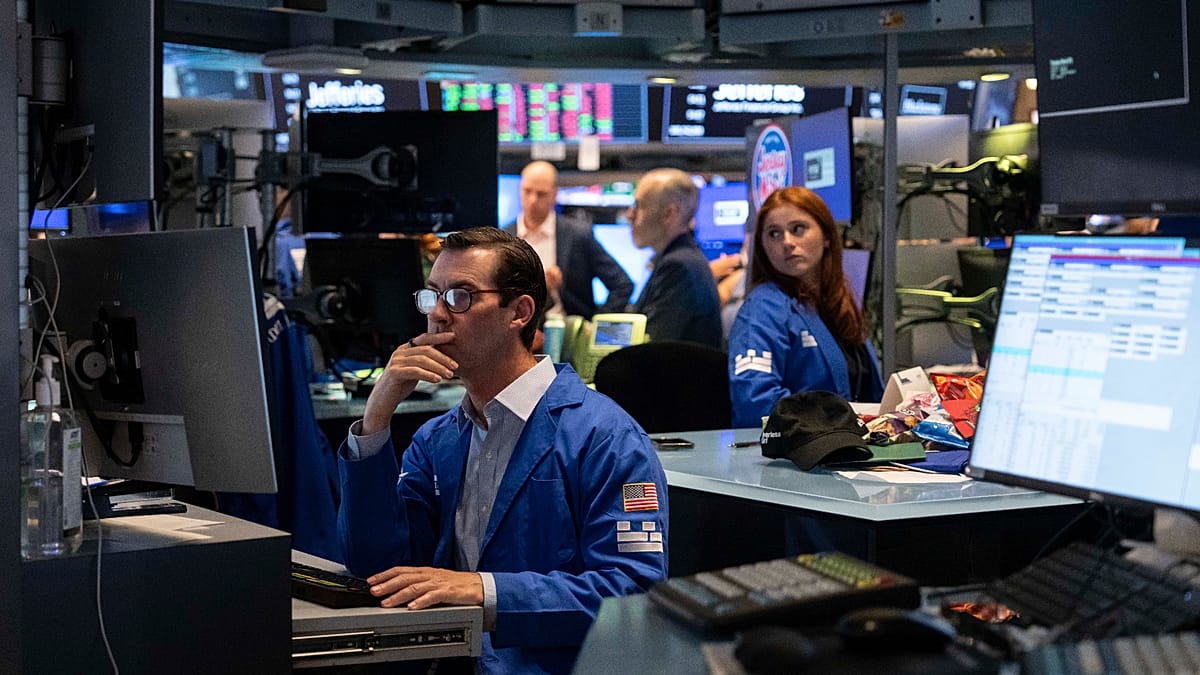
The positive tone in Asia followed a strong session on Wall Street, where the S&P 500 rose 1.1%—only its second gain in nine sessions. The Dow Jones Industrial Average added 316 points, or 0.6%, and the Nasdaq composite climbed 1.7%.
Falling oil prices and easing pressure in the bond market helped US stocks recover much of the previous day's losses. Brent crude, the international benchmark, slid 0.94% to $103.83 a barrel in Asian trading, while US crude fell 0.83% to $101.06. Earlier in the week, Brent had spiked to nearly $110 on fears that the conflict with Iran would disrupt Middle East supplies. Although prices remain well above the $72 level seen earlier this summer, the recent decline has pulled Treasury yields lower—the 10-year yield dropped to 4.93% from 5.01%—and removed some pressure on equities.
The Federal Reserve's decision on Wednesday to raise the federal funds rate by a quarter of a percentage point, its first hike in over three years, initially sent stocks on a roller-coaster ride. Officials signalled that one more increase could come this year as they battle high inflation. The shift has built confidence that the Fed is serious about returning inflation to its 2% target, but higher rates also tend to weigh on stock valuations.
For European investors, the global rate environment remains a key factor. The European Central Bank has been charting its own course, and the reaction of European shares to the Fed's move has been closely watched. Meanwhile, the broader economic picture in Europe is shaped by energy costs, which are sensitive to oil price swings. A sustained decline in crude could ease inflationary pressures across the continent, potentially giving the ECB more room to manoeuvre.
Analysts caution that the relief in markets may be short-lived. The conflict in the Middle East remains unresolved, and any escalation could send oil prices soaring again. Moreover, the yen's weakness persists despite intervention, and Japan's rate hike may not be enough to stem capital outflows.
In the US, the S&P 500 closed at 7,637.76, the Dow at 51,778.04, and the Nasdaq at 26,418.30. All three indices remain below their recent peaks, reflecting the uncertainty that has gripped global markets.
For now, investors are taking comfort in the fact that oil prices are off their highs and that central banks are acting decisively. But the path ahead is fraught with risks, from geopolitical flashpoints to the lingering effects of monetary tightening. As always, the interconnectedness of global markets means that developments in Asia, Europe, and the United States will continue to influence one another.