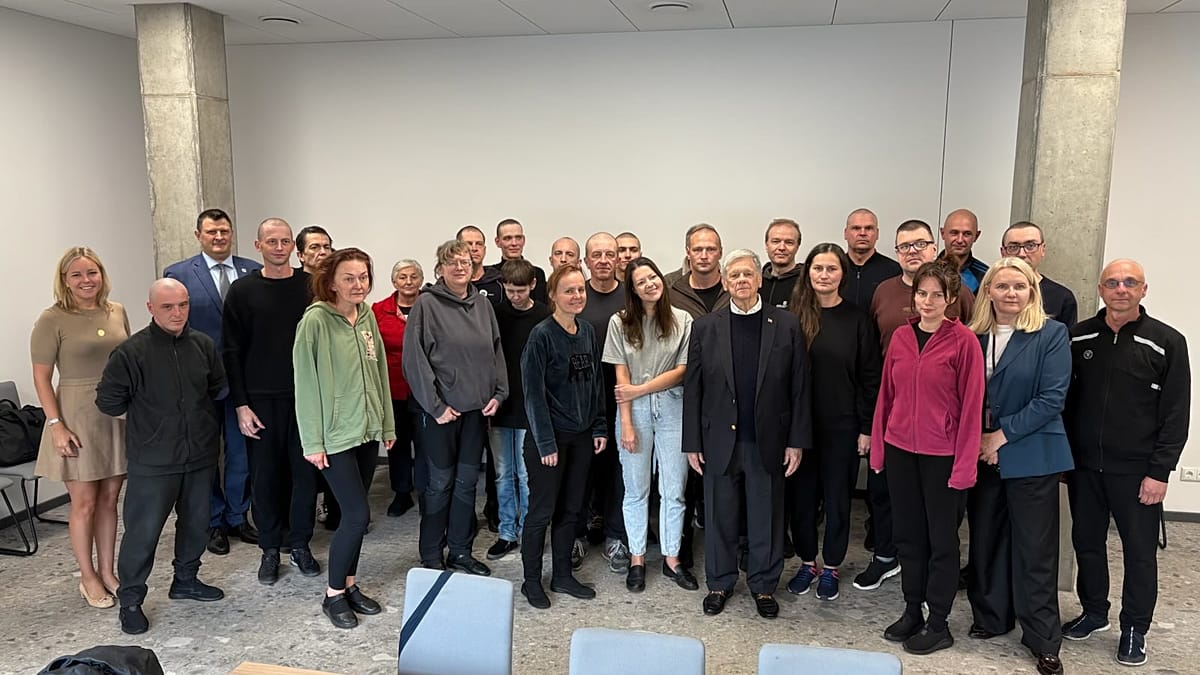
Belarus has released 25 political prisoners in a deal brokered by the United States, which in return lifted sanctions on two Belarusian companies. The announcement was made by US envoy John Coale, who was in Minsk for the negotiations.
Coale described the release as "a sign of goodwill" and indicated that further talks could lead to "a further release of individuals and additional sanctions relief." The deal was announced on his social media account, where he thanked President Donald Trump for his "commitment to direct diplomacy."
The US and many Western countries had imposed sanctions on Belarus after it allowed Russia to use its territory for the invasion of Ukraine in 2022. Washington has now eased restrictions on paint manufacturer Lakokraska and the forestry group Bellesbumprom.
Opposition cautious but hopeful
Sviatlana Tsikhanouskaya, the opposition leader in exile, welcomed the release but warned that "it is clear that Lukashenka does not want to release all political prisoners." Her comments reflect the deep skepticism among activists who have seen previous releases followed by new arrests.
Hundreds of people were imprisoned after mass protests in 2020, which erupted following the disputed re-election of President Aliaksandr Lukashenka, who has been in power since 1994. The independent Viasna rights group says there are currently 912 political prisoners behind bars.
Rights groups and activists caution that while the regime has released some prisoners, it continues to arrest and imprison others. Just last week, a lawyer representing opposition figure Viktor Babaryko was sentenced to three years in prison.
The release comes amid heightened tensions in the region, with Belarus recently launching military drills near NATO's Suwałki Gap and re-emerging as a launchpad for Russian drone strikes on Ukraine and NATO territory. These developments underscore the complex security environment in which this prisoner exchange takes place.
European governments have watched the deal with interest, as they grapple with their own sanctions policies. The EU has recently faced internal divisions over sanctions renewals, with France and Slovakia blocking a renewal and France linking sanctions to prisoner releases in Azerbaijan. The Belarus deal could set a precedent for similar negotiations, though many European officials remain wary of legitimizing Lukashenka's regime.
For now, the release of 25 prisoners is a small but tangible step. Yet with hundreds still detained, the path to a full amnesty remains long and uncertain. As Tsikhanouskaya noted, the regime's willingness to release some does not signal a fundamental change in its approach to dissent.