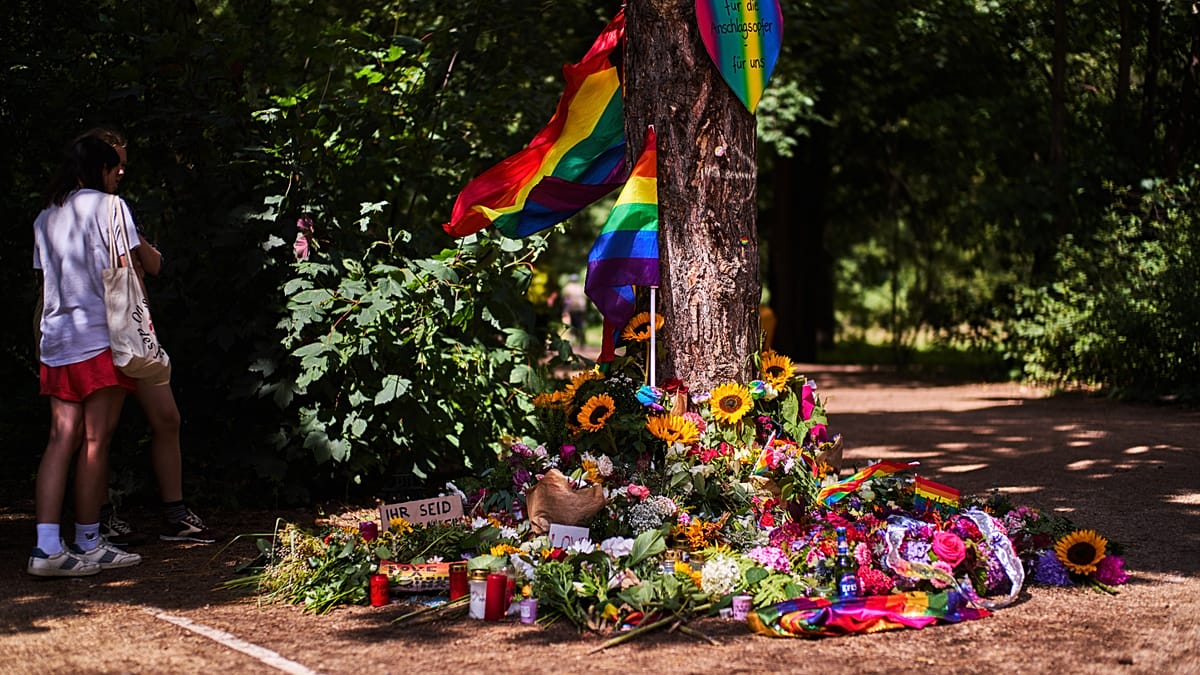
Berlin officials and members of the LGBTQ community gathered in Tiergarten on Wednesday to unveil a rainbow bench and plant a maple tree, creating a permanent memorial for the victims of the attack that marred this year's Christopher Street Day (CSD) parade. The ceremony, held under grey skies, was both a tribute and a statement that the city will not be intimidated by violence targeting its queer citizens.
The attack, which occurred during the annual Pride celebrations in late July, left several people injured and sent shockwaves through Germany's capital. In response, city authorities and activists sought a way to transform grief into a visible, lasting gesture. The rainbow bench, painted in the colors of the LGBTQ flag, now sits along a quiet path in the park, inviting passersby to pause and reflect. Beside it, the young maple tree stands as a living symbol of resilience and growth.
A city's response to violence
Berlin's governing mayor, Kai Wegner, attended the unveiling and spoke directly to the crowd. "This bench is more than a piece of furniture," he said. "It is a promise that Berlin will always stand with its LGBTQ community, and that hatred will never have the last word here." His remarks were echoed by other officials and representatives from queer organizations, who emphasized that the memorial is not just about mourning but about affirming the city's commitment to diversity and safety.
The choice of Tiergarten, a central and beloved park, was deliberate. It is a place where Berliners and tourists alike gather, and the memorial ensures that the memory of the attack remains in the public eye. For many in the community, the bench also serves as a gathering point—a spot where people can sit, talk, and find solace. "We wanted something that would be used, not just looked at," explained one activist involved in the project. "A bench is a place for conversation, for community, for life."
The attack itself was a stark reminder of the challenges that still face LGBTQ people across Europe, even in cities known for their openness. In the weeks since, Hamburg Pride drew 250,000 attendees under heightened security, a sign that while solidarity is strong, fear persists. Berlin's memorial is part of a broader conversation about how European cities can protect and honor their queer communities.
Local LGBTQ groups have welcomed the memorial but stress that symbolic gestures must be accompanied by concrete action. They are calling for increased police presence at future Pride events, better support for victims of hate crimes, and educational programs in schools. "A bench is beautiful, but it cannot replace safety," said one community leader. "We need the city to invest in real protections."
The unveiling also comes at a time when debates over LGBTQ rights are intensifying across the continent. From Poland to Hungary, political leaders have clashed with EU institutions over issues of equality and discrimination. Berlin's gesture stands in contrast to those tensions, offering a model of municipal solidarity that other cities might emulate.
For now, the rainbow bench in Tiergarten is a quiet but powerful presence. As autumn approaches and the maple tree begins to turn, it will draw visitors who may not know its story—but who will, perhaps, ask questions and learn. In that way, the memorial extends beyond its physical form, becoming a tool for education and empathy.
Berlin's Pride celebrations have long been among the largest in Europe, drawing hundreds of thousands of participants each year. The attack was a rare but jarring incident in a city that prides itself on tolerance. The new memorial is an attempt to reclaim that narrative, to ensure that the city's identity is not defined by the violence but by its response to it.
As the ceremony concluded, attendees placed flowers at the base of the tree and lingered by the bench, some in quiet conversation, others in silence. The maple tree, still young, will grow alongside the city's memory of the attack—and its determination to move forward.