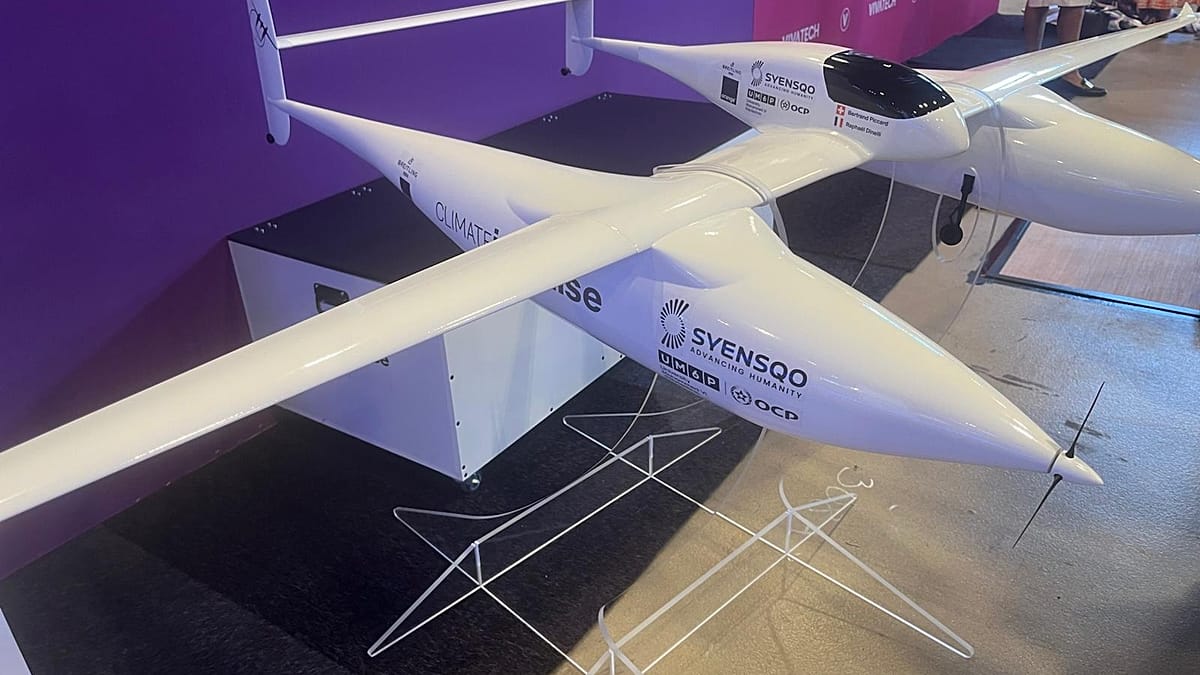
Swiss explorer Bertrand Piccard, known for completing the first round-the-world solar-powered flight and the first non-stop balloon circumnavigation, is now betting on hydrogen to inspire a new generation. His latest venture, developed through the Solar Impulse Foundation, is nearing completion, with first test flights scheduled for early 2027. The aircraft is designed to circle the globe non-stop with zero carbon emissions, carrying a dual mission: proving hydrogen's viability for long-haul aviation and delivering a message of hope to young people.
"We want to show young people that there are solutions, that there is a future — but we must now develop the pioneer spirit," Piccard told Euronews Next. He argues that environmentalism has suffered from its own messaging, which has often framed ecological action as costly, restrictive, and sacrificial. This narrative, he says, has provoked a backlash that allowed economic and political forces to sideline climate concerns.
"Many people have presented ecology as something off-putting, expensive, sacrificial — something that causes the economy to shrink, mobility to shrink," Piccard said. "And nobody wants that. With such an uninspiring narrative, it's clear there has been a backlash."
Reframing Ecology as Innovation
Piccard insists the solution is not to abandon ecological ambition but to reframe it as a key driver of innovation and prosperity. The Solar Impulse Foundation has already certified 1,650 clean and profitable solutions as proof that sustainability and economic growth are not in conflict. "I think we need to cut the head off that narrative but we must not cut the head off ecology in general. Because ecology can be exciting. It can be economically profitable. It can open new markets for companies," he said.
This reframing is particularly relevant for Europe, where the EU Green Bond Initiative and other policies aim to channel investment into sustainable technologies. Piccard's approach aligns with efforts to make green tech economically attractive, though he warns that the continent must avoid subsidising foreign competitors without ensuring domestic benefits.
AI and Sustainability: A Fork in the Road
Since the rise of generative AI in 2022, Piccard draws a sharp distinction between two possible futures. In one, AI optimises energy grids and eliminates waste; in the other, it powers unnecessary applications like faster video streaming and higher-resolution gaming, demanding vast new data centres that erase any environmental gains. "All the positive impact we could have on the environment may be completely short-circuited by unnecessary uses, poorly implemented, with polluting technologies," he warned.
Data centres are a test case for AI's environmental footprint. Cooling servers with air conditioning or river water wastes enormous energy, but channelling that heat waste to warm nearby cities would use the same energy twice, cutting costs and emissions. Piccard points to examples like Finnish firm Wärtsilä's hydrogen engine powering Spain's grid as a model for integrating clean tech into existing infrastructure.
Ultimately, Piccard argues, the decision on how AI is used rests with humanity. "It's not AI that is good or bad — it's the user who will be wise or dangerous. What will humanity do with it?" he said. He believes governments, not tech companies, should navigate AI's direction, and that Europe must hold its nerve despite pressure from trading partners. "Tech enthusiasts will always go too far, because their goal is technology — not the quality of life of humanity. Those who are responsible for that are governments, institutions, NGOs. They must make their voices heard louder than the tech enthusiasts."
Engaging the Next Generation
Piccard's outreach extends beyond Europe. A partnership with the Mohammed VI Polytechnic University in Morocco positions the country as a gateway for students across Africa. Once airborne, he plans to speak to schoolchildren live from the cockpit as the plane circles the Earth. "If one morning we say we want to speak to all the schools, nobody will answer. If we say we're going to speak to students from the cockpit of a plane circling the world on hydrogen — all the doors will open," he explained.
The project ultimately poses a question to the next generation: "Do you want to be a pioneer — someone who hopes they can achieve something different? Or do you want to be a dinosaur, trying to live off the past, and disappearing?" For Piccard, the answer is clear, and he hopes Europe will lead the way in embracing a green tech future that balances innovation with responsibility.