Berlin's pull is undeniable: in 2025, the German capital welcomed more than 12 million visitors, who together accounted for nearly 30 million overnight stays. Most come for the iconic sights—the Brandenburg Gate, the Reichstag, the remnants of the Wall—but the city's true character often lies in the spaces between the postcard images. For those willing to wander, Berlin offers a layered narrative of reinvention, resilience, and raw creativity.
From the Brandenburg Gate to the Wall's living canvas
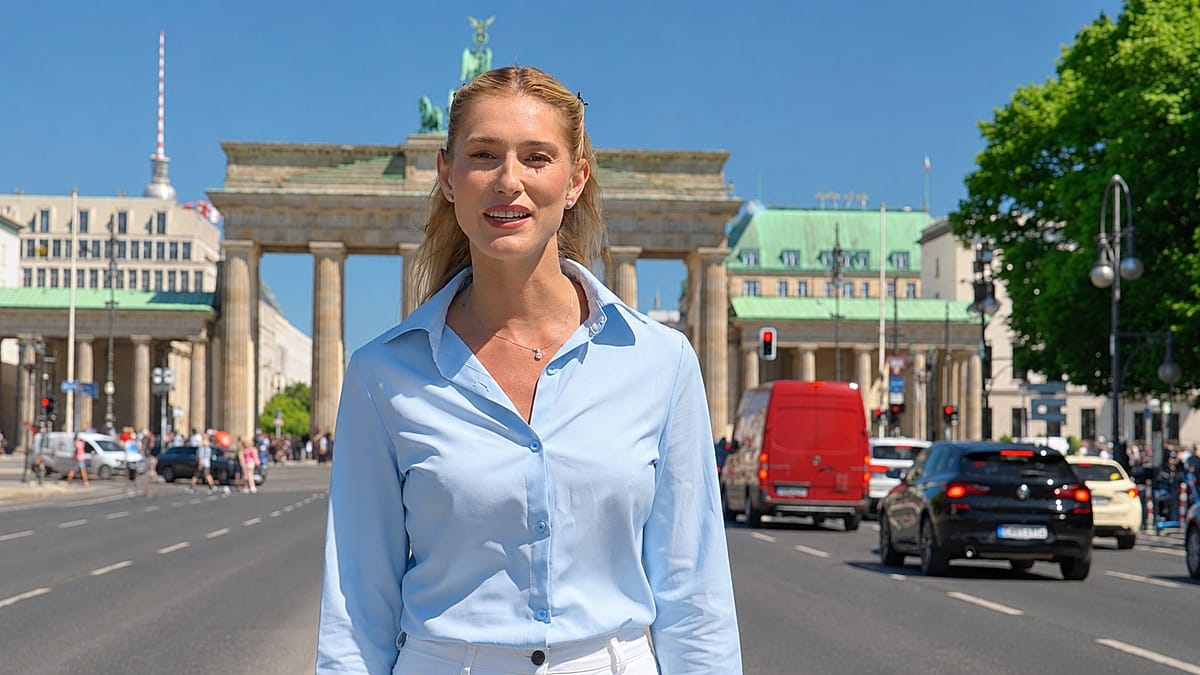
Lilly Douse begins her exploration at the Brandenburg Gate, a neoclassical monument completed in 1791. It has witnessed some of the most consequential moments in the city's history, from Napoleonic parades to Cold War division and the euphoria of 1989. With a local guide, she peels back the layers of well-known landmarks, learning the stories that textbooks often omit.
No structure has shaped Berlin's recent past more than the Berlin Wall. Erected in 1961 and dismantled in 1989, it split the city for 28 years, separating families and ideologies. Today, a long stretch of the Wall remains, now a vibrant open-air gallery covered in graffiti and street art. It is a testament to how the city has transformed a symbol of oppression into a canvas for expression.
That creative spirit is infectious. Lilly joins a graffiti workshop led by Hendrik auf der Heidt, founder of Urban Artists, who shares insights into the techniques and ethics of street art. "It's not just about spray paint," he explains. "It's about understanding the space, the message, and the community." For Lilly, the workshop is a hands-on lesson in Berlin's alternative culture, which thrives in former industrial yards and along the Spree's banks.
A prison reborn as a hotel
In West Berlin, the Wilmina Hotel offers a different kind of historical immersion. Housed in a former women's prison that operated until the 1980s, the building retains its iron window bars and long, echoing corridors. The renovation took a decade, transforming the austere structure into a design-forward hotel while preserving its haunting past. Guests can sleep in cells that once held political prisoners, a reminder of the city's darker chapters.
The hotel's transformation mirrors Berlin's broader ability to repurpose its history. Similar adaptive reuse projects dot the city, from bunkers turned art galleries to breweries converted into tech hubs. It is a philosophy that resonates beyond tourism, reflecting a European approach to urban renewal that values memory over erasure.
Cycling through a divided past
To see the city from a different vantage point, Lilly joins Sascha Möllering of Berlin by Bike for a cycling tour. Their route takes them through Mauerpark, a green space that was once part of the death strip between the two Berlins. Today, it hosts a bustling flea market and impromptu karaoke sessions, a stark contrast to its grim past. The ride continues to Zionskirche, a Protestant church that became a focal point for dissidents in East Germany, where the communist regime's surveillance and repression were palpable.
Cycling, Lilly discovers, is the ideal way to grasp Berlin's scale and its juxtapositions—the sleek glass towers of Potsdamer Platz giving way to cobblestone streets in Prenzlauer Berg, the graffiti-covered remnants of the Wall appearing unexpectedly in residential neighborhoods. It is a city that rewards curiosity and punishes haste.
For those planning a visit, Berlin's tourism boom shows no signs of slowing. The city's ability to blend its turbulent history with a forward-looking creative scene makes it a perennial draw. As Berlin's political landscape shifts, the city's cultural vitality remains a constant, even as debates over housing and gentrification intensify. And with tech startups moving to Berlin, the city is also becoming a hub for innovation, adding another layer to its identity.
Lilly's journey ends where it began, at the Brandenburg Gate, but with a new appreciation for the city's depth. Berlin is not a museum piece; it is a living, breathing entity that invites exploration beyond the obvious. Whether you're tracing the Wall's path, cycling through Mauerpark, or sleeping in a former prison, the city's stories are waiting to be uncovered.